
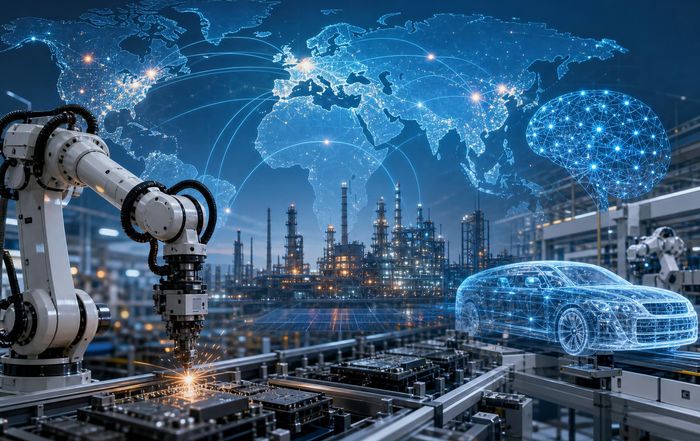
Global Manufacturing in a High-Tech Era
The New Geography of Making: Manufacturing Rewired for 2026
By 2026, global manufacturing has moved far beyond the traditional image of assembly lines and low-cost labor hubs; instead, it has become a dense, digitally connected ecosystem where data, automation, and advanced materials define competitiveness as much as physical plants and logistics networks, and where strategic decisions made in boardrooms in the United States, Germany, China, or Singapore ripple instantly across supply chains stretching through Europe, Asia, Africa, and the Americas. For the audience of TradeProfession.com, which spans executives, founders, investors, and professionals across sectors such as advanced technology, banking, crypto, and sustainable industries, understanding how global manufacturing is being reshaped in this high-tech era is no longer optional; it is central to strategy, risk management, and long-term value creation.
Manufacturing now sits at the intersection of artificial intelligence, robotics, cloud computing, and green technologies, with leading organizations integrating insights from platforms such as TradeProfession.com's coverage of artificial intelligence, innovation, and technology into core industrial decisions. From the reconfiguration of supply chains after the COVID-19 disruptions, to the impact of geopolitical tensions on semiconductor and battery production, to the race to decarbonize heavy industry in line with international climate commitments, the manufacturing landscape in 2026 is defined by complexity, speed, and the premium placed on trusted expertise and execution.
Industry 4.0 Becomes Operational Reality
For more than a decade, policymakers and consultants have described the convergence of cyber and physical systems as Industry 4.0, but in 2026 this concept has finally matured from pilot projects and slide decks into fully operational factories where sensors, machines, and analytics engines collaborate in real time. Manufacturers across the United States, Germany, Japan, China, and the broader European and Asian markets now routinely deploy industrial Internet of Things (IIoT) platforms, edge computing, and AI-driven predictive maintenance to optimize throughput and reduce downtime. Organizations that once treated data as a by-product of operations now treat it as a primary asset, integrating information flows from factories, suppliers, logistics partners, and customers into unified decision-making platforms.
Research and frameworks from institutions such as the World Economic Forum have helped shape this transition, offering global benchmarks and case studies that illustrate how leading plants are transforming into "lighthouse" factories, where digital technologies are scaled across sites and regions rather than remaining isolated experiments. Executives who follow global business and economy insights on TradeProfession.com increasingly recognize that the gap between digital leaders and laggards is no longer incremental but exponential, with early adopters achieving significantly higher productivity, quality, and resilience. In this environment, the ability to orchestrate a digital transformation program across multiple plants, countries, and regulatory regimes has become a core competency for industrial leadership teams.
Artificial Intelligence as the New Production Engineer
Artificial intelligence has evolved from a promising technology to a pervasive operational tool, effectively becoming a new category of "digital production engineer" that supports, augments, and in some cases automates complex manufacturing decisions. In 2026, manufacturers deploy AI models to forecast demand across volatile global markets, optimize production schedules in response to changing orders and supply constraints, and dynamically adjust process parameters to maintain quality while reducing energy and material consumption. These AI systems draw on vast datasets, including real-time sensor streams, historical maintenance records, supply chain information, and even macroeconomic indicators sourced from organizations such as the International Monetary Fund, which provides critical context on global economic trends that influence industrial demand.
Advanced machine learning techniques, including reinforcement learning and computer vision, have enabled robots and autonomous systems to perform increasingly sophisticated tasks in automotive, electronics, pharmaceuticals, and aerospace manufacturing, with companies in South Korea, Japan, Germany, and the United States at the forefront of high-density automation. At the same time, the rise of generative AI has begun to transform product and process design, with engineers using AI tools to propose novel component geometries, simulate manufacturing processes, and generate documentation at unprecedented speed. Professionals who follow AI and technology developments on TradeProfession.com understand that the key differentiator is no longer access to AI algorithms, which are widely available, but rather the depth and quality of industrial data, the robustness of governance frameworks, and the degree to which frontline workers are trained to collaborate effectively with AI systems.
Robotics, Automation, and the Changing Nature of Work
The deployment of advanced robotics and automation has accelerated sharply across global manufacturing hubs, driven by both technological progress and demographic pressures such as aging populations in countries like Japan, Germany, Italy, and South Korea, as well as persistent labor shortages in sectors such as logistics and electronics assembly. Collaborative robots, or cobots, are now common on shop floors from the United States and Canada to Singapore and Denmark, working alongside humans on tasks such as precision assembly, packaging, and quality inspection, while autonomous mobile robots move materials across warehouses and factories in a continuous flow governed by AI-based orchestration software.
This shift in the nature of work has significant implications for employment, skills, and education systems worldwide, and organizations that monitor employment and jobs trends recognize that the key challenge is not a simple substitution of machines for people but a complex reconfiguration of roles and competencies. Workers increasingly require hybrid skill sets that combine technical literacy, data interpretation, and problem-solving with traditional mechanical and operational expertise, while companies collaborate more closely with universities and technical institutes to redesign curricula in line with the needs of high-tech manufacturing. Initiatives highlighted by bodies such as the Organisation for Economic Co-operation and Development underscore the importance of lifelong learning and reskilling as automation changes the labor market, particularly in regions such as North America, Europe, and Asia where manufacturing remains a critical pillar of the economy.
The Data-Driven Factory and Cybersecurity Imperative
As factories become more digital and interconnected, they also become more exposed to cyber risk, forcing manufacturers to confront the reality that cybersecurity is now as essential to operational continuity as physical safety or quality control. The modern production environment integrates cloud-based manufacturing execution systems, remote monitoring tools, supplier portals, and connected machinery, all of which create potential attack surfaces that can be exploited by criminal groups or state-backed actors. High-profile incidents over the past several years, including ransomware attacks on industrial facilities and disruptions to critical infrastructure, have demonstrated that a single breach can halt production, damage equipment, and cause significant financial and reputational harm.
Guidance from organizations such as the National Institute of Standards and Technology has become a reference point for industrial cybersecurity frameworks, helping manufacturers in the United States and beyond implement layered defenses, network segmentation, and robust incident response plans. Executives who follow technology and business risk coverage on TradeProfession.com increasingly view cybersecurity investment as an integral part of capital expenditure on new plants and equipment, particularly in sectors such as automotive, aerospace, pharmaceuticals, and semiconductors where intellectual property is highly valuable and regulatory scrutiny is intense. Moreover, as supply chains become more integrated, leading manufacturers are beginning to require cybersecurity standards from their suppliers and partners, recognizing that resilience in a high-tech era depends on the security posture of the entire ecosystem, not just individual facilities.
Supply Chain Resilience, Nearshoring, and Regionalization
The disruptions of the early 2020s, including the COVID-19 pandemic, port congestion, and geopolitical tensions affecting trade routes and critical materials, triggered a fundamental reassessment of global supply chain strategies. By 2026, manufacturers have moved decisively beyond the old model of single-sourcing from the lowest-cost region, instead building more resilient, diversified, and regionally balanced networks that can absorb shocks and respond quickly to shifts in demand or regulation. This has led to a wave of nearshoring and friend-shoring initiatives, with companies in the United States expanding production in Mexico and within North America, European firms investing in Central and Eastern Europe, and Asian manufacturers diversifying from China into Southeast Asia, India, and other emerging markets.
Analyses from institutions such as the World Bank have documented how these shifts affect trade flows, investment patterns, and employment across continents, while also highlighting the opportunities and challenges for developing economies seeking to attract advanced manufacturing. Readers of TradeProfession.com who track global economic and investment dynamics understand that supply chain resilience now encompasses not only geographic diversification but also digital visibility, multi-sourcing, and inventory strategies informed by sophisticated risk modeling. At the same time, regulatory developments in the United States, the European Union, and Asia, including export controls on advanced technologies and incentives for domestic semiconductor and battery production, are reshaping the global map of high-tech manufacturing, forcing executives to align their footprint decisions with an evolving geopolitical and regulatory landscape.
Sustainability, Decarbonization, and the Green Factory
Sustainability has moved from a peripheral concern to a central strategic priority for global manufacturers, driven by regulatory requirements, investor expectations, customer demand, and the physical realities of climate change. In 2026, industrial companies are under increasing pressure to align their operations with national and international climate commitments, including net-zero targets and sector-specific emissions reduction pathways. Heavy industries such as steel, cement, chemicals, and automotive manufacturing, which have historically been major sources of greenhouse gas emissions, are experimenting with new technologies and business models to decarbonize production, including green hydrogen, electrification of processes, circular material flows, and carbon capture and storage.
Reports from the International Energy Agency provide detailed roadmaps for industrial decarbonization, highlighting both the technological options and the policy frameworks needed to accelerate progress, while initiatives such as the European Green Deal and national climate plans in countries like the United States, Canada, Germany, and Japan create regulatory and financial incentives for low-carbon manufacturing investments. Professionals who rely on TradeProfession.com for sustainable business insights and investment trends recognize that sustainability is now closely tied to access to capital, as investors and lenders increasingly apply environmental, social, and governance criteria to evaluate industrial projects. At the operational level, factories are integrating energy management systems, renewable power procurement, and life-cycle analysis into everyday decision-making, while product design teams prioritize recyclability, repairability, and resource efficiency as core elements of competitiveness.
Finance, Banking, and Capital for High-Tech Manufacturing
The transformation of global manufacturing is deeply intertwined with developments in finance and banking, as capital-intensive investments in automation, digital infrastructure, and green technologies require sophisticated funding structures and risk-sharing mechanisms. In 2026, banks and institutional investors are playing a pivotal role in enabling the modernization of factories and supply chains, with specialized financing products tailored to equipment leasing, energy efficiency upgrades, and large-scale projects such as gigafactories for batteries or advanced semiconductor fabs. Coverage of banking and capital markets on TradeProfession.com highlights how financial institutions are refining their assessment of industrial risk, incorporating technology obsolescence, cybersecurity exposure, and climate transition risk into lending decisions.
Multilateral institutions such as the European Investment Bank and national development banks across regions including Asia, Africa, and South America are also supporting advanced manufacturing through concessional financing, guarantees, and public-private partnerships, particularly in areas that contribute to strategic resilience such as renewable energy components, electric vehicles, and medical supplies. At the same time, the rise of digital finance, including tokenization of assets and the use of blockchain in supply chain finance, is beginning to influence how working capital flows through manufacturing ecosystems, with pilots that link physical shipments to smart contracts and real-time payment triggers. While crypto-assets remain volatile and subject to regulatory debate, the underlying distributed ledger technologies are being tested in trade finance and provenance tracking, and readers who follow crypto and financial innovation are closely watching how these tools may reduce friction and improve transparency in global manufacturing trade.
Skills, Education, and the Human Capital Challenge
The success of high-tech manufacturing in 2026 ultimately depends on human capital, even as automation and AI take on a growing share of routine tasks. Manufacturers across North America, Europe, and Asia consistently report shortages of workers with the right combination of technical, digital, and soft skills, including mechatronics specialists, data-savvy engineers, cybersecurity professionals, and frontline operators comfortable with advanced human-machine interfaces. This skills gap has prompted a wave of collaboration between industry, governments, and educational institutions, with technical colleges, universities, and vocational programs redesigning curricula to reflect the realities of Industry 4.0 and beyond.
Organizations such as UNESCO emphasize the importance of aligning education systems with the future of work, particularly in regions where manufacturing remains a key driver of economic development, while national initiatives in countries like Singapore, Germany, and the United States promote apprenticeships, micro-credentials, and mid-career reskilling programs. Professionals who consult TradeProfession.com's coverage of education and jobs and employment trends recognize that attracting and retaining talent is now a strategic differentiator for manufacturers, influencing decisions on plant locations, automation strategies, and compensation models. Leading companies are also investing in internal academies and digital learning platforms, blending online and hands-on training to continuously upgrade the skills of their workforce, while leveraging AI-driven tools to personalize learning pathways and assess competency development over time.
Regional Perspectives: United States, Europe, and Asia
Although global manufacturing is increasingly interconnected, regional dynamics shape how technology, policy, and market forces play out on the ground. In the United States, industrial policy has returned to the forefront, with legislation that supports domestic semiconductor production, clean energy manufacturing, and infrastructure modernization, while also encouraging reshoring and nearshoring to strengthen supply chain security. The interplay between federal incentives, state-level initiatives, and private sector investment is reshaping the manufacturing footprint across states such as Texas, Arizona, Ohio, and North Carolina, particularly in sectors like chips, batteries, and electric vehicles, and executives track these developments through business and economy insights to inform long-term site selection and partnership strategies.
In Europe, the focus on strategic autonomy, climate leadership, and digital sovereignty is driving coordinated efforts to build regional capacity in key technologies, including advanced manufacturing equipment, green hydrogen, and sustainable materials. The European Commission's initiatives on industrial strategy, combined with national programs in Germany, France, Italy, Spain, the Netherlands, and the Nordic countries, aim to balance competitiveness with high environmental and social standards, creating both opportunities and compliance challenges for manufacturers operating within the Single Market. Meanwhile, in Asia, countries such as China, South Korea, Japan, Singapore, and Thailand continue to play central roles in global supply chains, with a strong emphasis on electronics, automotive, and consumer goods, while also investing heavily in next-generation technologies and automation. Regional trade agreements and infrastructure projects, including those discussed by the Asian Development Bank, influence the flow of goods, capital, and technology across Asia-Pacific, shaping the strategic options available to multinational manufacturers and local champions alike.
Leadership, Governance, and the Role of TradeProfession.com
In this high-tech era, leadership in global manufacturing demands more than operational excellence; it requires a sophisticated understanding of technology trends, regulatory environments, financial markets, and societal expectations, combined with the ability to orchestrate complex ecosystems of partners, suppliers, and stakeholders across multiple regions. Boards and executive teams must navigate trade-offs between efficiency and resilience, automation and employment, short-term returns and long-term sustainability, all under the scrutiny of investors, regulators, and the public. This places a premium on trusted information, expert analysis, and cross-disciplinary insight, which is precisely where platforms such as TradeProfession.com play an increasingly important role for decision-makers in manufacturing and adjacent sectors.
By integrating coverage of global business developments, executive leadership perspectives, founder and innovation stories, and personal career and skills strategies, TradeProfession.com provides a vantage point that connects the technical and financial dimensions of manufacturing with the human and strategic elements that ultimately determine success. As global manufacturing continues to evolve through 2026 and beyond, professionals who engage with this ecosystem of knowledge will be better equipped to build factories that are not only more productive and profitable, but also more sustainable, resilient, and inclusive, ensuring that the next chapter of industrial development creates durable value for businesses, workers, and societies across the world.
