
France's Corporate Champions: How the Country's Biggest Companies Shape Global Business
France enters 2026 with a corporate landscape that remains central to the global economy, defined by industrial diversity, technological ambition, and a deepening commitment to sustainable growth. From energy transition and digital banking to luxury, infrastructure, and mobility, the country's largest enterprises continue to exert outsized influence on global supply chains, capital flows, and consumer behavior. On TradeProfession.com, this subject is more than a macroeconomic snapshot; it is a strategic lens for executives, investors, founders, and policymakers who seek to understand how national champions adapt in a world being reshaped by artificial intelligence, decarbonization, and geopolitical realignment.
While the headline list of the top French companies by revenue and market capitalization has not radically changed since 2025, their operating environment has. The energy shock of the early 2020s, the acceleration of digital adoption, the tightening of climate regulation, and the normalization of higher interest rates have all forced these giants to refine strategies, rebalance portfolios, and rethink their global footprints. In parallel, France's policy framework-anchored in the France 2030 investment plan and aligned with the European Green Deal-has reinforced a long-term bias toward innovation, industrial sovereignty, and green technology. This interplay between public ambition and private execution is a defining theme for business leaders who regularly engage with the Business, Economy, Innovation, and Global sections of TradeProfession.com.
Methodology and Strategic Lens in 2026
The assessment of France's leading corporations in 2026 continues to rest on a multi-dimensional view of corporate power. Revenue and profitability remain critical, but they are now evaluated alongside resilience, innovation capacity, and the credibility of transition plans. Market capitalization, while influenced by cyclical sentiment, still serves as an indicator of investor confidence in long-term strategy and governance. The breadth of geographic reach and diversification across business lines is increasingly important as companies hedge against regional shocks and evolving trade regimes.
A central pillar of this perspective is the depth and quality of technological integration. French champions are judged not merely on their adoption of digital tools, but on how effectively they embed artificial intelligence, data analytics, cloud infrastructure, and cybersecurity into their core operating models. Readers exploring artificial intelligence in business will recognize that the winners in this new era are those that treat technology as a strategic foundation rather than a peripheral enabler. Similarly, environmental, social, and governance (ESG) performance has shifted from marketing language to a measurable determinant of access to capital, regulatory goodwill, and customer trust.
In this context, the companies that dominated rankings in 2025-TotalEnergies, AXA, BNP Paribas, Carrefour, LVMH, Christian Dior, Engie, Vinci, Bouygues, and Renault Group-continue to define the French corporate story in 2026. Their trajectories illustrate how scale, heritage, and global reach can be leveraged-or squandered-under the pressure of systemic change.
France's Economic Platform in 2026
France's macroeconomic backdrop in 2026 is one of cautious resilience. Growth remains moderate but positive, underpinned by strong export sectors, a robust services economy, and continued public investment in infrastructure, clean energy, and digitalization. The country's membership in the European Union continues to provide a stable regulatory and trade framework, as well as access to coordinated initiatives such as the NextGenerationEU recovery plan and the EU's green taxonomy for sustainable finance. Executives and analysts following developments in European macro policy can explore broader context through the Economy insights on TradeProfession.com, where fiscal, monetary, and industrial trends are reviewed through a global business lens.
France's industrial base has also benefited from the global rethinking of supply chains. Nearshoring, friendshoring, and the desire to reduce overdependence on single-country suppliers have all favored European manufacturing hubs. French aerospace, automotive, pharmaceuticals, and high-tech sectors have leveraged this shift to justify capacity expansions and strategic partnerships. Meanwhile, the country's financial sector, anchored by BNP Paribas and AXA, continues to serve as a gateway between European capital markets and global investors, particularly for those seeking exposure to sustainable infrastructure, clean technology, and innovation-led growth.
TotalEnergies SE: Executing a Complex Energy Transition
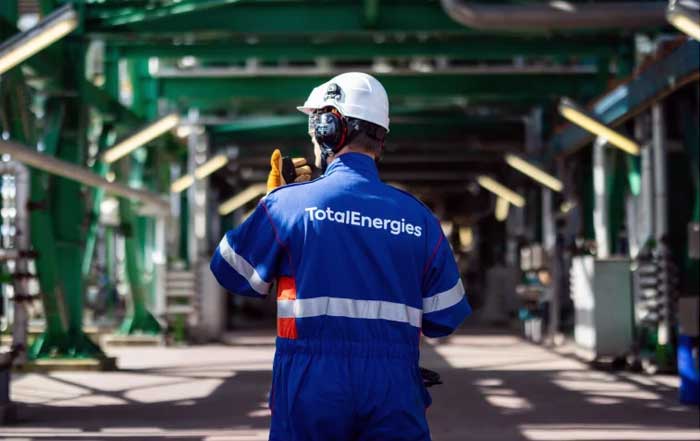
TotalEnergies SE remains France's largest company by revenue and one of the most influential energy groups globally. Its strategic narrative in 2026 is dominated by the execution risk and opportunity inherent in its energy transition plan. While oil and gas still constitute a significant share of earnings, the company has steadily increased the proportion of capital expenditure devoted to renewables, electricity, and low-carbon solutions. Ambitions to reach 100 GW of renewable capacity by 2030 are no longer merely aspirational; they are embedded in project pipelines that span Europe, North America, the Middle East, Africa, and Asia.
The company's integrated model-combining upstream exploration, LNG, refining, trading, retail networks, and now large-scale solar, wind, and battery storage-gives it levers to manage volatility in commodity prices and power markets. Yet this same complexity exposes TotalEnergies to heightened geopolitical and regulatory risk, from sanctions and political instability in producing countries to evolving carbon pricing mechanisms in Europe and beyond. The firm's credibility increasingly depends on transparent reporting of emissions, disciplined divestment of high-carbon assets, and the financial performance of its renewables portfolio.
For investors and executives who follow sustainable business models, this evolution demonstrates that transition is not a binary switch but a phased reallocation of capital, talent, and technology. Readers seeking a broader view of sustainable corporate strategy can explore related perspectives in the Sustainable business section, where energy, infrastructure, and industrial case studies are examined through an ESG lens.
AXA S.A.: Risk, Data, and Responsible Finance
AXA S.A. continues to stand at the intersection of global risk and capital allocation. In 2026, its transformation from a traditional insurer to a data-driven risk intelligence platform has accelerated. The company's use of advanced analytics, machine learning, and cloud-based infrastructure allows it to price risk more accurately, automate claims processes, and develop personalized products for both individuals and enterprises. Partnerships with major technology providers and insurtech startups have become critical, not only to improve efficiency but also to build new revenue streams in cyber risk, climate risk modeling, and health analytics.
AXA's positioning as a leader in responsible investment has also deepened. The group has further tightened exclusion policies on coal and high-carbon assets, expanded its green bond portfolios, and aligned its investment strategies with the objectives of the Paris Agreement. This alignment is not driven solely by regulatory pressure; institutional clients in Europe, North America, and Asia are increasingly demanding demonstrable ESG integration in asset management mandates. For professionals interested in the convergence of finance, risk, and sustainability, AXA's trajectory illustrates how large financial institutions can use their balance sheets to influence real-economy outcomes. Related dynamics in banking and insurance innovation are frequently discussed in the Banking section of TradeProfession.com.
BNP Paribas: Financing the Digital and Green Transformation
BNP Paribas remains one of Europe's most systemically important banks and a critical conduit for financing the digital and green transformation. In 2026, the bank's strategy is defined by three pillars: strengthening its universal banking model, scaling sustainable finance, and embedding technology into every layer of its operations. Its corporate and institutional banking arm continues to dominate in trade finance, project finance, and capital markets, while its retail and wealth management businesses invest heavily in digital platforms and personalization.
The bank has become a major arranger of green, social, and sustainability-linked bonds, channeling capital into renewable energy, low-carbon transport, and social infrastructure. Its asset management division has expanded thematic funds focused on climate transition, biodiversity, and inclusive growth, reflecting growing demand from institutional and retail investors. At the same time, BNP Paribas is experimenting with digital assets and blockchain-based solutions in trade finance and securities services, carefully navigating regulatory frameworks in Europe, the United States, and Asia. Readers tracking the evolution of digital assets, tokenization, and crypto-adjacent financial products can deepen their understanding through the Crypto and digital finance coverage on TradeProfession.com, where the intersection of regulation, technology, and market structure is examined in detail.
Carrefour S.A.: Omnichannel Retail and Conscious Consumption
Carrefour S.A. continues to evolve from a traditional hypermarket operator into an omnichannel retail and data company. In 2026, its strategic focus is on three fronts: digital customer engagement, supply chain resilience, and sustainable consumption. The company's investments in e-commerce, click-and-collect, and last-mile delivery have solidified its position in markets across Europe and Latin America, while partnerships with technology firms and logistics startups have helped optimize route planning, inventory management, and demand forecasting.
At the same time, Carrefour's sustainability agenda has matured from isolated initiatives into a core element of brand positioning. Efforts to reduce food waste, expand organic and locally sourced product lines, and phase out single-use plastics are increasingly visible to consumers and regulators. The company's "Act for Food" program, which promotes healthier and more sustainable food choices, has become a differentiating factor in a crowded retail landscape. For professionals interested in how retail models adapt to digital disruption and rising ESG expectations, Carrefour provides a concrete case of how operational efficiency, data-driven decision-making, and purpose-led branding can reinforce each other. These themes resonate strongly with the Business and Marketing audiences on TradeProfession.com, who track evolving consumer behavior and retail innovation worldwide.
LVMH and Christian Dior: Luxury, Heritage, and Digital Craftsmanship
LVMH Moët Hennessy Louis Vuitton SE and Christian Dior SE together embody France's unparalleled influence in global luxury. In 2026, LVMH, under the continued leadership of Bernard Arnault and a new generation of family executives, remains a benchmark for how to manage a diversified portfolio of high-end brands across fashion, leather goods, wines and spirits, perfumes, cosmetics, and selective retail. Its ability to balance the preservation of heritage with the demands of digital engagement is particularly instructive for global brand leaders.
LVMH has expanded its use of artificial intelligence and data analytics in merchandising, customer relationship management, and inventory planning, while maintaining strict control over distribution to protect brand equity. Virtual try-on technologies, immersive digital showrooms, and collaborations with gaming and metaverse platforms have opened new channels of engagement for younger demographics in the United States, China, South Korea, and beyond. At the same time, the group invests heavily in artisanal skills, training programs, and sustainable sourcing of materials, aligning with growing consumer scrutiny of environmental and social practices in the luxury supply chain.
Christian Dior SE, closely linked to LVMH through the Arnault family's holdings, plays a dual role as both a flagship brand and a strategic holding structure. Dior's own fashion and beauty lines continue to expand globally, particularly in Asia, while the company's governance position within the LVMH ecosystem reinforces family control and long-term strategic orientation. For executives and investors exploring corporate structure, brand architecture, and long-horizon capital allocation, the LVMH-Dior configuration provides a sophisticated case of how governance can underpin global dominance. Related analysis on brand strategy and executive leadership can be found in the Executive insights area of TradeProfession.com, where governance, succession, and strategic control are frequent themes.
Engie S.A.: Grids, Decentralization, and Smart Energy
Engie S.A. continues to position itself as a global leader in low-carbon energy and energy services. In 2026, the company's portfolio is increasingly weighted toward renewable generation, gas infrastructure aligned with transition pathways, and decentralized energy solutions for cities, industries, and campuses. Its expertise in district heating and cooling, combined with smart metering and building management systems, places it at the heart of Europe's efforts to decarbonize buildings and urban environments.
Engie's strategy is built around the "3Ds" of decarbonization, decentralization, and digitalization. By deploying IoT sensors, digital twins, and advanced analytics, the company optimizes asset performance and offers clients energy-as-a-service models that align cost savings with emissions reductions. This approach is particularly attractive in markets such as Germany, the Netherlands, and the Nordics, where regulatory frameworks and corporate commitments support aggressive climate targets. For TradeProfession readers focused on sustainable infrastructure and technology-enabled energy systems, Engie illustrates how utilities can evolve from commodity providers to complex solution partners, a theme that aligns closely with the Technology and Innovation coverage on the site.
Vinci S.A.: Infrastructure, Concessions, and Long-Term Value
Vinci S.A. remains one of the world's most influential infrastructure and concessions groups, with a portfolio that spans highways, airports, rail, and complex civil engineering projects. In 2026, the company's dual model-combining construction capabilities with long-term operation of concession assets-continues to generate stable cash flows and strategic optionality. Its airports division, with assets across Europe and Latin America, has largely recovered from the pandemic shock, while its motorway concessions in France and abroad remain cash-generative anchors.
Vinci's competitive edge increasingly lies in its ability to integrate digital tools into project design, execution, and operation. The use of Building Information Modeling (BIM), AI-driven scheduling, and predictive safety analytics has improved margins and reduced delays on major projects. At the same time, the company is under pressure to align its infrastructure development with climate resilience and biodiversity considerations, prompting investments in low-carbon construction materials, green mobility corridors, and nature-based solutions. For investors and executives tracking global infrastructure opportunities, Vinci's experience highlights how engineering excellence, digitalization, and responsible design can reinforce long-term asset value. Similar themes are explored in the Global business analysis section of TradeProfession.com, where cross-border infrastructure and logistics strategies are regularly assessed.
Bouygues S.A.: Convergence of Telecom, Media, and Construction
Bouygues S.A. continues to exemplify the strategic possibilities and challenges of a diversified conglomerate. Its operations span construction, real estate development, telecommunications via Bouygues Telecom, and media through TF1 Group. In 2026, the group leverages synergies across these sectors while facing intense competition in each. Bouygues Telecom remains a key player in France's 5G and fiber rollout, investing heavily in network quality and customer experience to compete with Orange and SFR. Its infrastructure is increasingly critical to France's digital economy, enabling remote work, cloud services, and IoT applications.
In construction, Bouygues applies digital tools, modular construction techniques, and eco-design principles to address housing needs and urban regeneration projects in France, the United Kingdom, and other European markets. Its media arm navigates the streaming era through a mix of original content, partnerships, and digital platforms, seeking to maintain relevance in an environment dominated by global tech and content giants. For TradeProfession readers interested in how conglomerates manage capital allocation, governance, and cross-sector innovation, Bouygues offers a nuanced example of both diversification benefits and coordination complexity, intersecting naturally with the site's coverage of Innovation and technology-enabled business models.
Renault Group: From Automaker to Mobility Platform
Renault Group remains a bellwether for Europe's automotive and mobility transition. In 2026, the company's strategy, anchored in its "Renaulution" plan, is focused on electrification, software-defined vehicles, and circular economy principles. The spin-out and development of its Ampere division, dedicated to electric vehicles and software, has clarified the group's strategic priorities and allowed for more agile partnerships with technology and battery manufacturers. Collaborations with Google on connected car platforms and with European battery players on gigafactory projects are central to Renault's attempt to regain competitiveness against U.S. and Asian EV leaders.
Renault's approach to affordability-developing mass-market EVs for European and emerging markets-differentiates it from luxury-focused competitors and aligns with tightening emissions regulations in the EU and beyond. At the same time, the company confronts the challenge of restructuring legacy internal combustion engine operations, managing labor transitions, and securing critical raw materials. For executives and investors following industrial transformation and mobility innovation, Renault's trajectory illustrates the operational, financial, and social complexity of reinventing a century-old business model. Related discussions on technology-driven industrial change can be explored in the Technology and Business sections of TradeProfession.com, which examine similar shifts across sectors and geographies.
Cross-Cutting Themes: What France's Giants Tell Global Leaders
Across these ten companies, several cross-cutting themes emerge that are highly relevant to TradeProfession's global audience in the United States, Europe, Asia, Africa, and the Americas. First, scale remains a powerful asset when combined with agility and innovation. Whether in energy, finance, luxury, or infrastructure, French champions demonstrate that large organizations can pivot when they invest in technology, empower cross-functional teams, and maintain strategic discipline.
Second, sustainability and ESG integration have moved from peripheral concerns to core strategic drivers. Energy majors, banks, insurers, and industrial groups alike are embedding climate and social considerations into capital allocation, product design, and stakeholder engagement. This shift is reshaping investor expectations and competitive dynamics in ways that are particularly visible to professionals who follow Investment trends on TradeProfession.com, where ESG performance increasingly correlates with valuation and access to capital.
Third, the war for talent-especially in AI, data science, cybersecurity, and advanced engineering-has become a defining constraint on execution. French companies are competing not only with each other, but also with global technology giants and high-growth startups. Hybrid work models, international recruitment, and partnerships with universities and research institutes such as INRIA and CEA are now standard components of talent strategy. Readers interested in how these dynamics affect labor markets and career paths can find complementary analysis in the Employment and jobs coverage, where workforce transformation and skills development are recurring topics.
Finally, France's corporate landscape underscores the importance of governance and long-term orientation. Whether through family control structures in luxury, state influence in strategic sectors, or independent boards in listed multinationals, governance frameworks shape how companies balance short-term performance with long-term investment. For executives, founders, and investors worldwide, these French case studies provide concrete lessons on how to build resilience, maintain trust, and lead through uncertainty.
Outlook: France's Corporate Role in a Fragmenting World
As 2026 unfolds, France's largest companies occupy a critical position in a world that is simultaneously integrating through technology and fragmenting through geopolitics. Their ability to operate across jurisdictions, comply with divergent regulatory regimes, and manage complex stakeholder expectations will determine not only their own success, but also France's standing as a global economic power. The trajectories of TotalEnergies in energy transition, BNP Paribas and AXA in sustainable finance, LVMH and Christian Dior in cultural and brand leadership, Engie and Vinci in infrastructure and smart cities, Bouygues in digital connectivity, and Renault in mobility will continue to shape global markets and industrial standards.
For the professional community that turns to TradeProfession.com for insight across ArtificialIntelligence, Banking, Business, Crypto, Economy, Education, Employment, Executive, Founders, Global, Innovation, Investment, Jobs, Marketing, News, Personal, StockExchange, Sustainable, and Technology, these French champions offer more than case studies; they are living laboratories in which the future of large-scale enterprise is being tested in real time. By following their strategic moves, performance, and governance choices, decision-makers worldwide can draw actionable lessons on how to navigate disruption, harness innovation, and align profitability with responsibility in an increasingly complex global economy.
