
Leading Hybrid Workforces in 2026: How TradeProfession Readers Are Redefining Management
Hybrid work has moved from experimental to existential. By 2026, organizations across North America, Europe, Asia-Pacific, and emerging markets in Africa and South America are no longer debating whether remote and office work can coexist; they are competing on how intelligently and sustainably they orchestrate this coexistence. For the business leaders, founders, executives, and professionals who rely on TradeProfession.com as a strategic guide, managing remote and in-office staff has become a core capability that shapes profitability, brand reputation, and long-term resilience in an increasingly volatile global economy.
The hybrid workplace is no longer a simple split between home and office. It is a dynamic ecosystem spanning time zones from San Francisco to Singapore, regulatory regimes from the United States to the European Union, and cultural expectations from Japan to Brazil. In this environment, effective management is defined by the ability to align distributed teams around clear goals, shared values, and measurable outcomes, while safeguarding well-being and trust. Organizations that succeed in this transformation are typically those that combine rigorous performance management with human-centered leadership, sophisticated technology with robust governance, and global ambition with local sensitivity. For TradeProfession's audience, this is not a theoretical discussion; it is the daily reality that informs decisions on investment, hiring, technology adoption, and organizational design, as explored across TradeProfession Business and TradeProfession Global.
Building a Communication Spine for Distributed Organizations
Hybrid organizations in 2026 recognize that communication is not merely a set of tools; it is the operational spine that holds together remote and office-based teams. Platforms such as Slack Technologies, Microsoft Teams, and Zoom have become embedded into corporate infrastructure, but the true differentiator lies in how leaders architect communication norms. High-performing organizations define explicit protocols for synchronous and asynchronous communication, specifying which channels are used for rapid decisions, which for documentation, and which for long-form strategic discussions. This reduces noise, clarifies expectations, and minimizes the cognitive load on employees who must navigate multiple systems every day.
The most advanced hybrid enterprises also design communication policies with global inclusivity in mind. Rather than defaulting to headquarters time zones, they stagger key meetings to accommodate employees in London, Berlin, Toronto, Sydney, and Singapore, while relying on recorded town halls and written summaries to ensure that no region is structurally disadvantaged. They invest heavily in documentation, taking cues from remote-native companies like GitLab and Automattic, which have demonstrated that clear written records can substitute for corridor conversations and protect institutional memory. As communication moves deeper into digital channels, leaders must also confront information security and compliance obligations, drawing on best practices from organizations such as NIST and regulations like the EU's GDPR, which are increasingly referenced in global governance frameworks. Readers can deepen their understanding of the technological underpinnings of these communication systems through TradeProfession Technology.
From Activity Monitoring to Outcome-Based Management
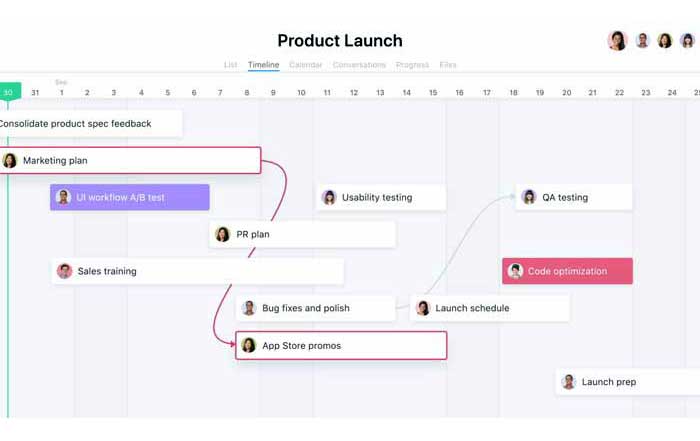
One of the most profound shifts accelerated by hybrid work is the move from presence-based to performance-based management. In-office visibility, once a proxy for productivity, has lost its relevance when teams are distributed across home offices, co-working spaces, and corporate hubs. Leading organizations now anchor performance management on outcomes, using clearly defined objectives and key results (OKRs) and role-specific key performance indicators (KPIs) to evaluate contribution. Platforms such as Asana, Trello, Monday.com, Lattice, and Betterworks have matured into integrated performance systems that connect individual tasks to strategic objectives, providing transparency for both employees and leaders.
This shift has important implications for fairness between remote and office workers. When evaluation is grounded in measurable outcomes rather than informal impressions, the "proximity bias" that historically favored office-based staff is reduced. Remote employees in India, Poland, or South Africa can compete on equal terms with colleagues in New York or London, provided that goals and expectations are unambiguous. At the same time, organizations must be careful not to reduce work to simplistic metrics; qualitative dimensions such as innovation, collaboration, and mentoring remain vital. Progressive firms combine quantitative dashboards with structured feedback, peer reviews, and narrative assessments to capture the full scope of an employee's impact. For TradeProfession's executive and founder community, these practices directly influence board-level discussions on talent strategy and performance culture, themes explored in TradeProfession Executive and TradeProfession Founders.
Technology as an Operating System for Hybrid Work
By 2026, hybrid work is fundamentally a technology story. Cloud ecosystems such as Google Workspace and Microsoft 365, collaborative canvases like Miro and Notion, and workflow platforms integrating automation and artificial intelligence have become the operating system of modern enterprises. The most sophisticated organizations treat this stack as a strategic asset rather than a collection of tools, architecting it to support secure access, seamless collaboration, and robust analytics across borders. They standardize file structures, naming conventions, and access rights, reducing friction in cross-functional work and ensuring that distributed teams can locate information quickly.
Artificial intelligence has become a decisive enabler in this landscape. AI-driven assistants now summarize meetings, auto-generate documentation, and surface relevant knowledge from corporate repositories, allowing employees to focus on higher-order problem-solving. HR and people analytics platforms, including Workday, BambooHR, and AI-enhanced solutions such as ClickUp AI, analyze patterns in workloads, engagement, and performance to alert managers to potential burnout or disengagement. However, the most trusted organizations deploy these systems with strict ethical guardrails, aligning with frameworks from bodies such as the OECD and World Economic Forum on responsible AI. They communicate clearly to employees about what is tracked, how data is used, and what safeguards are in place, reinforcing trust rather than eroding it. TradeProfession's coverage of AI trends and governance, accessible through TradeProfession Artificial Intelligence, has become a key reference for decision-makers navigating this terrain.
Balancing Flexibility, Accountability, and Legal Compliance
Flexibility is now a competitive necessity in talent markets from the United States and United Kingdom to Germany, Canada, Australia, and Singapore, where knowledge workers increasingly expect hybrid or remote options as a baseline. Yet unstructured flexibility can quickly devolve into chaos, misalignment, and legal risk. Mature hybrid organizations therefore codify flexible work through well-designed policies that specify eligibility, core collaboration hours, expectations for responsiveness, and guidelines for cross-border work. They distinguish between occasional remote work within a country and "work from anywhere" arrangements that trigger complex tax and labor law implications, particularly in jurisdictions like France, Italy, and Spain, where regulations are evolving.
Accountability mechanisms are embedded into this framework through shared calendars, transparent project boards, and regular check-ins that focus on progress rather than surveillance. Leaders are trained to manage by agreement-negotiating realistic timelines and deliverables with their teams-and to intervene early when commitments are at risk. In parallel, HR and legal teams collaborate to ensure compliance with national labor laws, health and safety standards for home offices, and data protection requirements. International employment platforms such as Deel, Remote.com, and Papaya Global have become central in managing multi-country payroll and contracts, especially for organizations scaling into markets like Malaysia, Thailand, and New Zealand. TradeProfession's readers can explore the employment and regulatory dimensions of hybrid work further at TradeProfession Employment.
Culture Without Walls: Sustaining Identity in a Hybrid Era
One of the most pressing concerns for leaders in 2026 is how to maintain a coherent organizational culture when teams rarely share the same physical space. High-performing hybrid organizations treat culture as a designed experience rather than an emergent property of office life. They articulate a clear purpose and values, then translate these into observable behaviors, rituals, and decision-making norms that are reinforced across digital touchpoints. Regular all-hands meetings, virtual fireside chats, and Q&A sessions with senior leaders provide visibility and alignment, while internal social platforms and recognition tools such as Bonusly, CultureAmp, WorkTango, and 15Five help celebrate achievements and reinforce desired behaviors.
In-office time is increasingly curated rather than incidental. Instead of expecting employees to commute for tasks that can be done remotely, forward-looking organizations redesign their physical spaces as collaboration hubs. Visits to offices in Zurich, Amsterdam, Stockholm, or Dublin are timed around innovation sprints, client workshops, or team-building events that justify the investment of travel and time. This approach enhances the perceived value of office presence and aligns with sustainability goals by reducing unnecessary commuting, a trend closely followed by readers of TradeProfession Sustainable. At the same time, leaders remain attentive to inclusion, ensuring that remote employees are not relegated to "second-class" status during hybrid meetings, for example by standardizing on "one person, one screen" participation even when some participants are co-located.
Well-Being, Mental Health, and the Duty of Care
The blurring of boundaries between work and personal life, first accelerated during the early remote work surge, has not disappeared in 2026; it has simply evolved. Employees in Japan, South Korea, Norway, and Finland face different cultural expectations around overtime and availability than those in the United States or Brazil, yet the risk of burnout is global. Organizations that aspire to be employers of choice now position well-being as a strategic pillar, integrating it into leadership metrics and corporate reporting. Major employers such as Salesforce, Google, Spotify, and Microsoft have expanded benefits to include digital mental health platforms, confidential counseling, mindfulness programs, and protected "no meeting" windows.
Hybrid management practices must support these initiatives rather than undermine them. Managers are expected to model healthy behavior-respecting local time zones, avoiding after-hours messaging where possible, and encouraging employees to use their vacation days. Regular one-on-ones are used not only for task updates but for well-being check-ins, supported by anonymous pulse surveys that surface systemic issues. In Europe, "right to disconnect" principles, inspired by legislation in countries like France and Spain, are increasingly influencing corporate policies worldwide. For TradeProfession's community, especially those involved in HR, sustainability, and corporate governance, this holistic view of well-being aligns with broader ESG expectations tracked on TradeProfession Economy and TradeProfession Sustainable.
Cross-Cultural Competence and the Global Talent Advantage
Hybrid work has accelerated the globalization of talent. Organizations headquartered in New York, London, Frankfurt, Toronto, or Sydney can now hire specialists in India, Nigeria, Kenya, Mexico, or Vietnam without requiring relocation, enabling access to skills that are scarce or expensive in home markets. This shift offers clear advantages in innovation, customer insight, and resilience, but it also demands a new level of cross-cultural competence from managers and teams. Cultural dimensions-such as attitudes toward hierarchy, directness in communication, and approaches to conflict-vary significantly between regions like Scandinavia, East Asia, and Latin America, and can easily lead to misinterpretation if not understood.
Leading organizations respond by investing in cultural intelligence training, inclusive communication guidelines, and mentoring structures that pair employees from different regions. They adopt documentation and meeting practices that minimize the dominance of native English speakers, use clear and simple language, and encourage asynchronous contributions so that colleagues in different time zones can participate meaningfully. In client-facing roles across banking, consulting, and technology, this cultural fluency becomes a competitive differentiator, particularly in markets such as China, Singapore, and South Africa, where local nuance is critical. TradeProfession's coverage of cross-border business and leadership at TradeProfession Global offers additional perspectives for organizations scaling internationally.
Cybersecurity, Data Privacy, and Digital Trust
As hybrid work expands the corporate perimeter to thousands of homes, co-working spaces, and mobile devices, cybersecurity and data protection have become board-level concerns. Threat actors increasingly exploit remote access points and collaboration tools, prompting organizations to adopt zero-trust architectures, multi-factor authentication, endpoint protection, and continuous monitoring solutions from providers such as Cisco, Palo Alto Networks, and CrowdStrike. Regulatory expectations have also intensified; frameworks like the EU's GDPR, California's CCPA, and emerging data protection laws in Brazil, India, and South Africa impose strict obligations on how employee and customer data is collected, stored, and transferred across borders.
In 2026, digital trust is as much a human issue as a technical one. Employees must understand their role in safeguarding information, from using secure networks in remote locations to recognizing phishing attempts. Organizations therefore integrate cybersecurity awareness into onboarding and continuous learning, often leveraging microlearning platforms and simulated attack exercises. At the same time, they are increasingly transparent about monitoring practices, clearly delineating between legitimate security measures and intrusive surveillance that could erode morale and violate local laws. TradeProfession's readers tracking technology, regulation, and risk can explore these dynamics further at TradeProfession Technology.
Leadership, Learning, and the New Managerial Skill Set
Perhaps the most profound transformation catalyzed by hybrid work is the redefinition of leadership itself. In 2026, effective leaders are expected to combine strategic acumen with digital fluency, emotional intelligence, and coaching capabilities. They must be comfortable leading teams they rarely meet in person, using digital channels to inspire, align, and support. Institutions such as Harvard Business School Online, INSEAD, and platforms like LinkedIn Learning and Coursera have developed specialized programs on virtual leadership, hybrid team management, and inclusive communication, which are increasingly embedded into corporate leadership academies.
Forward-looking organizations treat leadership development as a continuous process rather than a one-off intervention. Managers receive regular feedback from their teams through tools like Officevibe, Engagedly, and internal 360-degree reviews, and are evaluated not only on financial results but also on engagement, retention, and inclusion metrics. Hybrid work has also heightened the emphasis on coaching: instead of supervising tasks, managers help employees prioritize, navigate ambiguity, and build careers that may span multiple geographies and business units. For TradeProfession's audience focused on education, skills, and career development, these shifts connect directly with the themes covered on TradeProfession Education and TradeProfession Jobs.
Innovation, Experimentation, and the Economics of Hybrid Models
Hybrid work is not merely a cost optimization exercise; it is increasingly recognized as an innovation strategy. When organizations bring together engineers in Germany, marketers in Canada, data scientists in Singapore, and product managers in the United Kingdom, they unlock perspectives that can lead to differentiated products and services. Companies like IBM, Adobe, Atlassian, Zoom, and Meta Platforms have invested in digital innovation hubs and virtual labs where cross-functional teams collaborate on new solutions, often using design thinking methodologies adapted for remote and hybrid settings. These practices are particularly attractive to younger professionals who value autonomy, creativity, and purpose, making them a powerful tool in the war for talent.
From an economic standpoint, hybrid work allows organizations to reconfigure their cost base. Real estate footprints are being rationalized in cities such as New York, London, Paris, Berlin, and Hong Kong, with large headquarters giving way to smaller, more flexible collaboration spaces or hub-and-spoke models. Savings are partially reinvested into technology, employee experience, and global talent acquisition. Finance leaders are refining models to quantify not only direct savings but also indirect impacts on productivity, innovation, and retention. For investors, analysts, and executives who follow TradeProfession's coverage of markets and macro trends, these dynamics intersect with themes on TradeProfession StockExchange and TradeProfession Investment, as hybrid strategies increasingly influence valuations and risk assessments.
Looking Ahead: Hybrid Intelligence and the Human Core of Work
As organizations move deeper into 2026, the frontier of hybrid management is shifting from simply enabling distributed work to harnessing what many thought leaders describe as "hybrid intelligence": the combination of human judgment, creativity, and empathy with the analytical power of AI and data-driven systems. Predictive analytics now help forecast workforce needs, identify emerging skills gaps, and model different hybrid configurations for cost and productivity. Yet, the ultimate value of these tools depends on leaders' ability to interpret data in context, recognize ethical implications, and make decisions that honor both business imperatives and human dignity.
For the TradeProfession community, the message is clear. The future of managing remote and office staff is not a choice between technology and humanity, but a disciplined integration of both. Organizations that will thrive across the United States, United Kingdom, Germany, Canada, Australia, France, Italy, Spain, Netherlands, Switzerland, China, Japan, and beyond are those that build robust digital infrastructures, cultivate inclusive and resilient cultures, and invest relentlessly in leadership and learning. They will treat hybrid work not as a temporary accommodation but as a long-term design principle for how value is created, talent is engaged, and global opportunity is shared.
For professionals, executives, and founders who turn to TradeProfession.com for guidance, hybrid management is now central to strategy, whether they are scaling a fintech in Singapore, transforming a bank in New York, or building a technology startup in Berlin. By staying informed through TradeProfession Business, TradeProfession Technology, and TradeProfession News, they equip themselves to lead organizations where remote and in-office employees are not competing realities but complementary forces, aligned around a shared mission and empowered by a new era of work.
