
The Future of Work in an Automated Economy: Strategic Realities in 2026
Automation in 2026: From Disruption to Operating Norm
By 2026, automation is no longer perceived as an emerging disruption but as a structural reality embedded in the operating models of enterprises, governments, and financial systems worldwide. What began as experimental pilots in robotic process automation and early machine learning has matured into deeply integrated ecosystems of intelligent software, robotics, and data-driven decision engines that shape how value is created, delivered, and governed across the global economy. From New York and London to Berlin, Singapore, and Sydney, leadership teams are refining strategies not around whether to automate, but around what to automate, how fast, and under which ethical and regulatory constraints.
For the readership of TradeProfession.com, which cuts across artificial intelligence, banking, business, crypto, education, employment, innovation, and technology, automation is now a daily operational concern rather than a distant future scenario. It affects how capital is allocated, how risk is managed, how teams are structured, and how careers evolve. Executives are expected to understand not only the technical possibilities of AI and robotics but also their implications for workforce planning, regulatory compliance, brand trust, and global competitiveness. In this environment, the organizations that lead are those that combine advanced technical capabilities with disciplined governance, a commitment to lifelong learning, and a clear, human-centric philosophy about the future of work.
Understanding the Automated Economy in 2026
The automated economy in 2026 can be described as a tightly interwoven system in which software agents, AI models, and physical robots execute, coordinate, and optimize a significant share of productive tasks across manufacturing, services, logistics, finance, and knowledge work. Automation no longer stops at repetitive or low-skill functions; generative AI and advanced analytics now support strategic decision-making, product design, legal drafting, and complex financial modeling, often working alongside human experts in hybrid workflows.
Institutions such as the World Economic Forum continue to map how this transformation reconfigures global labor markets, supply chains, and industry structures. Learn more about how automation is reshaping skills demand and employment trajectories through the World Economic Forum's future of jobs insights. Parallel research from the OECD highlights persistent asymmetries in automation exposure across occupations, regions, and demographic groups, emphasizing that the impact is deeply contextual rather than uniform; further analysis is available through the OECD future of work resources.
Within this shifting landscape, TradeProfession.com has evolved into a cross-functional intelligence hub that links developments in artificial intelligence, banking, employment, and technology. This integrated approach reflects the reality that the automated economy does not respect traditional sectoral boundaries: algorithmic trading affects capital markets and corporate funding, AI-driven marketing reshapes consumer demand, and automation in logistics alters cost structures from manufacturing to retail.
Technology Drivers: AI, Robotics, and the Data Infrastructure Layer
The acceleration of automation since 2020 has been powered by the convergence of three primary forces: exponential advances in AI models, the industrialization of cloud and edge infrastructure, and the maturation of robotics and cyber-physical systems.
On the AI front, large language models and multimodal systems have become core components of enterprise software, enabling natural language interfaces to complex data, intelligent copilots for developers and analysts, and automated content generation for marketing, compliance, and customer service. Research organizations such as OpenAI, Google DeepMind, and Microsoft have pushed the frontier of model scale and capability, while a growing open-source ecosystem has democratized access to powerful tools. Those seeking a deeper understanding of cutting-edge AI research directions can explore resources from the Allen Institute for AI and the MIT Computer Science and Artificial Intelligence Laboratory, accessible via MIT CSAIL.
At the infrastructure level, hyperscale cloud platforms and specialized AI hardware have dramatically reduced the barriers to deploying sophisticated automation. Organizations now routinely orchestrate machine learning pipelines, data lakes, and real-time analytics across global operations. Simultaneously, edge computing and 5G connectivity allow AI models to run closer to physical processes, enabling autonomous decision-making in factories, vehicles, and smart buildings. The International Federation of Robotics tracks how these capabilities translate into robot density and productivity across countries and industries; further data is available via the IFR statistics and reports.
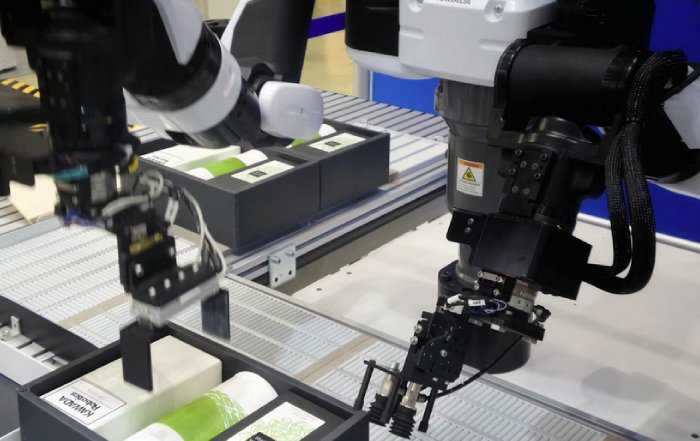
In the physical domain, robotics has moved beyond traditional industrial arms to include collaborative robots, autonomous mobile robots in warehouses, and increasingly capable service robots in logistics, healthcare, and hospitality. These systems are often integrated with AI-based perception and planning, creating flexible automation that can adapt to variable tasks and environments rather than only rigid, preprogrammed routines.
For readers and decision-makers who rely on TradeProfession.com to interpret these developments, the central insight is that the limiting factor is no longer raw technological capability. Instead, constraints arise from organizational readiness, data quality, regulatory clarity, cybersecurity resilience, and the availability of professionals who can design, implement, and supervise complex automated systems responsibly.
Sectoral Transformations: Finance, Industry, Services, and Beyond
Automation's impact remains highly differentiated across sectors, yet common strategic patterns can be observed in how value chains are reconfigured, cost structures evolve, and competitive moats are built or eroded.
In banking and financial services, algorithmic trading, AI-based risk models, and automated compliance monitoring are now foundational rather than experimental. Robo-advisors, embedded finance, and intelligent credit-scoring systems have become mainstream in markets from the United States and United Kingdom to Germany, Singapore, and Australia. Global regulatory bodies such as the Bank for International Settlements continue to analyze how these technologies reshape financial stability, operational resilience, and conduct risk; their perspectives can be explored through the BIS publications on fintech and innovation. Readers following developments in banking and financial innovation on TradeProfession.com will recognize that automation simultaneously enhances efficiency and introduces new challenges related to model risk management, explainability, and algorithmic fairness.
In manufacturing and industrial ecosystems, the Industry 4.0 vision has moved into large-scale execution. AI-driven predictive maintenance, digital twins, and autonomous material handling have become key levers for competitiveness in industrial powerhouses such as Germany, Japan, South Korea, and increasingly in the United States and China. The McKinsey Global Institute has documented how these technologies influence productivity, cost structures, and employment patterns across manufacturing segments; further detail is available from the McKinsey Global Institute's automation research. For companies operating complex global supply chains, automation is now tightly linked with resilience strategies, reshoring decisions, and energy efficiency targets.
Service sectors have also undergone profound transformation. Retail and hospitality increasingly rely on automated inventory systems, dynamic pricing engines, and AI-driven personalization, while customer-facing bots and self-service interfaces handle a growing share of routine interactions. In healthcare, AI supports diagnostics, imaging interpretation, triage, and resource allocation, while clinicians retain responsibility for complex judgment and patient relationships. The World Health Organization has published guidance on responsible AI deployment in health systems, available through the WHO digital health and AI resources.
For founders, executives, and investors who look to TradeProfession.com for integrated insights across business, innovation, and investment, the implication is clear: automation strategy must be industry-specific in its operational design yet cross-sectoral in its strategic framing, since competitive dynamics in one domain increasingly depend on technological shifts in others.
Labor Markets, Jobs, and Skills: Managing Structural Transition
Concerns about job displacement remain central to public and corporate debates, but by 2026 the narrative has become more granular and evidence-based. Automation is not eliminating work wholesale; it is unbundling jobs into tasks, some of which are automated, some augmented, and some newly created. The net impact on employment and wages depends on how effectively economies and organizations manage this reconfiguration.
The International Labour Organization continues to emphasize active labor market policies, reskilling support, and robust social protection as essential tools to navigate these transitions; more information is available via the ILO future of work portal. Academic research from institutions such as the London School of Economics and Harvard University reinforces the pattern that workers whose skills complement AI and automation tend to see rising demand and wage premiums, while those in roles dominated by routine, predictable tasks face stagnation or decline.
Across North America, Europe, and Asia, demand has surged for data scientists, AI engineers, cybersecurity specialists, cloud architects, and product leaders able to integrate technology with market insight. At the same time, there is growing recognition of the value of human-centric roles in coaching, complex negotiations, design, and change management, which are difficult to automate due to their reliance on empathy, contextual understanding, and nuanced judgment. Readers interested in tracking how these shifts are reflected in hiring patterns and career pathways can explore the jobs and employment coverage on TradeProfession.com.
The central challenge is temporal: automation can be adopted faster than workers can be retrained under traditional models of education and corporate learning. Without deliberate, large-scale reskilling programs and pathways for internal mobility, there is a risk that productivity gains will coincide with rising inequality and social tension. For businesses, this is not only a social or political issue; it is a strategic risk that affects brand reputation, regulatory scrutiny, and the availability of talent for future growth.
Education and Lifelong Learning as Strategic Infrastructure
In the automated economy, education has effectively become a form of national and corporate infrastructure. Countries and companies that can rapidly equip their populations with relevant skills gain a structural advantage, while those that rely on traditional, front-loaded education models fall behind. The shift toward lifelong learning is therefore not rhetorical; it is a practical response to accelerating technological cycles.
Leading universities such as Stanford, MIT, and ETH Zurich are expanding modular, stackable credentials, executive education tailored to AI and digital transformation, and industry partnerships that ensure curricula remain aligned with real-world demands. Those interested in how higher education is reconfiguring itself for the digital era can explore initiatives from Stanford Digital Education and the European University Association, accessible through the EUA's work on digital transformation.
For the community that relies on TradeProfession.com for insights at the intersection of education, employment, and executive leadership, a clear pattern is visible: learning is increasingly embedded in the flow of work. Enterprises are deploying internal talent marketplaces, AI-based skill mapping, and personalized learning journeys that match employees to micro-courses, stretch assignments, and mentors. Governments in countries such as Singapore, Denmark, and Finland are supporting this transition with individual learning accounts, tax incentives, and public-private partnerships that link national skills strategies to innovation and competitiveness agendas.
Crucially, the skills required are not limited to programming or data analysis. Professionals must learn how to interpret AI outputs, understand model limitations, manage human-machine collaboration, and apply ethical reasoning in technology-mediated decisions. This blend of digital fluency, critical thinking, and interpersonal capability is becoming the defining marker of employability and leadership potential in the automated economy.
Leadership, Governance, and Trustworthy Automation
As automation capabilities expand, leadership responsibilities deepen. Boards and C-suites are expected to make informed decisions about where automation creates value, where it introduces unacceptable risk, and how to balance cost efficiencies with long-term human capital and societal considerations. Automation is no longer a purely operational topic; it is a core governance issue.
International frameworks provide important reference points. The OECD, the European Commission, and UNESCO have articulated principles for trustworthy AI and responsible digital transformation, emphasizing human oversight, accountability, transparency, and robustness. Executives can explore these frameworks through resources such as the OECD AI principles and the European Commission's AI policy pages. These guidelines are increasingly reflected in regulatory instruments, including the European Union's AI Act and evolving sector-specific rules in finance, healthcare, and public services.
Within organizations, leading executives and founders-many of whom share their experiences through TradeProfession.com's founders and executive coverage-are establishing cross-functional AI and automation councils that bring together technology, risk, legal, HR, and business units. These bodies oversee model governance, data ethics, algorithmic impact assessments, and stakeholder engagement. In regions such as the European Union, Canada, and Australia, where data protection and AI regulation are becoming more stringent, such structures are not optional; they are critical to maintaining license to operate.
Trustworthiness has become a competitive differentiator. Customers, employees, and investors increasingly scrutinize how organizations deploy automation: whether they communicate transparently, whether they provide recourse when automated decisions go wrong, and whether they invest in worker transition rather than treating labor purely as a cost to be minimized. Companies that can demonstrate responsible automation practices are better positioned to attract talent, secure regulatory goodwill, and build resilient brands across global markets.
Global and Geopolitical Dynamics of Automation
Automation is unfolding on an uneven global terrain shaped by national strategies, demographic profiles, industrial structures, and institutional capacity. Advanced economies such as the United States, Germany, Japan, and South Korea possess the capital, technical expertise, and digital infrastructure to lead in AI and robotics adoption, but they also face aging populations and skills gaps that complicate large-scale deployment. Emerging economies in Asia, Africa, and South America see automation as both an opportunity to leapfrog and a threat to labor-intensive development models.
Institutions such as the World Bank and the International Monetary Fund have analyzed how automation interacts with development, inequality, and global value chains. Their perspectives can be explored via the World Bank's future of work pages and the IMF's digitalization and digital economy resources. For export-oriented economies in Southeast Asia, Eastern Europe, and Latin America, the spread of advanced robotics and AI in North American and European manufacturing raises questions about reshoring, nearshoring, and the future of global production networks.
For readers who follow global trends and policy developments on TradeProfession.com, the geopolitical dimension of automation is increasingly central. Competition over AI leadership, semiconductor supply chains, cloud infrastructure, and data governance has become a defining element of strategic rivalry, particularly between the United States and China, but also involving the European Union, the United Kingdom, Japan, and South Korea. At the same time, there is active international collaboration on AI safety, interoperability standards, and digital trade rules, as governments recognize that fragmented regimes could undermine both innovation and security.
Cities and regions are competing to become automation and AI hubs by investing in research clusters, startup ecosystems, and regulatory sandboxes. Toronto, London, Berlin, Paris, Singapore, and Melbourne, among others, have positioned themselves as magnets for AI talent and capital. For multinational enterprises and investors, understanding this evolving geography of innovation is essential to decisions about where to base R&D, where to locate shared service centers, and how to design global operating models.
Automation, Productivity, and the Macro-Economic Outlook
From a macro-economic perspective, automation is widely viewed as a key lever to address the productivity slowdown that has challenged many advanced economies since the early 2000s. Yet the empirical relationship remains complex. While individual firms that effectively deploy automation often enjoy substantial productivity gains, aggregate statistics sometimes lag due to measurement issues, slow diffusion, and organizational frictions.
Research from institutions such as the Brookings Institution and the Peterson Institute for International Economics explores these dynamics in depth, examining how digital technologies interact with capital investment, skills, and market structures; further reading is available from Brookings productivity and technology research and the Peterson Institute's work on the digital economy. Policymakers in the United States, United Kingdom, European Union, and across Asia increasingly see automation as a central component of industrial policy, particularly in sectors such as advanced manufacturing, clean energy, and healthcare.
Automation also affects income distribution and aggregate demand. If the gains from automation accrue disproportionately to capital owners and highly skilled workers, wage shares may fall, potentially dampening consumption and fueling social and political tensions. Debates over tax policy, social insurance, competition law, and collective bargaining are therefore closely linked to the trajectory of automation. Readers interested in how these forces intersect with global markets, monetary policy, and capital flows can explore analyses in the economy section of TradeProfession.com and its coverage of the stock exchange and capital markets.
For investors and corporate strategists, automation is now a central theme in portfolio construction and capital allocation. Investment flows into AI infrastructure, robotics, cybersecurity, and data platforms continue to grow, while sectors slow to adopt automation may face margin pressure and competitive erosion. Understanding how automation reshapes industry economics is therefore critical to long-term value creation.
Crypto, Digital Assets, and the Programmable Financial System
The rise of crypto assets and decentralized finance has introduced a parallel layer of automation into global finance. Smart contracts, decentralized exchanges, and algorithmic governance mechanisms allow financial services to be executed programmatically, often without traditional intermediaries. While the exuberance of early speculative cycles has moderated, the underlying technological trend toward more programmable and automated financial infrastructure remains powerful.
Regulators in the United States, European Union, United Kingdom, Singapore, and Switzerland continue to refine frameworks for digital assets, aiming to balance innovation with financial stability and consumer protection. For readers engaged with crypto and digital assets on TradeProfession.com, the convergence of AI and blockchain is particularly significant. AI-driven trading algorithms, risk models, and on-chain analytics tools are reshaping how market participants assess liquidity, creditworthiness, and systemic risk. Institutions such as the Bank of England and the Monetary Authority of Singapore provide valuable insights into these developments; further information is available via the Bank of England's fintech and digital innovation pages and the MAS fintech and innovation site.
The broader direction of travel is toward a more automated and data-rich financial system, where both traditional and digital assets are managed through intelligent, interoperable platforms. For financial professionals, this implies a growing need for fluency in smart contracts, AI governance, and digital identity frameworks, alongside enduring skills in risk management, regulation, and macro-economic analysis.
Sustainability, Inclusion, and a Human-Centric Automation Strategy
Automation intersects directly with the global imperative to build more sustainable and inclusive economies. Intelligent systems can optimize energy use, reduce waste, and support the integration of renewable energy into power grids, while advanced analytics can improve environmental monitoring and reporting. Organizations such as the International Energy Agency have documented how digital technologies and AI can accelerate decarbonization; further insights are available via the IEA's work on digitalization and energy.
At the same time, the social dimension of automation cannot be ignored. If automation is pursued purely as a cost-cutting exercise, without investment in worker transition, community resilience, and equitable access to new opportunities, it risks deepening social divides and undermining long-term stability. Companies that integrate sustainability and inclusion into their automation strategies-by designing fair workforce transitions, supporting local ecosystems, and engaging transparently with stakeholders-are better positioned to maintain their social license to operate. Readers interested in how sustainable practices intersect with technology, innovation, and employment can explore the sustainable business coverage on TradeProfession.com.
A human-centric approach to automation does not reject technology; it insists that technology serves clearly articulated human and societal goals. This perspective recognizes that the most valuable organizations in the coming decade will be those that combine technical excellence with ethical leadership, long-term thinking, and a genuine commitment to shared prosperity.
Strategic Priorities for Leaders and Professionals in 2026
In 2026, the automated economy is a lived reality rather than a theoretical construct. For the global community that turns to TradeProfession.com-from executives in New York and London to founders in Berlin and Singapore, investors in Toronto and Sydney, and professionals across Europe, Asia, Africa, and the Americas-several strategic priorities stand out.
Organizations must continue investing in robust AI and automation capabilities while building governance frameworks that ensure responsible deployment. Workforce development must be treated as a core strategic asset, with continuous learning, internal mobility, and reskilling embedded into business planning rather than treated as discretionary initiatives. Engagement with regulators, industry bodies, and communities should be proactive, aiming to shape policies and norms that balance innovation with protection and inclusion.
At the individual level, professionals across banking, technology, manufacturing, education, and services need to cultivate adaptability, digital fluency, and the uniquely human skills that complement automation-complex problem-solving, creativity, ethical reasoning, and emotional intelligence. Those who embrace lifelong learning and are prepared to collaborate with intelligent systems rather than compete against them will be best positioned to thrive in the years ahead.
The automated economy presents significant risks, but it also offers an unprecedented opportunity to reimagine work and productivity on a global scale. By aligning technological innovation with ethical governance, inclusive workforce strategies, and sustainable business models, leaders can help ensure that automation becomes a catalyst for shared progress rather than a driver of fragmentation. In this endeavor, platforms such as TradeProfession.com, with its integrated focus on business and technology, global economic trends, and cross-sector innovation, will remain essential in equipping decision-makers with the insights needed to navigate an increasingly automated world.
