
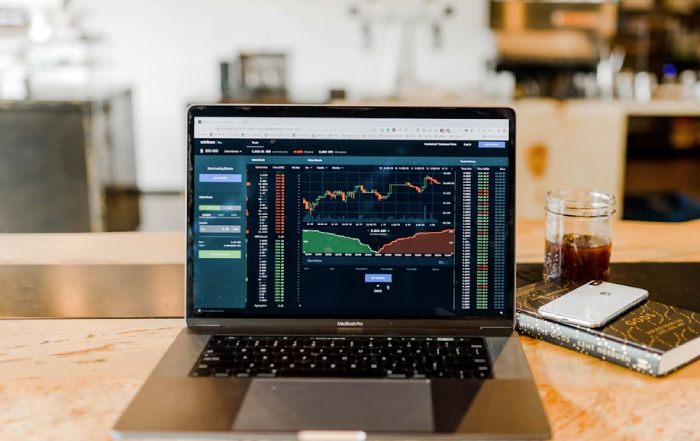
From Amateur to Professional: How Trading Became a True Global Career
Today trading is no longer perceived as a fringe activity reserved for a small circle of specialists or an adrenaline-fueled hobby for retail speculators; it has matured into a recognized global profession that demands rigorous preparation, technological fluency, and a deep sense of responsibility. Across asset classes-equities, foreign exchange, fixed income, commodities, derivatives, and digital assets-professional traders now operate at the intersection of finance, data science, behavioral psychology, and regulatory governance, and the path from amateur to professional has become both more accessible and more demanding.
For the audience of TradeProfession.com, this evolution is not an abstract trend but a lived reality: readers across the United States, Europe, Asia-Pacific, Africa, and the Americas are increasingly treating trading as a structured business and a long-term career, rather than a series of speculative bets. The shift is driven by the democratization of institutional-grade tools, the rise of artificial intelligence, the integration of sustainable finance, and the global standardization of best practices in risk management and governance.
Professionalism in trading, as understood in 2026, is defined by four pillars aligned with the E-E-A-T framework-Experience, Expertise, Authoritativeness, and Trustworthiness. It is no longer enough to be profitable in the short term; traders are expected to demonstrate repeatable processes, transparent reporting, ethical conduct, and the capacity to adapt to rapid technological and macroeconomic change. In this environment, TradeProfession.com has positioned itself as a practical guide and strategic partner, offering insights across domains such as business, technology, investment, and global markets, helping both aspiring and established professionals navigate the new landscape.
Mindset Shift: From Speculation to Structured Business
The most profound transformation in the journey from amateur to professional trader is psychological. Many individuals still enter markets inspired by stories of overnight success, viral social media posts, and the ease of opening accounts on mobile platforms. Yet, by 2026 it is widely understood-reinforced by research from organizations like the Bank for International Settlements and OECD-that sustainable trading performance is built on process, not luck. Those who succeed over years, not months, approach trading as a business governed by rules, capital allocation policies, and measurable performance metrics.
A professional mindset reframes the trader's role from "predicting markets" to "managing risk under uncertainty." Losses are treated as operating expenses and data points, not as personal failures, and the objective is to generate risk-adjusted returns over long horizons rather than chase singular windfalls. This mindset requires emotional neutrality during both drawdowns and winning streaks, and it is reinforced by structured routines, documented trading plans, and continuous post-trade review.
On TradeProfession.com, this transformation is reflected in content that emphasizes trading as a career path and business operation, rather than entertainment. Readers are encouraged to build written playbooks, define their edge clearly, and align their trading approach with broader financial goals, whether that involves generating primary income, diversifying wealth, or building a track record for future fund management. Resources on economy and employment further contextualize trading within the broader labor and macroeconomic environment, helping professionals think in terms of long-term viability rather than short-term excitement.
Building Deep Market Knowledge and Strategic Specialization
Professional traders in 2026 are distinguished by the depth and structure of their knowledge. While the internet offers an overwhelming volume of information, from retail forums to advanced research portals, the professional filters aggressively for quality. They build a curriculum around macroeconomics, market microstructure, and behavioral finance, using trusted resources such as the Federal Reserve and European Central Bank for policy insight, and platforms like Investopedia and CME Group to understand derivatives, margining, and contract specifications.
Specialization has become a defining feature of professional practice. Rather than attempting to trade every asset or time frame, professionals often begin by mastering a narrow domain-such as US index futures, G10 FX pairs, European large-cap equities, or major cryptocurrency pairs-before gradually diversifying. They select a core methodology, whether trend-following, mean reversion, statistical arbitrage, or options volatility strategies, and subject it to rigorous testing using historical data, forward performance tracking, and stress-testing under different volatility regimes.
Within this process, understanding market structure is essential. Professionals study order book dynamics, the role of liquidity providers, the impact of high-frequency trading, and how institutional order flow shapes intraday and multi-day price patterns. Platforms like Bloomberg, Refinitiv, and TradingView provide granular depth-of-market data and analytics, while academic resources such as the MIT Sloan School of Management help traders deepen their grasp of microstructure theory and quantitative modeling. Readers of TradeProfession.com are encouraged to integrate these insights with practical market observation, building a bridge between theory and execution that supports a durable edge.
Risk Management as Core Professional Discipline
By 2026, the consensus across global trading desks is unequivocal: risk management is the foundation of professionalism. While amateurs fixate on potential gains, professionals design their entire process around capital preservation and controlled exposure. They define, in advance, how much of their equity they will risk per trade, per day, and per strategy, and they enforce these limits with the same rigor that a corporate CFO applies to budget controls.
Quantitative risk metrics-such as maximum drawdown, Sharpe and Sortino ratios, Value-at-Risk, and expected shortfall-are no longer limited to institutional reports; they are part of the vocabulary of serious independent traders worldwide. Many now use specialized software or custom-built Python or R scripts to track these metrics across strategies and time frames, adjusting position sizing and leverage dynamically as volatility regimes change. Learning resources from organizations such as the CFA Institute and Financial Times help traders interpret and apply these measures within real portfolios.
The psychological dimension of risk management is equally important. Professional traders develop clear rules for when to step back-daily loss limits, weekly drawdown thresholds, and criteria for pausing or reducing risk after a series of losses or during periods of heightened emotional stress. Performance coaches and trading psychologists, drawing on research from behavioral economics and neuroscience, now work with traders in New York, London, Singapore, Sydney, and beyond to instill habits that reduce impulsive behavior. On TradeProfession.com, the emphasis on disciplined risk practices is woven throughout coverage of stock exchange activity, investment strategy, and personal finance, underscoring that professional risk management is central to both trading longevity and overall financial health.
Financial Structure, Capital Planning, and Tax Awareness
The professionalization of trading has also changed how traders structure their finances. In 2026, serious practitioners in regions such as the United States, United Kingdom, Germany, Singapore, and Australia increasingly operate via legal entities-limited companies, LLCs, or partnerships-rather than informal personal accounts. This approach allows for clearer separation between personal and trading capital, more efficient tax planning, and more formal accounting and reporting.
Professionals maintain detailed profit and loss statements, balance sheets, and cash flow projections, treating their trading capital as business working capital. They maintain reserves to withstand drawdowns and avoid overleveraging, and they plan for contingencies such as prolonged low-volatility environments or regulatory changes that may affect leverage, margin, or product availability. Guidance from regulators like the U.S. Securities and Exchange Commission (SEC), Financial Conduct Authority (FCA), and Monetary Authority of Singapore (MAS) is closely monitored, as rule changes can directly impact strategy feasibility and capital requirements.
Beyond active trading, professionals often integrate longer-term investment components into their financial plans, including diversified portfolios of equities, bonds, real estate investment trusts, and, where appropriate, regulated digital asset exposure. Platforms like Morningstar and MSCI provide analytics on portfolio diversification, factor exposures, and ESG scores. On TradeProfession.com, readers find complementary perspectives that connect active trading with broader wealth-building strategies, ensuring that their trading activities support, rather than destabilize, their overall financial trajectory.
Technology, AI, and the Quantitative Edge
Technology has always been a differentiator in markets, but by 2026, it has become the central nervous system of professional trading. Cloud-based infrastructure, low-latency connectivity, and API-driven execution are now standard components of serious trading operations, whether run from New York or Nairobi. Professional traders combine execution platforms such as Interactive Brokers, MetaTrader 5, cTrader, or multi-venue smart order routers with analytics environments built on Python, R, and tools like Koyfin or NVIDIA-accelerated data pipelines.
Artificial intelligence, in particular, has moved from buzzword to practical utility. Machine learning models are widely used to identify non-linear patterns, classify market regimes, and forecast volatility clusters. Natural language processing systems ingest central bank speeches, corporate earnings transcripts, and macroeconomic reports, extracting sentiment and key themes that can influence asset prices. Cloud providers such as Google Cloud, Amazon Web Services, and Microsoft Azure now offer specialized financial AI toolkits, making advanced modeling accessible to smaller firms and independent professionals.
Yet the most sophisticated professionals treat AI as decision support, not as an autonomous pilot. They validate models through out-of-sample testing, cross-validation, and live paper trading before deployment, and they remain acutely aware of the risks of overfitting, data leakage, and regime change. On TradeProfession.com, the artificial intelligence hub and technology section highlight practical ways traders can integrate AI and data science into their workflows without compromising robustness or oversight, reinforcing that technological edge must be grounded in sound risk and governance frameworks.
Crypto, Tokenization, and the Convergence of Traditional and Digital Markets
Digital assets have moved decisively into the professional domain. By 2026, regulated exchanges and custodians in jurisdictions such as the US, EU, UK, Singapore, and Japan have brought institutional standards to crypto trading, and many professional traders now operate hybrid portfolios that combine traditional instruments with bitcoin, ether, tokenized treasuries, and other digital asset exposures.
Decentralized finance (DeFi) has also matured, with institutional gateways, audited smart contracts, and clearer regulatory guidance enabling professional participation in on-chain liquidity provision, derivatives, and fixed-income-like yield products. Tokenization of real-world assets-including real estate, private credit, and even certain forms of equity-is reshaping how professionals think about liquidity, collateral, and market access.
For traders, this convergence means that skills developed in FX, commodities, or equity index futures can increasingly be applied to digital markets, but with added layers of technology and protocol risk. Platforms like CoinDesk, Chainalysis, and major exchange research portals provide data and analytics that complement traditional sources. The crypto section of TradeProfession offers frameworks for integrating digital assets into professional trading businesses, emphasizing regulatory awareness, counterparty risk management, and the importance of on-chain data in strategy design.
Professional Psychology, Performance, and Well-Being
The psychological demands of professional trading have intensified in a world of 24-hour markets and constant data streams. Professionals must manage not only market risk but also cognitive load, stress, and the risk of burnout. As a result, performance psychology has become embedded in the culture of many trading firms and serious independent operations.
Traders now routinely employ structured routines-pre-market preparation, intraday check-ins, and end-of-day reviews-to maintain clarity and discipline. Techniques from sports psychology, such as visualization, breathing exercises, and deliberate practice, are applied to enhance focus and resilience. Organizations and practitioners specializing in trading psychology, as well as broader performance platforms like Mindvalley, have developed curricula tailored specifically to the pressures of financial markets.
Emotional intelligence, including self-awareness and impulse control, is recognized as a core professional competency. Professionals learn to separate identity from outcomes, to avoid revenge trading after losses, and to resist the euphoria that follows outsized wins. On TradeProfession.com, the interconnection between personal development, employment trends, and trading performance is frequently highlighted, underscoring that sustainable success in markets is inseparable from overall mental and physical well-being.
Education, Certification, and Professional Credibility
As trading has become more institutionalized, formal education and certification have taken on greater importance. Universities in the United States, United Kingdom, Germany, Canada, Singapore, and Australia now offer degree programs in financial engineering, quantitative finance, and algorithmic trading, while professional bodies such as the CFA Institute and CMT Association provide specialized tracks for market practitioners.
These credentials serve multiple purposes: they deepen technical competence, signal commitment to ethical standards, and enhance credibility with potential employers, counterparties, and investors. In regions such as North America, Europe, and parts of Asia, regulatory registrations through bodies like FINRA, ASIC, and ESMA have become prerequisites for certain roles, particularly where client capital is involved.
Continuous learning remains non-negotiable. Professionals follow research from the International Monetary Fund, World Bank, and think tanks such as the Brookings Institution to stay ahead of macroeconomic and policy developments, while also consuming specialized content on innovation and market structure from sources like the World Economic Forum. The education section of TradeProfession curates pathways that blend academic rigor with real-world application, helping traders at different career stages map their development from independent operator to institutional-grade professional.
Networking, Personal Brand, and Global Opportunity
In 2026, professional trading is as much about relationships and reputation as it is about charts and order books. Traders build global networks, connecting with peers, quants, technologists, and executives. Conferences and virtual summits-such as major quantitative finance gatherings, fintech expos, and regional trading forums-have become key venues for exchanging ideas, forming partnerships, and discovering new technologies.
A credible digital presence is now a strategic asset. Professionals share research, market commentary, and risk perspectives on platforms like LinkedIn, institutional blogs, and specialized media, building a track record of thought leadership that can attract both talent and capital. Transparency, integrity, and respect for compliance boundaries are crucial; misrepresentation or irresponsible promotion can quickly erode hard-won trust in a tightly connected global community.
For readers of TradeProfession.com, networking and brand-building are increasingly linked to entrepreneurship. Many traders evolve into founders of proprietary trading firms, asset management boutiques, or fintech ventures. The site's founders section and executive insights showcase how trading expertise can translate into broader leadership roles, reinforcing the idea that professional traders are not only market participants but also business builders within the financial ecosystem.
Sustainability, Ethics, and the Future of Professional Trading
One of the most notable shifts by 2026 is the integration of sustainability and ethics into professional trading frameworks. ESG considerations, once niche, now influence capital flows globally, and traders who ignore environmental, social, and governance risks increasingly find themselves misaligned with institutional capital and regulatory expectations.
Professional traders analyze not only financial metrics but also the ESG profiles of securities and counterparties, using tools and ratings from organizations like MSCI, Sustainalytics, and BlackRock's research platforms. In commodities and energy markets, carbon pricing mechanisms and renewable energy contracts are reshaping trading opportunities, while in equities and credit, governance quality and social impact are factored into risk assessment.
Ethical trading also encompasses market conduct: avoiding manipulation, respecting information barriers, and supporting fair and transparent price discovery. Regulators in North America, Europe, and Asia have intensified enforcement around market abuse, insider trading, and misleading communications, reinforcing that professionalism is inseparable from integrity. The sustainable finance hub on TradeProfession and external resources like the World Economic Forum help traders integrate sustainability into strategy design, risk analysis, and stakeholder communication.
Trading as a Long-Term Career in a Global Economy
By 2026, trading has fully emerged as a structured, long-term career path comparable to other professions in finance and technology. Career trajectories now often begin with roles in research, execution, or quantitative analysis, progressing to portfolio management, desk leadership, and ultimately partnership or C-suite positions in hedge funds, proprietary firms, and asset managers. In parallel, independent professionals build their own firms, manage external capital, or consult on strategy, risk, and technology.
This professionalization reflects a deeper truth: markets have become too complex, interconnected, and technologically advanced for casual, undisciplined participation to be viable at scale. Success now belongs to those who combine domain expertise, data literacy, psychological resilience, ethical grounding, and a global outlook. For the audience of TradeProfession.com, this reality is both a challenge and an opportunity-a call to invest in skills, infrastructure, and networks that can support decades of evolution in a rapidly changing financial system.
Ultimately, the journey from amateur to professional trader is not defined by a single milestone but by a continuous commitment to improvement. It requires accepting that uncertainty is permanent, that risk can be managed but never eliminated, and that the true edge lies in preparation, adaptability, and integrity. In this sense, trading in 2026 is more than a way to generate returns; it is a demanding but rewarding craft that sits at the heart of the global economy.
For those ready to approach trading with the seriousness it now requires, TradeProfession.com serves as a dedicated companion-connecting insights across news, innovation, banking and markets, and global macro trends-to support a professional journey that is not about gambling on price movements, but about building a resilient, ethical, and forward-looking career in the world's financial markets.
