
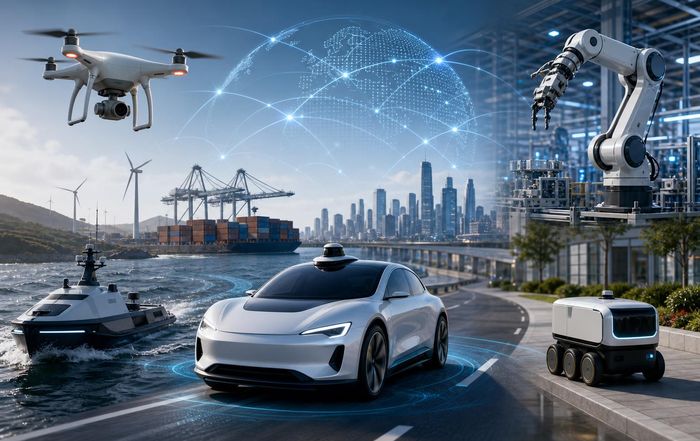
The Business Potential of Autonomous Systems
Introduction: Autonomous Systems Move From Vision to Infrastructure
Autonomous systems have shifted from experimental curiosities to foundational infrastructure across industries, geographies, and business models. From self-optimizing supply chains and algorithmic trading engines to autonomous vehicles, warehouses, and industrial plants, these systems are no longer isolated pilots but integrated components of enterprise strategy, reshaping how organizations create value, manage risk, and compete in a global marketplace. For decision-makers who often come here daily, the rise of autonomy intersects directly with priorities in artificial intelligence, banking, business transformation, crypto, the wider economy, education, employment, executive leadership, founders' journeys, global expansion, innovation, investment, jobs, marketing, sustainability, technology, and capital markets.
Autonomous systems, broadly defined, are technologies capable of perceiving their environment, making decisions, and acting with minimal or no human intervention while continually learning from data and feedback. They sit at the convergence of advanced sensing, machine learning, robotics, cloud computing, and high-speed connectivity, and they increasingly form the operational backbone of modern enterprises. As global economies in the United States, Europe, Asia, and beyond confront productivity challenges, demographic shifts, and mounting competitive pressures, autonomous capabilities are emerging as a decisive lever for achieving scalable efficiency, resilience, and innovation.
For business leaders, investors, and policymakers, understanding the business potential of autonomous systems is no longer optional; it is a prerequisite for informed strategic planning. Through the lens of TradeProfession this hopefully clear, written article examines how autonomy is transforming core business functions, reshaping industry structures, and redefining the skills and governance frameworks needed to harness its power responsibly.
Defining Autonomous Systems in a Business Context
In a business context, autonomous systems extend well beyond self-driving cars. They encompass software agents, physical robots, and hybrid cyber-physical systems that can sense, decide, and act in dynamic environments. Modern autonomous systems typically integrate advanced artificial intelligence models, sensor fusion, real-time data processing, and continuous learning capabilities, often deployed through cloud-native architectures and edge computing.
A key distinction lies between automation and autonomy. Traditional automation follows pre-programmed rules and workflows; it is brittle when conditions change. Autonomous systems, in contrast, adapt to uncertainty, learn from data, and optimize toward objectives such as cost, safety, throughput, or customer satisfaction. For example, an autonomous warehouse orchestration platform can dynamically reroute robots and tasks in response to unexpected demand spikes or equipment failures, while an autonomous trading engine can adjust strategies in response to shifting market regimes and volatility patterns.
Global standards and safety frameworks are evolving to keep pace. Organizations such as the International Organization for Standardization (ISO) and the Institute of Electrical and Electronics Engineers (IEEE) are developing guidelines for functional safety, explainability, and human-machine interaction in autonomous environments. Business leaders can explore these emerging requirements through resources such as ISO's standards catalogue and IEEE's autonomous systems initiatives. As autonomy becomes embedded in mission-critical operations, adherence to such standards is increasingly a competitive differentiator and a prerequisite for trust.
For the professional trade community visiting here today, this conceptual foundation connects directly to the platform's focus on artificial intelligence, technology, and innovation, where autonomy is not just a technical feature but a strategic capability.
Economic Impact and Competitive Advantage
Autonomous systems are emerging as a macroeconomic force, influencing productivity, labor markets, and competitiveness across regions from North America and Europe to Asia-Pacific and beyond. Analyses from institutions such as the McKinsey Global Institute and the World Economic Forum indicate that AI-driven autonomy could add trillions of dollars in economic value over the next decade by unlocking new efficiencies, enabling new products and services, and accelerating the diffusion of innovation. Executives can review broader macro trends through resources that analyze global productivity and AI and future-of-work scenarios.
At the firm level, the business potential of autonomous systems manifests in three primary dimensions. First, they deliver step-change productivity improvements by automating complex, variable tasks in logistics, manufacturing, customer service, and knowledge work, often yielding double-digit reductions in operating costs and cycle times. Second, they enable new forms of resilience and responsiveness by allowing organizations to sense and respond to disruptions in real time, whether in supply chains, financial markets, or industrial operations. Third, they create differentiated customer experiences by enabling hyper-personalized services, rapid fulfillment, and always-on support.
Global competitiveness is increasingly shaped by how effectively companies and countries deploy autonomous systems across sectors. Nations such as the United States, China, Germany, South Korea, and Singapore are investing heavily in AI, robotics, and digital infrastructure, recognizing that leadership in autonomy will influence export competitiveness, industrial policy, and national security. Business leaders can contextualize these developments through resources such as the OECD's work on AI and productivity and the IMF's analysis of technology and global growth. For readers of TradeProfession.com, this macro lens complements the platform's coverage of the economy, global markets, and business strategy.
Sector-by-Sector Transformation
Manufacturing, Logistics, and the Industrial Core
Manufacturing and logistics have become proving grounds for autonomous systems, particularly in the United States, Germany, China, and other industrial powerhouses. Autonomous mobile robots navigate warehouses, robotic arms perform complex assembly tasks, and AI-driven systems orchestrate production schedules and inventory flows in real time. Companies such as Siemens, ABB, Bosch, and Fanuc have integrated advanced autonomy into industrial automation platforms, while technology leaders including Amazon and Alibaba have transformed fulfillment operations through fleets of autonomous robots and intelligent routing engines.
Industry frameworks like Industry 4.0 and the more recent Industry 5.0 emphasize the convergence of cyber-physical systems, AI, and human-centric design. Executives can explore these concepts through resources such as the European Commission's perspective on Industry 5.0 and human-centric manufacturing. Simultaneously, logistics providers and port operators in regions from Rotterdam and Hamburg to Singapore and Los Angeles are deploying autonomous yard vehicles, drones, and scheduling systems to alleviate bottlenecks and labor shortages.
For business readers, the strategic implication is that operational excellence is increasingly defined by the ability to integrate autonomous systems across the value chain, from demand forecasting and procurement to production, warehousing, and last-mile delivery. This evolution connects directly with the themes of investment, jobs, and employment that are core to TradeProfession.com.
Financial Services, Banking, and Crypto
In banking and financial services, autonomy is reshaping everything from risk management to customer engagement. Algorithmic trading systems now incorporate reinforcement learning and advanced market simulation to operate with a higher degree of autonomy, adjusting strategies within regulatory and risk constraints. Banks in the United States, United Kingdom, Switzerland, and Singapore are deploying autonomous credit decision engines, fraud detection systems, and portfolio optimization tools that can process vast volumes of data in real time.
Organizations such as JPMorgan Chase, Goldman Sachs, UBS, and HSBC are investing heavily in AI and autonomous analytics to maintain competitive advantage. Central banks and regulators, including the U.S. Federal Reserve and the European Central Bank, are examining how autonomous trading and decentralized finance intersect with financial stability. Executives and analysts can follow these developments through resources such as the Bank for International Settlements' research on technology and financial stability and the Financial Stability Board's work on AI in finance.
In the crypto and digital asset ecosystem, autonomous systems underpin decentralized finance protocols, algorithmic market makers, and automated governance mechanisms. Smart contract platforms and on-chain autonomous agents execute transactions, manage liquidity, and enforce protocol rules without centralized intermediaries. Business leaders exploring this frontier can understand the crypto and DeFi landscape in the context of broader financial innovation, while also monitoring regulatory perspectives through sources such as the U.S. Securities and Exchange Commission and the UK Financial Conduct Authority. This convergence of autonomy, crypto, and traditional banking aligns closely with TradeProfession.com's focus on banking and stock exchanges.
Mobility, Cities, and Infrastructure
Autonomous mobility has progressed significantly by 2026, with commercial deployments of robotaxis, autonomous shuttles, and driver-assistance systems in cities across the United States, China, Europe, and parts of the Middle East and Asia-Pacific. Companies such as Waymo, Cruise, Baidu Apollo, and Mobileye have expanded operations, while automotive manufacturers including Tesla, Mercedes-Benz, BMW, Hyundai, and Toyota integrate higher levels of autonomy into consumer vehicles and commercial fleets.
City planners and regulators are adapting infrastructure, traffic management, and safety frameworks to accommodate autonomous vehicles and drones. Organizations such as the U.S. Department of Transportation and the European Union Agency for Railways provide guidance and policy frameworks that can be explored through resources like U.S. DOT's automated vehicles hub and the European Commission's work on connected and automated mobility. For businesses, the opportunity extends beyond vehicle manufacturers to include mobility-as-a-service platforms, insurance providers, real estate developers, and logistics operators who can leverage autonomous mobility to reduce costs, improve safety, and reimagine urban space.
This evolution intersects with TradeProfession.com's coverage of global markets, sustainable business models, and technology-driven innovation, as autonomous mobility influences energy use, emissions, and urban planning in markets from North America and Europe to Asia and Africa.
Healthcare, Life Sciences, and Precision Operations
In healthcare and life sciences, autonomous systems are emerging as critical tools for diagnostics, surgery, logistics, and research. Robotic surgical platforms, enhanced by AI-driven imaging and decision support, enable more precise and minimally invasive procedures, while autonomous pharmacy robots and logistics systems optimize the flow of medications and supplies within hospitals. AI-based diagnostic systems support clinicians in radiology, pathology, and cardiology by autonomously flagging anomalies and prioritizing cases.
Organizations such as Intuitive Surgical, Siemens Healthineers, GE HealthCare, and Philips are integrating autonomous capabilities into medical devices and imaging platforms. Global health institutions and regulators, including the World Health Organization and the U.S. Food and Drug Administration, are developing frameworks for validating and monitoring AI-enabled autonomous medical systems. Healthcare leaders can explore these developments through resources such as the WHO's work on digital health and the FDA's guidance on AI/ML-based medical devices.
For business audiences, the key insight is that autonomy in healthcare is not only a technological advance but also a driver of new business models, partnerships, and investment opportunities, particularly in aging societies such as Japan, Germany, Italy, and South Korea where labor shortages and healthcare demand are acute.
Leadership, Governance, and Organizational Capability
As autonomous systems become embedded in core operations, leadership and governance structures must evolve to manage both the opportunities and the risks. Boards and executive teams are increasingly establishing dedicated AI and autonomy oversight committees, integrating technical expertise into governance, and aligning autonomy initiatives with enterprise risk management frameworks. For readers of TradeProfession.com, this aligns directly with the platform's focus on executive leadership and founders, where the strategic stewardship of technology is central to long-term value creation.
Leading organizations are adopting principles-based governance frameworks that emphasize transparency, accountability, and human oversight. Resources such as the OECD AI Principles, the EU AI Act, and the NIST AI Risk Management Framework provide reference points for responsible autonomy. Executives can explore structured approaches to governance through the U.S. National Institute of Standards and Technology's work on AI risk management and the European Commission's guidance on trustworthy AI.
Organizationally, the rise of autonomy demands new capabilities in data engineering, machine learning operations, human-machine interface design, cybersecurity, and change management. Companies in the United States, United Kingdom, Germany, Canada, Singapore, and Australia are building cross-functional AI and robotics centers of excellence, integrating domain experts with data scientists and engineers. This capability-building imperative ties directly to the themes of education, employment, and personal development that are central to TradeProfession.com's audience.
Workforce, Skills, and the Future of Employment
The deployment of autonomous systems inevitably reshapes labor markets, job content, and required skills. Rather than a simple narrative of replacement, autonomy often reconfigures roles, automating routine and hazardous tasks while elevating the importance of higher-order cognitive, social, and creative capabilities. In warehouses, factories, trading floors, and hospitals, human workers increasingly collaborate with autonomous agents and robots, supervising, configuring, and augmenting their performance.
Global labor organizations and research institutions, such as the International Labour Organization and the World Bank, are analyzing how autonomy and AI affect employment patterns in both advanced and emerging economies. Business leaders can explore these perspectives through resources on the future of work and technology and digital transformation in labor markets. Countries such as Sweden, Norway, Denmark, and Finland are experimenting with social and educational policies to smooth transitions, while nations like Singapore and South Korea are investing heavily in lifelong learning and reskilling.
For the TradeProfession.com community, the workforce dimension of autonomy intersects with jobs, employment, and education, highlighting the need for individuals and organizations to invest in continuous learning, digital fluency, and cross-disciplinary collaboration. Employers who proactively reskill and redeploy workers in tandem with autonomy deployments are more likely to capture long-term value and maintain social legitimacy.
Sustainability, Resilience, and Global Responsibility
Autonomous systems are also powerful tools for advancing sustainability and resilience objectives, particularly as businesses and governments confront climate change, resource constraints, and geopolitical volatility. Autonomous energy management systems optimize consumption in buildings, factories, and data centers, reducing emissions and operating costs. In agriculture, autonomous tractors, drones, and sensor networks enable precision farming, reducing water and fertilizer use while improving yields in regions from North America and Europe to Africa, Asia, and South America.
Organizations such as the International Energy Agency and the United Nations Environment Programme highlight the role of digital and autonomous technologies in achieving climate and sustainability targets. Business leaders can learn more about sustainable business practices and the intersection of technology and climate through these institutions. At the same time, companies must manage the environmental footprint of autonomous systems themselves, including energy-intensive AI training, hardware production, and e-waste, ensuring that autonomy contributes to net-positive outcomes.
For TradeProfession.com, sustainability is not a peripheral theme; it is integral to how readers evaluate investments, innovations, and long-term strategy. The platform's focus on sustainable business, global markets, and investment provides a context in which autonomy is assessed not only for profitability but also for its contribution to resilience and responsible growth.
Investment, Innovation Ecosystems, and Regional Dynamics
The investment landscape around autonomous systems has matured significantly by 2026. Venture capital, private equity, corporate venture arms, and sovereign wealth funds across the United States, Europe, Asia, and the Middle East are allocating substantial capital to startups and scale-ups in autonomy, robotics, AI infrastructure, and enabling technologies such as sensors, chips, and connectivity. Innovation hubs in Silicon Valley, Boston, Toronto, London, Berlin, Munich, Shenzhen, Beijing, Seoul, Tokyo, Singapore, and Sydney are particularly active, but emerging ecosystems in regions such as the Netherlands, Sweden, Norway, Brazil, South Africa, and the United Arab Emirates are gaining momentum.
Investors and founders can contextualize these trends through resources such as PitchBook, CB Insights, and the Global Entrepreneurship Monitor, which analyze funding flows, sector dynamics, and regional strengths. Public markets are also reacting, with listed companies in technology, industrials, healthcare, and financial services increasingly valued on their ability to deploy and monetize autonomous capabilities. Readers of TradeProfession.com can connect these developments to the platform's coverage of investment, stock exchanges, and news, using autonomy as a lens for evaluating corporate strategy and valuation.
Regional policy frameworks play a critical role in shaping where and how autonomy flourishes. The United States emphasizes innovation and market-driven deployment, the European Union prioritizes human-centric regulation and data protection, China integrates autonomy into industrial and geopolitical strategy, and countries such as Singapore, Japan, and South Korea position themselves as testbeds for safe and scalable deployment. Business leaders can track policy developments through resources such as the European Commission's digital strategy portal and national AI strategies published by governments worldwide.
Strategic Roadmap for Business Leaders in 2026
For executives, founders, and professionals who rely on TradeProfession.com for insight, the business potential of autonomous systems is best realized through deliberate strategy rather than opportunistic experimentation. Organizations that succeed in 2026 and beyond typically adopt a structured roadmap. They begin with a clear articulation of where autonomy can create distinctive value in their specific context, whether through cost leadership, differentiated customer experience, risk reduction, or new revenue streams. They then invest in the data, technology, and talent foundations required to deploy autonomy at scale, integrating AI, robotics, and digital infrastructure into a coherent architecture.
Governance, risk management, and ethics are embedded from the outset, avoiding fragmented pilots that later require costly retrofits. Partnerships with technology providers, universities, startups, and industry consortia enable access to specialized expertise and accelerate learning curves. Crucially, organizations treat workforce development and change management as central pillars, aligning autonomy initiatives with reskilling, communication, and cultural evolution.
For business professionals across the United States, United Kingdom, Germany, Canada, Australia, France, Italy, Spain, the Netherlands, Switzerland, China, Sweden, Norway, Singapore, Denmark, South Korea, Japan, Thailand, Finland, South Africa, Brazil, Malaysia, New Zealand, and beyond, TradeProfession.com serves as a always up-to-date premium platform for tracking how these strategic choices play out in real time across sectors and regions. By connecting top insights from business strategy, technology, artificial intelligence, global markets, and sustainability, the platform enables its audience to navigate the complex but rewarding terrain of autonomous systems.
Conclusion: Autonomy as a Defining Business Capability
In 2026, autonomous systems stand at the intersection of technology, economics, and strategy, reshaping industries from manufacturing and logistics to finance, healthcare, mobility, and beyond. Their business potential lies not merely in cost savings but in the creation of new capabilities, resilience, and value propositions that were previously unattainable. Organizations that approach autonomy with a focus on experience, expertise, authoritativeness, and trustworthiness-supported by rigorous governance, robust technical foundations, and thoughtful workforce strategies-are best positioned to capture its benefits.
For the professional and entrepreneurial audience coming here for insight and analysis, the rise of autonomous systems is both an opportunity and a responsibility. It demands informed leadership, disciplined execution, and a commitment to aligning technological progress with broader economic, social, and environmental goals. As autonomy continues to evolve, the businesses that thrive will be those that treat it not as a passing trend but as a core competency, integrated deeply into how they operate, innovate, and compete on a global stage.
