
Marketing Analytics and the Quest for Customer Insight
The New Competitive Frontier for Customer Understanding
Marketing analytics has evolved from a supportive function into a central strategic discipline that determines which brands grow, which plateau and which quietly disappear from the market. In an environment where digital interactions span continents and time zones, and where customers expect personalised, context-aware engagement in real time, the ability to extract meaningful insight from data has become the defining capability of modern organisations. For the global readership of TradeProfession.com, whose interests range from artificial intelligence and banking to employment, innovation and sustainable business, marketing analytics is no longer simply about optimising campaigns; it now sits at the intersection of strategy, technology, regulation and organisational design.
Executives and founders across the United States, the United Kingdom, Germany, Canada, Australia and other major markets are discovering that the quest for customer insight is not just a technical challenge but a leadership imperative. As they assess their competitive position, they increasingly turn to integrated views of their business, connecting disciplines such as business strategy, marketing transformation, technology adoption and global expansion into a single, analytics-led narrative. This shift reflects a broader recognition that data-driven understanding of customers is now the primary route to sustainable growth, resilience and trust.
From Reporting to Intelligence: The Maturation of Marketing Analytics
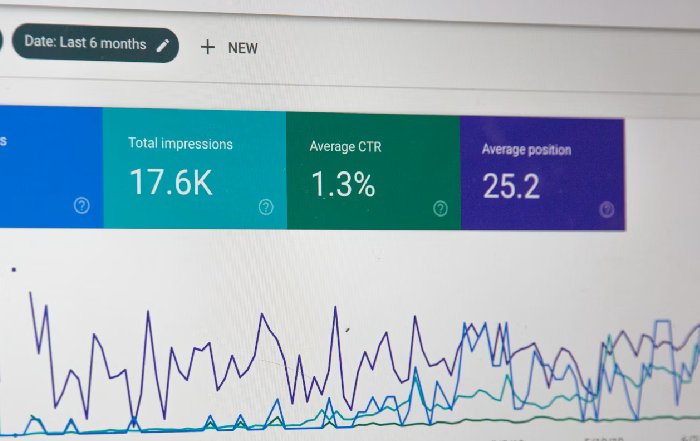
Marketing analytics has travelled a long path from basic web traffic reports to AI-augmented decision intelligence. In its early phase, marketers relied heavily on descriptive metrics such as impressions, click-through rates and last-touch attribution, focusing on what had already happened rather than what was likely to occur. Over the past decade, propelled by advances in cloud computing, open-source data tools and the rapid rise of Google, Meta, Amazon, Microsoft and other technology giants, analytics has expanded into predictive and prescriptive domains, enabling organisations to anticipate customer behaviour, optimise media investments and personalise content at scale.
By 2026, leading enterprises in sectors as diverse as retail, banking, manufacturing and professional services are building marketing intelligence platforms that unify first-party, second-party and carefully governed third-party data. Many of these organisations are adopting modern data stack architectures, combining data warehouses such as Snowflake and Google BigQuery with customer data platforms, identity resolution tools and advanced analytics environments. Industry frameworks from organisations like the Interactive Advertising Bureau and the Digital Analytics Association have helped standardise terminology and best practices, enabling more consistent measurement and governance across markets.
This maturation has also influenced how executives structure their teams. Rather than isolating analytics within a technical silo, progressive companies embed marketing data specialists within cross-functional squads that bring together brand managers, product leaders, data scientists and finance partners. This integrated approach supports the broader trend towards data-driven decision-making that TradeProfession.com covers regularly in areas such as executive leadership and innovation strategy, ensuring that customer insight is interpreted in the context of long-term business objectives rather than short-term campaign metrics.
AI, Machine Learning and the Personalisation Imperative
The most transformative development in marketing analytics over the past few years has been the mainstream adoption of artificial intelligence and machine learning. Models that once demanded specialised infrastructure and scarce expertise are now accessible through cloud-based services from providers such as Amazon Web Services, Microsoft Azure and Google Cloud, as well as through specialised marketing platforms and open-source ecosystems. Marketers in North America, Europe and Asia-Pacific increasingly rely on these capabilities to power recommendation engines, dynamic pricing, churn prediction, propensity scoring and creative optimisation.
AI-driven personalisation has become particularly important in sectors like e-commerce, streaming media, financial services and travel, where customer expectations are shaped by the experiences delivered by leaders such as Netflix, Spotify and Alibaba. Organisations that successfully harness machine learning can create highly tailored journeys that adapt in real time to behaviour signals, contextual data and inferred preferences. Those that lag behind face rising customer acquisition costs and declining engagement as audiences gravitate towards brands that "understand" them better.
However, the effective use of AI in marketing analytics demands more than technical capability; it requires a disciplined approach to data quality, model governance and ethical oversight. Guidance from institutions such as the World Economic Forum and the OECD on responsible AI has encouraged organisations to implement robust model testing, bias detection and transparency measures. Forward-looking companies are establishing AI ethics committees and cross-functional review boards that include marketing, legal, compliance and data science leaders, ensuring that customer insight is used to enhance value and trust rather than erode it.
For the TradeProfession.com audience, which is deeply engaged with artificial intelligence trends and their impact on employment, education and the global economy, the convergence of AI and marketing analytics offers both opportunity and challenge. It opens pathways to more relevant, efficient and measurable customer engagement, while simultaneously raising complex questions about data rights, algorithmic fairness and the future of marketing roles.
Privacy, Regulation and the First-Party Data Renaissance
As marketing analytics capabilities have grown more sophisticated, regulators and consumers have become more attentive to how personal data is collected, stored and used. The implementation and ongoing evolution of the EU General Data Protection Regulation (GDPR), the California Consumer Privacy Act (CCPA) and similar frameworks in markets such as Brazil, South Africa and Singapore have fundamentally reshaped the data landscape. Browser-level changes from Apple and Google, including restrictions on third-party cookies and device identifiers, have accelerated what many analysts describe as the first-party data renaissance.
Organisations now recognise that sustainable customer insight must be grounded in transparent, permission-based relationships rather than opaque tracking. Guidance from bodies such as the European Data Protection Board and the UK Information Commissioner's Office is prompting marketers to redesign consent flows, clarify privacy notices and invest in preference centres that give individuals meaningful control over their data. At the same time, industry initiatives like the Network Advertising Initiative are helping to define responsible data-sharing practices within the broader advertising ecosystem.
For businesses in banking, insurance, healthcare and other highly regulated sectors, the stakes are particularly high. Institutions covered by Basel Committee guidelines or overseen by regulators such as the U.S. Federal Trade Commission and the Monetary Authority of Singapore face stringent requirements regarding data security, risk management and customer communications. They are responding by building robust first-party data strategies, investing in consent management platforms and revisiting their marketing measurement approaches to reduce reliance on cross-site tracking.
Within this context, TradeProfession.com has become a reference point for executives seeking to align their marketing analytics with broader shifts in the global economy and evolving expectations of digital citizenship. The platform's coverage of sustainable and ethical business models, including a dedicated focus on sustainable practices, underscores the reality that trustworthy data practices are now a core component of corporate responsibility and brand equity.
Connecting Analytics to Revenue, Profitability and Shareholder Value
The enduring challenge for marketing leaders has always been to demonstrate how their activities contribute to tangible business outcomes. In 2026, the combination of advanced analytics, improved attribution models and closer collaboration with finance functions is enabling a more rigorous understanding of marketing's impact on revenue, profitability and shareholder value. Rather than relying solely on channel-level metrics, organisations are building marketing mix models, incrementality experiments and multi-touch attribution frameworks that connect investment decisions to long-term customer value.
Leading consultancies such as McKinsey & Company, Boston Consulting Group and Bain & Company have published extensive research on the financial impact of data-driven marketing, highlighting that companies which integrate analytics into their decision-making processes outperform peers on growth and efficiency measures. Industry benchmarks from sources like the Harvard Business Review and the MIT Sloan Management Review reinforce the view that marketing analytics, when properly embedded, is not a cost centre but a growth engine.
Executives who engage with TradeProfession.com's content on investment strategy and stock market dynamics increasingly recognise that investors reward firms that demonstrate disciplined, insight-led allocation of marketing resources. In markets such as the United States, the United Kingdom, Germany and Japan, where public companies face intense scrutiny from analysts and institutional shareholders, the ability to articulate a coherent narrative linking customer insight, marketing spend and financial performance is becoming a critical leadership competency.
Sector-Specific Applications: Banking, Crypto, Retail and B2B
While the core principles of marketing analytics are broadly applicable, their practical implementation varies significantly by sector and geography. In banking and financial services, where regulatory oversight is high and trust is paramount, institutions are using analytics to refine segmentation, detect fraud, personalise product recommendations and optimise branch and digital channel strategies. Research from organisations like the Bank for International Settlements and the World Bank has highlighted how data-driven approaches can support financial inclusion, risk management and product innovation, particularly in emerging markets.
The rise of digital assets and decentralised finance has created a distinct set of marketing analytics challenges and opportunities for crypto platforms and Web3 projects. Exchanges and wallet providers operating in regions such as North America, Europe and Asia must navigate volatile market conditions, evolving regulation and highly engaged online communities. They are leveraging behavioural analytics to monitor liquidity, understand trading patterns and manage customer education initiatives, while also grappling with the reputational risks associated with market speculation. Readers can explore these dynamics further through TradeProfession.com's coverage of crypto markets and their intersection with mainstream finance.
In retail and consumer goods, particularly in markets like the United States, the United Kingdom, China and Australia, omnichannel analytics has become essential. Brands integrate data from physical stores, e-commerce sites, mobile apps, loyalty programs and social platforms to build a unified view of the customer journey. They then use this insight to optimise assortment, pricing, promotions and in-store experiences, often drawing on advanced forecasting models and computer vision technologies. Industry groups such as the National Retail Federation provide case studies and best practices that illustrate how analytics is reshaping merchandising and customer engagement.
Business-to-business (B2B) organisations, traditionally slower to adopt sophisticated marketing analytics, are now catching up as account-based marketing, digital events and content-driven lead generation become standard practice. In sectors such as enterprise software, industrial manufacturing and professional services, firms are using intent data, firmographic signals and predictive scoring to prioritise accounts, tailor outreach and align marketing with sales. This trend is particularly noticeable in regions like Germany, the Netherlands, Sweden and Singapore, where export-oriented businesses rely on precise targeting and long sales cycles. The B2B evolution underscores a broader shift that TradeProfession.com tracks in its jobs and employment coverage: marketing roles now demand a blend of analytical, commercial and technical skills that did not exist a decade ago.
Skills, Talent and the Changing Nature of Marketing Careers
The rise of marketing analytics has transformed the profile of successful marketing professionals. Where creative intuition and campaign management once dominated, the modern marketing leader must be conversant in data structures, experimentation design, statistical reasoning and AI concepts, while still maintaining a deep understanding of brand building, customer psychology and storytelling. This hybrid skill set is influencing hiring practices across North America, Europe and Asia-Pacific, with organisations seeking candidates who can bridge the gap between data teams and commercial stakeholders.
Educational institutions and professional bodies are responding to this shift. Universities in the United States, the United Kingdom, Germany, Canada, Singapore and Australia now offer specialised programmes in marketing analytics, digital strategy and customer intelligence. Executive education providers, including leading business schools profiled by the Financial Times, have developed intensive courses that help senior leaders understand how to embed analytics within their organisations. At the same time, online learning platforms such as Coursera, edX and Udacity provide accessible pathways for early-career professionals to develop technical and analytical skills alongside their marketing expertise.
For the international audience of TradeProfession.com, the skills conversation is closely linked to broader themes in education and employment. As automation and AI reshape job profiles, marketing analytics stands out as a domain where human judgment, creativity and ethical reasoning remain indispensable, even as tools become more powerful. Organisations that invest in continuous learning, cross-training and inclusive talent development are better positioned to build resilient teams capable of navigating rapid technological change.
Building Trust: Transparency, Governance and Ethical Insight
Trust has emerged as the central currency in the relationship between brands and their customers. In 2026, audiences are more informed about data practices, more vocal about privacy and more willing to switch providers if they perceive misuse or manipulation. Marketing analytics, when implemented without appropriate safeguards, can undermine that trust; when guided by strong governance and ethical principles, it can reinforce it by delivering relevant, respectful and value-adding experiences.
Leading organisations are formalising their governance frameworks, drawing on standards and recommendations from bodies such as the International Organization for Standardization (ISO) and the Institute of Electrical and Electronics Engineers (IEEE). They establish clear data stewardship roles, implement rigorous access controls, and define policies for model explainability, fairness and accountability. Many publish transparency reports and engage with civil society groups to ensure that their use of customer insight aligns with societal expectations and legal obligations.
TradeProfession.com's emphasis on experience, expertise, authoritativeness and trustworthiness mirrors this organisational focus. By curating analysis across domains such as banking, technology and personal finance, the platform demonstrates that sustainable success in marketing analytics depends not only on technical sophistication but also on a clear ethical compass. Businesses that communicate openly about how they use data, invite feedback and empower customers with choices are better positioned to build long-term relationships in markets from North America and Europe to Asia, Africa and South America.
The Road Ahead: Strategic Priorities for 2026 and Beyond
As marketing analytics continues to evolve, executives, founders and investors face a set of strategic choices that will shape their competitiveness over the next decade. They must decide how aggressively to invest in AI-driven capabilities, how to modernise their data infrastructure, how to balance personalisation with privacy, and how to cultivate the talent and culture required to turn insight into action. In dynamic markets such as the United States, the United Kingdom, Germany, China, India, Brazil and South Africa, these choices will determine which organisations can adapt to shifting customer expectations, regulatory environments and technological breakthroughs.
For the readership of TradeProfession.com, the quest for customer insight is inseparable from broader questions about the future of business and work. It intersects with debates about the role of AI in society, the resilience of the global economy, the evolution of financial systems and the pursuit of sustainable growth. Those who approach marketing analytics not as a narrow technical function but as a strategic, cross-disciplinary capability will be best placed to navigate uncertainty and capture emerging opportunities.
In this environment, the most successful organisations will be those that treat customer insight as a long-term asset rather than a short-term tactic. They will invest in robust first-party data foundations, responsible AI, transparent governance and continuous learning. They will align their marketing analytics with corporate strategy, financial discipline and social responsibility, recognising that trust and relevance are mutually reinforcing. And they will look to platforms like TradeProfession.com as partners in understanding how developments in marketing analytics connect to wider trends in business, technology, employment and the global marketplace.
By 2026, marketing analytics is no longer a question of whether to invest, but how wisely and how well. The companies that answer this question with clarity, integrity and ambition will define the next era of customer-centric growth.
