
Business Opportunities in the Circular Economy: A Playbook for Global Leaders
The Circular Economy Arrives in the Boardroom
The circular economy has moved from the fringes of sustainability conferences into the core of executive strategy discussions, investor presentations, and board risk registers. Across major markets in North America, Europe, and Asia-Pacific, senior leaders in banking, manufacturing, retail, technology, and logistics are no longer asking whether circular models matter; they are asking how fast they can scale them and how to translate circularity into profitable growth. For the typical business, decision-maker demographic that comes to TradeProfession, which may also include decision-makers in banking, business, economy, education, employment, and technology, the circular economy is now a central lens through which competitive advantage, resilience, and innovation are being redefined.
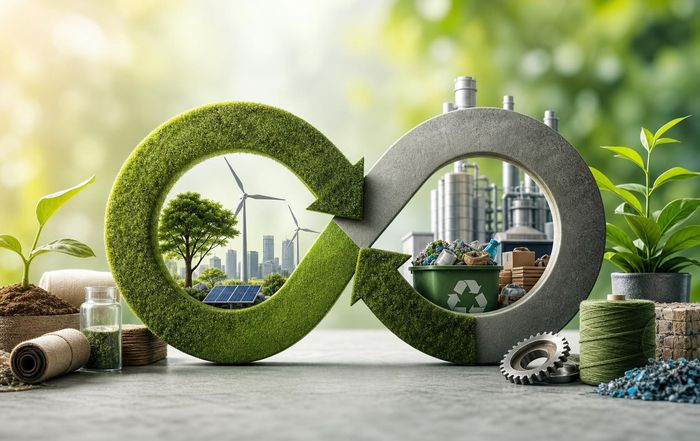
The concept itself is straightforward, even if its execution is complex. In contrast to the traditional linear "take-make-dispose" model, a circular economy aims to keep products, components, and materials at their highest value for as long as possible, through strategies such as reuse, repair, remanufacturing, recycling, and product-as-a-service models. Organizations from Ellen MacArthur Foundation to World Economic Forum have argued for over a decade that circularity can decouple economic growth from resource consumption, and in 2026 that thesis is increasingly supported by real-world data, regulatory developments, and market behavior across the United States, United Kingdom, European Union, and leading Asian economies.
For businesses that follow TradeProfession.com's unique business news in-depth articles around global economic trends and innovation strategies, the circular economy is no longer a niche sustainability topic; it is a cross-cutting business transformation agenda that touches capital allocation, supply chain design, product development, customer engagement, and digital technology deployment.
Regulatory Pressure and Market Signals Reshaping Opportunity
The acceleration of circular business opportunities is being driven by a combination of regulatory pressure, investor expectations, and shifting customer demand. In the European Union, the European Commission's Circular Economy Action Plan and the Corporate Sustainability Reporting Directive have set a clear direction of travel, requiring large companies to disclose resource use, waste, and circularity-related metrics, which in turn influences supply chains that stretch into the United States, Asia, and Africa. Readers following developments in global business will recognize that similar policy trends are emerging in the United Kingdom, Canada, and several Asia-Pacific economies, with Japan, South Korea, and Singapore positioning circularity as part of their long-term industrial strategies.
Financial markets have also begun to internalize circularity as a material factor. Major institutions such as BlackRock and HSBC have integrated resource efficiency and waste management into their environmental, social, and governance (ESG) frameworks, while the Task Force on Climate-related Financial Disclosures (TCFD) and its successor initiatives have prompted more sophisticated analysis of physical and transition risks tied to resource-intensive models. For executives tracking banking and capital markets, this shift is creating differentiated access to financing, with green and sustainability-linked loans increasingly rewarding companies that can demonstrate credible circular strategies and measurable performance outcomes.
At the same time, customer expectations are evolving rapidly. Surveys by organizations such as McKinsey & Company, Deloitte, and PwC indicate that younger consumers in the United States, Europe, and parts of Asia are willing to pay a premium for products that are demonstrably sustainable, repairable, or made from recycled materials, while corporate procurement teams in large enterprises are embedding circular criteria into supplier selection. Learn more about sustainable business practices through resources provided by United Nations Environment Programme and OECD, which highlight the growing alignment between circularity, climate action, and competitiveness.
Sector-by-Sector Business Opportunities
Manufacturing and Industrial Transformation
Manufacturing companies in Germany, the United States, China, and Japan are at the forefront of circular innovation, driven both by regulatory developments and the economic logic of material efficiency. Heavy industry and advanced manufacturing leaders are exploring closed-loop systems where production scrap, end-of-life components, and returned products are systematically collected, remanufactured, or recycled into high-quality inputs. This shift is particularly evident in automotive, electronics, and industrial machinery, where design-for-disassembly and modular components enable more efficient repair and upgrade cycles.
For industrial executives following TradeProfession.com's coverage of technology and automation, the integration of artificial intelligence, digital twins, and Internet of Things (IoT) sensors into production lines is enabling predictive maintenance, real-time material tracking, and optimized disassembly, all of which are essential for profitable circular models. Learn more about how digital technologies underpin circular manufacturing by exploring AI-driven industrial strategies and global case studies from organizations such as World Economic Forum and International Resource Panel.
Retail, Consumer Goods, and the Experience Economy
In retail and consumer goods, circularity is reshaping product design, logistics, and customer relationships. Apparel brands in Europe and North America are piloting take-back schemes, subscription models, and resale platforms, often in partnership with technology startups that specialize in reverse logistics and authentication. Electronics manufacturers are introducing modular smartphones, laptops, and appliances designed for easy repair and upgrade, aligning with the "right to repair" regulations emerging in the European Union and several U.S. states.
For business leaders tracking marketing and customer engagement trends, circularity offers new narrative and experiential opportunities, from repair workshops and refurbishment boutiques to digital product passports that share provenance and material composition data with consumers. Resources from Ellen MacArthur Foundation, World Business Council for Sustainable Development, and UN Global Compact provide practical frameworks for integrating circular principles into brand strategy and product portfolios, while demonstrating how circular offerings can deepen customer loyalty and open new revenue streams.
Banking, Investment, and the Financial Architecture of Circularity
The financial sector has emerged as a critical enabler of the circular economy, with banks, insurers, and asset managers developing products and services tailored to circular business models. For readers of TradeProfession.com's banking and investment sections, the evolution of green bonds, sustainability-linked loans, and blended finance structures is particularly relevant. Major institutions such as European Investment Bank, World Bank, and International Finance Corporation have launched dedicated facilities to support circular infrastructure, waste management, and resource-efficient manufacturing, while private banks are increasingly offering favorable terms to companies that commit to circular performance targets.
At the same time, venture capital and private equity investors are actively seeking startups and growth-stage companies that enable circular value chains, from advanced recycling technologies and material innovation platforms to digital marketplaces for secondary materials. Learn more about sustainable finance frameworks from UN Principles for Responsible Investment and Global Reporting Initiative, which provide guidance on integrating circularity into investment analysis and corporate reporting.
Technology, Data, and the Circular Intelligence Layer
Digital technology is the connective tissue that makes many circular models commercially viable. Artificial intelligence, machine learning, and advanced analytics allow companies to forecast product returns, optimize repair and refurbishment operations, and dynamically price secondary products. Blockchain and distributed ledger technologies, which have been widely discussed in TradeProfession.com's crypto and digital asset coverage, are now being applied to track material flows, verify recycled content, and enable trusted product passports across complex global supply chains.
For technology leaders, the convergence of circularity and digital transformation opens significant opportunities for platform businesses that orchestrate multi-sided markets for materials, components, and services. Companies in the United States, Europe, and Asia are launching B2B marketplaces for industrial by-products, while logistics firms deploy AI-powered route optimization to reduce the cost and carbon footprint of reverse logistics. Learn more about the role of digital innovation in circular systems through resources from World Economic Forum, International Telecommunication Union, and OECD, which highlight how data interoperability and standards are becoming strategic assets in circular ecosystems.
Executive Strategy: From Compliance to Competitive Advantage
For C-suite executives and founders who regularly consult TradeProfession.com's executive insights and founders' perspectives, the central question is how to translate the abstract promise of circularity into a coherent and profitable strategy. The most advanced organizations in 2026 are moving beyond isolated pilots and marketing campaigns to integrate circular principles into core business models, capital allocation decisions, and performance management systems.
This strategic integration often begins with a granular mapping of material and value flows across the enterprise, identifying where waste, idle assets, and underutilized capacity represent latent business opportunities. Executives then evaluate which circular strategies-such as product-as-a-service, remanufacturing, or secondary markets-align best with their brand, capabilities, and risk appetite. Resources from Harvard Business Review, MIT Sloan Management Review, and McKinsey & Company offer analytical frameworks and case studies that help leaders assess trade-offs between capital intensity, operational complexity, and potential returns.
Once a strategic direction is set, governance and incentives become critical. Boards are increasingly establishing sustainability and circularity committees, while executive compensation schemes are being updated to include resource productivity, waste reduction, and circular revenue metrics alongside traditional financial indicators. Learn more about evolving corporate governance practices from OECD Corporate Governance and World Economic Forum, which emphasize the need for integrated oversight of climate, resource, and social impacts.
Workforce, Skills, and the Circular Talent Agenda
The transition to a circular economy has profound implications for employment, skills development, and workforce planning across regions from North America and Europe to Asia and Africa. For readers engaging with TradeProfession.com's employment and jobs coverage, circularity presents both opportunities and challenges. New roles are emerging in areas such as reverse logistics, remanufacturing engineering, materials science, data-driven resource management, and circular product design, while traditional roles in linear production and waste disposal are evolving or declining.
Educational institutions and corporate training programs are responding by integrating circular economy concepts into curricula and leadership development initiatives. Universities in the United Kingdom, Germany, Netherlands, and Scandinavia are launching specialized master's programs in circular design, sustainable finance, and industrial ecology, often in collaboration with industry partners and organizations such as Ellen MacArthur Foundation and UNESCO. Learn more about evolving education models through TradeProfession.com's education insights and global resources from OECD Education and World Bank Education.
For employers, the circular transition requires a deliberate talent strategy that combines reskilling of existing staff with targeted recruitment of specialists in data analytics, lifecycle assessment, and regenerative design. Human resources leaders are also rethinking workforce models, as circular operations such as repair centers and refurbishment hubs may be more labor-intensive and geographically distributed than traditional centralized production facilities, creating new job opportunities in regions that have historically been dependent on linear manufacturing.
Global and Regional Dynamics: Where Opportunities Are Emerging Fastest
The business opportunities in the circular economy are inherently global, yet their manifestation varies significantly by region, influenced by policy frameworks, industrial structures, and consumer behavior. In the European Union, where regulatory drivers are most advanced, circularity is increasingly embedded in industrial strategy and trade policy, creating both opportunities for local innovators and compliance obligations for exporters from the United States, Asia, and Africa. Learn more about regional economic dynamics through TradeProfession.com's global analysis and external resources from European Commission, OECD, and World Bank.
In North America, the United States and Canada are witnessing strong momentum driven by corporate commitments, state-level regulations, and investor pressure, even in the absence of a single overarching federal circular economy framework. Major U.S. cities are adopting zero-waste targets and extended producer responsibility schemes, while Canadian provinces experiment with circular procurement policies and infrastructure investments. In Asia, countries such as Japan, South Korea, Singapore, and China are integrating circularity into broader green growth and innovation agendas, leveraging their advanced manufacturing capabilities and digital infrastructure.
Emerging markets in Africa, South America, and Southeast Asia face distinct challenges and opportunities. Rapid urbanization, infrastructure gaps, and informal waste sectors complicate the transition, yet they also create space for leapfrogging linear models and adopting digitally enabled circular solutions. Organizations such as UN Environment Programme, African Development Bank, and Inter-American Development Bank are supporting circular initiatives that link resource efficiency, job creation, and climate resilience, particularly in sectors such as agriculture, construction, and urban infrastructure.
Capital Markets, Stock Exchanges, and Circular Disclosure
For readers who follow stock exchange and capital market developments, the integration of circular metrics into financial reporting and valuation models is a critical emerging theme. Stock exchanges in Europe, Asia, and North America are increasingly encouraging or requiring listed companies to disclose information related to resource use, waste, and circular business models, often aligned with frameworks developed by Global Reporting Initiative, Sustainability Accounting Standards Board, and International Sustainability Standards Board. Learn more about evolving disclosure standards through resources provided by these organizations and by IFRS Foundation.
Investors are beginning to differentiate companies based on their exposure to resource price volatility, regulatory risks, and stranded asset potential associated with linear models, as well as on their capacity to generate new revenue streams from circular products and services. This shift is particularly relevant for sectors such as mining, chemicals, consumer goods, and technology hardware, where the ability to secure secondary materials and design for circularity can materially affect long-term profitability and resilience.
Personal Finance, Entrepreneurship, and Individual Opportunity
The circular economy is not only a macro-level transition; it also creates tangible opportunities for individuals, entrepreneurs, and small and medium-sized enterprises (SMEs). For readers of TradeProfession.com's personal finance and business entrepreneurship content, circularity offers new avenues for value creation, from repair cafés and refurbishment businesses to digital platforms for sharing, renting, and reselling assets in sectors such as mobility, housing, tools, and consumer electronics.
Micro-entrepreneurs and SMEs in regions from Europe and North America to Africa and Asia are launching ventures that extend product lifetimes, provide specialized repair services, or create local markets for refurbished goods, often supported by municipal programs, impact investors, and incubators focused on green innovation. Learn more about entrepreneurial opportunities in circularity through resources from OECD SME and Entrepreneurship, UNDP, and World Bank's climate and circular economy initiatives, which highlight case studies and policy frameworks that enable small businesses to thrive in circular ecosystems.
For individuals, personal investment strategies are also evolving, as retail investors increasingly seek exposure to companies and funds that are aligned with circular and sustainable business models. Major asset managers and online platforms are responding with thematic funds and screening tools that highlight circular economy leaders, while financial education initiatives emphasize the link between long-term value creation, resource efficiency, and climate resilience.
Technology, Artificial Intelligence, and the Future of Circular Business Models
Looking ahead, the intersection of circular economy principles with advances in artificial intelligence, robotics, and materials science is likely to define the next wave of business opportunities. As covered in depth on TradeProfession.com's artificial intelligence and technology fast loading pages, AI is rapidly enhancing the ability of companies to predict material flows, optimize reverse logistics, and design products for circularity using generative design tools and lifecycle simulation models.
Robotics and automation are transforming disassembly and sorting processes, making high-quality recycling and remanufacturing economically viable at scale, while breakthroughs in bio-based and advanced materials are enabling new forms of regenerative design that go beyond traditional recycling. Learn more about these technological frontiers through resources from MIT, Stanford University, and Fraunhofer Institute, which showcase research at the interface of circularity, digitalization, and advanced manufacturing.
As these capabilities mature, business models are likely to shift further toward service-based offerings, performance contracts, and platform-mediated ecosystems, in which ownership of physical assets becomes less central than the ability to orchestrate data, relationships, and flows of materials. Companies that can integrate circular design, digital intelligence, and customer-centric service models will be well positioned to capture disproportionate value in this emerging landscape.
Integrating Circularity into Corporate DNA
For the global increasing business community groups and individuals that turn to TradeProfession for forward-looking insights across banking, business, economy, employment, investment, and technology, the circular economy represents both a strategic imperative and a generational opportunity. The most successful organizations are those that treat circularity not as a peripheral sustainability initiative, but as a core element of corporate strategy, innovation, and risk management.
This integration requires sustained leadership commitment, cross-functional collaboration, and a willingness to rethink long-standing assumptions about growth, ownership, and value. It also demands engagement with a broad ecosystem of stakeholders, from policymakers and investors to suppliers, customers, and communities across regions as diverse as the United States, United Kingdom, Germany, Canada, Australia, China, Japan, Singapore, South Africa, and Brazil.
As the decade progresses, the companies, financial institutions, and entrepreneurs that embrace circular principles and embed them into product design, supply chains, and business models are likely to outperform their peers on resilience, innovation, and long-term value creation. For decision-makers seeking to position their organizations at the forefront of this transition, the large number of article resources and very recent analysis available across TradeProfession.com-from global economic outlooks to innovation roadmaps and sustainable business strategies-provide a practical foundation for turning circular vision into concrete competitive advantage.
