
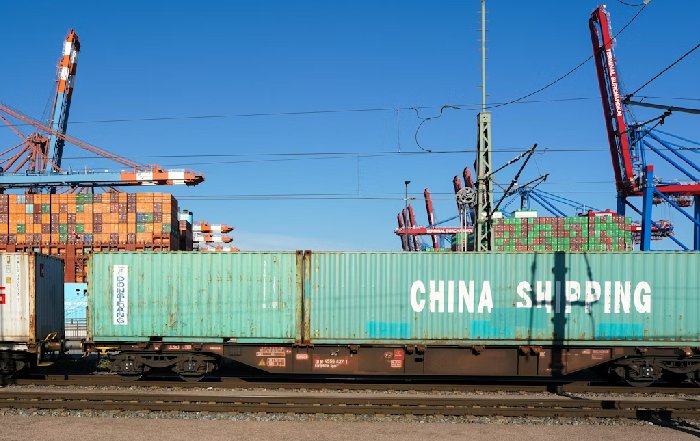
The Role of China in Global Technology Supply Chains
Introduction: A System Under Quiet Strain
The role of China in global technology supply chains has become both more entrenched and more contested, shaping strategic decisions in boardrooms from New York and London to Singapore and Berlin. For the readership of TradeProfession.com, whose professional focus spans artificial intelligence, banking, global business, crypto, the broader economy, employment, executive leadership, founders, investment, marketing, sustainable operations, and advanced technology, understanding China's evolving position is no longer a matter of geopolitical curiosity; it is a central component of risk management, capital allocation, and long-term competitive strategy.
While headlines often focus on visible flashpoints such as export controls, sanctions, or high-profile corporate disputes, the deeper reality is that China remains structurally embedded in the world's technology value chains, from rare earths and batteries to advanced manufacturing and consumer devices. Executives and investors who follow the latest analysis on global business and markets and technology trends increasingly recognize that decoupling is more of a spectrum than a binary choice, and that resilience now depends on nuanced diversification rather than simplistic withdrawal.
In this environment, the ability to assess China's role with precision-grounded in data, industrial expertise, and a clear view of regulatory trajectories-has become a core competence for global decision-makers. This article examines that role across upstream materials, manufacturing, innovation, finance, and sustainability, and explores what it means for strategy in the years ahead.
China's Structural Position in the Technology Value Chain
To understand the present, it is essential to map the full technology value chain: upstream resources, midstream components, downstream assembly, and after-sales services. China's strength has historically been concentrated in midstream and downstream stages, but over the last decade it has significantly deepened its influence upstream as well.
At the resource level, China retains a dominant position in rare earth processing and critical minerals refinement. Although countries such as the United States, Australia, and Canada have increased mining output, a substantial proportion of global processing capacity remains in China, giving Chinese firms leverage over the availability and pricing of inputs for high-performance magnets, electric vehicles, and advanced electronics. Analysts who track the global economy note that this concentration has become a key factor in sovereign industrial policies across North America, Europe, and parts of Asia.
In midstream components-from printed circuit boards and displays to camera modules and power management chips-Chinese factories, often clustered in highly specialized industrial zones, continue to supply a large share of the world's consumer electronics and industrial systems. Data from organizations such as the World Trade Organization and the Organisation for Economic Co-operation and Development consistently show China as a central node in global trade in intermediate technology goods, even as trade flows become more complex through re-routing via Southeast Asia and other regions.
Downstream, China remains the world's largest producer of smartphones, laptops, networking equipment, and a wide range of Internet-of-Things devices. While some high-profile manufacturers have shifted incremental capacity to Vietnam, India, and Mexico, the density of ecosystems in regions such as the Pearl River Delta and the Yangtze River Delta-where suppliers, logistics providers, and engineering talent co-locate-still offers a scale and efficiency that is difficult to replicate quickly.
Semiconductors, Chips, and the Battle for Technological Sovereignty
No discussion of China's role in global technology supply chains in 2026 can avoid the semiconductor sector, where the interplay of innovation, national security, and industrial strategy is most visible. The global chip industry is often described as a finely tuned web stretching from design centers in the United States and Europe to fabrication facilities in Taiwan and South Korea, equipment makers in the Netherlands and Japan, and packaging and testing operations across Asia, with China both a critical customer and an increasingly ambitious producer.
Export controls implemented by the United States and some allies since 2022, targeting advanced nodes, lithography equipment, and AI-oriented accelerators, have reshaped the landscape. Public sources such as the U.S. Bureau of Industry and Security and the European Commission detail a tightening regime intended to slow China's access to cutting-edge chips while maintaining some commercial flows in mature nodes. At the same time, China has expanded support for domestic semiconductor champions through funding, tax incentives, and accelerated procurement, seeking to secure greater autonomy in areas such as memory, power electronics, and specialized industrial chips.
For multinational firms that follow investment and capital markets, this creates a dual-track dynamic: on one track, China remains a massive market and manufacturing base for mature-node semiconductors used in automobiles, appliances, and industrial systems; on the other track, regulatory friction and geopolitical risk complicate the deployment of advanced AI and high-performance computing chips in Chinese data centers. This split is forcing global chipmakers, cloud providers, and device manufacturers to develop differentiated product lines, compliance regimes, and supply strategies for China versus the rest of the world, increasing operational complexity and legal exposure.
Importantly, this shift does not remove China from global semiconductor supply chains; instead, it nudges Chinese industry toward self-reliance where possible, while maintaining strong interdependence in areas where technology gaps remain significant. That interdependence continues to influence the calculations of policymakers in Washington, Brussels, Tokyo, and beyond.
China's Manufacturing Ecosystem: Scale, Speed, and Systems
Executives who work closely with global operations and innovation often emphasize that China's advantage goes far beyond low labor costs, which have been rising steadily for more than a decade. The core strength lies in the density and sophistication of the manufacturing ecosystem, the integration of digital tools into factory operations, and the availability of capable suppliers at every tier.
In sectors such as consumer electronics, telecommunications equipment, and increasingly electric vehicles, Chinese manufacturers have demonstrated an ability to move from design to mass production at remarkable speed, leveraging flexible automation, modular supply architectures, and tight coordination between engineering and production teams. Reports from institutions like the World Bank and the International Monetary Fund highlight how infrastructure-ports, highways, high-speed rail, and power grids-has underpinned this manufacturing prowess, enabling just-in-time logistics at a national scale.
For global brands headquartered in the United States, Europe, and other advanced economies, this ecosystem translates into shorter product cycles, rapid scaling, and cost structures that support competitive pricing in both developed and emerging markets. However, it also creates concentration risk, as demonstrated during the COVID-19 pandemic and subsequent disruptions, where localized lockdowns or regulatory changes in China had outsized effects on global supply availability. Firms that monitor supply-chain-driven employment and jobs have seen how such shocks ripple through labor markets worldwide, affecting manufacturing hubs in Mexico, Eastern Europe, and Southeast Asia that depend on Chinese inputs or final assembly.
In 2026, many companies pursue a "China-plus" strategy, adding capacity in countries like Vietnam, India, Thailand, and Mexico while retaining a significant footprint in China, thereby balancing resilience with the continued benefits of China's ecosystem.
Innovation, AI, and the Domestic Technology Flywheel
China's role in global technology supply chains is no longer limited to manufacturing and assembly; it is increasingly defined by innovation and intellectual property creation, particularly in artificial intelligence, telecommunications, and green technologies. The rapid growth of artificial intelligence applications in Chinese industry and government has created a powerful domestic demand engine that fuels further innovation.
Chinese technology firms, many of them household names worldwide, have built expansive AI capabilities in areas such as computer vision, natural language processing, recommendation systems, and industrial automation. Academic output, measured by publications and patents, has surged, with data from the United Nations Educational, Scientific and Cultural Organization and the World Intellectual Property Organization indicating that China now ranks among the leading countries in AI-related intellectual property filings. This innovation base feeds back into global supply chains through hardware requirements, software standards, and new categories of connected devices.
The interplay between AI and manufacturing is particularly significant. Chinese factories increasingly deploy AI-driven quality control, predictive maintenance, and supply chain optimization tools, which in turn improve cost efficiency and reliability for global clients. For executives who regularly consult TradeProfession.com's technology and innovation coverage, this integration of AI into production processes is a critical factor in assessing long-term competitiveness. While regulatory differences and data governance frameworks may limit cross-border flows of certain AI technologies, the underlying hardware, components, and manufacturing know-how continue to be deeply intertwined with global markets.
Financial Systems, Banking, and the Flow of Capital
The financial dimension of China's role in technology supply chains often receives less attention than manufacturing, yet it is central to understanding the strategic landscape. Chinese banks, development institutions, and capital markets provide significant funding for infrastructure, industrial parks, and technology projects both within China and across Asia, Africa, and parts of Europe and Latin America.
Major state-owned and commercial banks, supported by policy frameworks outlined by regulators such as the People's Bank of China, have financed logistics hubs, fiber-optic networks, and data centers that form the backbone of regional digital economies. For global financial institutions and corporate treasurers who follow developments in banking and financial services, this means that Chinese capital is often embedded in the physical and digital infrastructure that supports technology trade, even when the end products are sold under non-Chinese brands.
At the same time, international regulatory bodies such as the Bank for International Settlements and the Financial Stability Board have highlighted the systemic importance of Chinese financial institutions and the potential risks associated with rapid credit expansion, property market adjustments, and cross-border exposures. These financial dynamics can indirectly affect technology supply chains by influencing investment cycles, credit availability for manufacturers, and currency stability, all of which shape the cost and reliability of sourcing from China.
For technology companies and investors who monitor global economic and market news, the interaction between China's financial system and its industrial policy is a key variable in scenario planning for the next decade.
Crypto, Digital Currencies, and Alternative Infrastructures
Although China has taken a restrictive stance on public cryptocurrencies, its experiments with central bank digital currency (CBDC) and digital infrastructure have implications for global technology supply chains. The rollout of the digital renminbi, or e-CNY, has been closely watched by central banks and financial regulators worldwide, including those who study developments via the Bank of England and the European Central Bank.
For the crypto and digital asset community, which follows trends in blockchain and digital finance, China's approach offers a contrasting model to decentralized systems: a state-backed digital currency integrated with existing banking infrastructure, potentially enabling more efficient cross-border trade settlement within certain networks. If adopted at scale in regional trade corridors, such digital infrastructures could alter the way payments and financing are executed across technology supply chains, influencing working capital cycles, compliance processes, and even sanctions enforcement.
While it is unlikely in the near term that e-CNY or similar initiatives will fully replace traditional trade finance mechanisms, the experimentation underscores China's ambition to shape not only the physical movement of technology goods but also the financial rails on which those goods are traded.
Employment, Skills, and the Global Talent Equation
From a labor and employment perspective, China's role in technology supply chains is undergoing a gradual but meaningful transformation. Rising wages, demographic shifts, and the increasing automation of routine manufacturing tasks are changing the profile of jobs within Chinese factories and technology firms, with more emphasis on engineering, robotics, and digital operations.
For global HR leaders and policymakers who follow employment and labor trends, this evolution has dual implications. On one hand, higher value-added roles in China support the development of complex products and systems that benefit multinational clients; on the other hand, some lower-value manufacturing stages are relocating to countries with younger populations and lower wage levels, including Vietnam, India, Indonesia, and parts of Africa. Organizations such as the International Labour Organization and the World Economic Forum have documented how these shifts affect global job distribution, skills requirements, and workforce resilience.
For professionals in North America, Europe, and other advanced economies, the continued centrality of China in technology supply chains means that cross-cultural collaboration, supply chain management expertise, and familiarity with Chinese regulatory and business practices remain valuable career assets. At the same time, the push for supply chain diversification is creating new employment opportunities in alternative manufacturing hubs, logistics, and regional R&D centers, reshaping the global map of technology employment.
Sustainability, ESG, and the Quest for Responsible Supply Chains
Sustainability has moved from peripheral concern to central strategic priority for technology companies, investors, and regulators. China's role in this dimension is inherently complex: it is both a major emitter and a crucial supplier of clean-energy technologies such as solar panels, wind turbines, and batteries. For readers who track sustainable business strategies, this dual role presents both risk and opportunity.
Chinese manufacturers dominate global production of photovoltaic cells and battery components, enabling the rapid deployment of renewable energy and electric vehicles worldwide. Yet concerns persist about the environmental impact of mining, refining, and manufacturing processes, as well as about labor standards and community impacts in certain regions. Organizations such as the International Energy Agency and the United Nations Environment Programme provide detailed assessments of how these industries contribute to decarbonization while also imposing environmental burdens that must be managed.
For multinational enterprises, investor pressure and regulatory frameworks-such as the EU's Corporate Sustainability Due Diligence Directive or evolving disclosure standards in North America and Asia-require greater transparency into supply chains that run through China. This has led to more rigorous supplier audits, traceability initiatives leveraging digital technologies, and collaborative efforts to improve environmental and social performance across tiers. Companies that rely heavily on Chinese manufacturing are increasingly integrating ESG metrics into supplier selection and contract structures, aligning sustainability with cost and quality considerations.
Professionals who consult TradeProfession.com's global and executive insights are seeing sustainability become a decisive factor in location strategy, capital allocation, and brand positioning, particularly in markets such as the European Union, the United Kingdom, Canada, and Australia, where regulatory and consumer expectations are rising.
Strategic Responses: Diversification, Redundancy, and Partnership
Faced with the combination of geopolitical tension, regulatory uncertainty, and operational dependence on China, technology companies and investors are rethinking supply chain strategies in a more structural way than in previous cycles. The language of "decoupling" has evolved into a more nuanced focus on "de-risking," emphasizing diversification, redundancy, and selective localization rather than wholesale disengagement.
Organizations that monitor executive decision-making and founder strategies see several patterns emerging. First, firms are mapping their tier-two and tier-three supplier networks with greater granularity, identifying hidden concentrations in Chinese manufacturing clusters and developing contingency plans. Second, they are building multi-country production configurations, with China often serving as one of several regional hubs rather than the single point of production. Third, they are investing in digital twins, predictive analytics, and AI-driven risk management tools to monitor supply disruptions in real time and re-route orders dynamically.
This does not mean that China's role is diminishing uniformly. In many high-volume, complex product categories, the combination of scale, supplier depth, and accumulated know-how still makes China the most efficient or even the only viable option for certain components and assemblies. Instead, companies are segmenting their product portfolios: high-risk or geopolitically sensitive products may be localized closer to end markets, while less sensitive and more commoditized products continue to rely on Chinese manufacturing. Institutions such as the McKinsey Global Institute and Boston Consulting Group have analyzed how this segmented approach can balance resilience with cost competitiveness.
For boards and senior leaders, the core challenge is to design supply chains that can withstand shocks without sacrificing the innovation speed and cost structures demanded by competitive markets. That requires not only operational changes but also a deeper integration of supply chain risk into corporate strategy, capital planning, and governance.
Implications for TradeProfession.com's Global Audience
The readership of TradeProfession.com spans executives, founders, investors, technologists, and policy professionals across North America, Europe, Asia-Pacific, Africa, and Latin America, all of whom must interpret China's role in global technology supply chains through the lens of their own markets and sectors. For a U.S.-based AI startup, the key questions may revolve around access to specialized chips, compliance with export controls, and the reliability of hardware suppliers. For a European industrial manufacturer, the focus might be on sourcing components for automation equipment while meeting strict ESG standards. For an African or Southeast Asian policymaker, the priority could be attracting investment from Chinese and non-Chinese technology firms to build local manufacturing and digital infrastructure.
Readers who regularly consult TradeProfession.com's business and economy coverage and its insights on personal and professional strategy are increasingly aware that decisions made in Beijing, Washington, Brussels, and other capitals can quickly cascade into procurement costs, product roadmaps, and hiring plans. Staying ahead of these shifts requires continuous monitoring of regulatory developments, trade negotiations, and industrial policy announcements, as well as a grounded understanding of how those policies translate into real-world changes on factory floors and in logistics networks.
For professionals in banking and capital markets, the intersection of technology supply chains with financial stability, sanctions regimes, and currency dynamics is becoming a central theme in risk assessments. For those in marketing and product strategy, perceptions of supply chain resilience and ethical sourcing are influencing brand value and customer loyalty, particularly in premium segments and sustainability-conscious markets.
Interdependence in an Era of Business Fragmentation
The global technology business system is characterized by a paradox: intensifying geopolitical competition and regulatory fragmentation on one side, and deep structural interdependence on the other. China sits at the heart of this paradox, simultaneously indispensable and contested, a partner, competitor, and systemic risk factor for technology supply chains worldwide.
For the global business community that turns to TradeProfession.com for insight into business, technology, and stock exchange and capital markets, the practical takeaway is not to assume either a rapid decoupling or a simple reversion to pre-2020 norms. Instead, the most resilient organizations will treat China as a permanent, if evolving, pillar of the global technology landscape, and will design strategies that acknowledge both its enduring strengths and its associated risks.
In this environment, leadership requires a combination of technical understanding, geopolitical awareness, and operational discipline. Companies that invest in diversified yet integrated supply networks, robust compliance and risk frameworks, and collaborative relationships across regions will be best positioned to navigate an era in which China's role in global technology supply chains remains central, even as the contours of that role continue to shift.
