
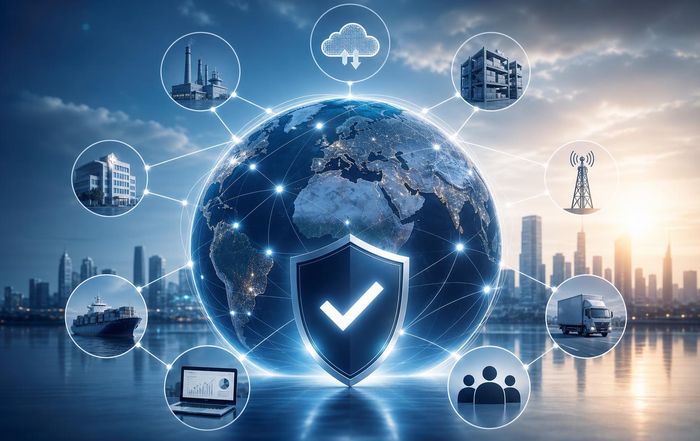
Business Continuity in a Connected World
The New Definition of Business Continuity in 2026
By 2026, business continuity has evolved from a primarily technical discipline focused on disaster recovery into a strategic capability that determines whether organizations can compete, innovate, and retain stakeholder trust in an increasingly connected and volatile world. In an era defined by pervasive digital infrastructure, complex global supply chains, accelerated climate risks, geopolitical fragmentation, and the rapid adoption of artificial intelligence, continuity is no longer only about keeping servers online; it is about preserving the organization's ability to operate, adapt, and create value under continuous uncertainty.
For the global audience of TradeProfession.com, which spans executives, founders, investors, and professionals across sectors such as artificial intelligence, banking, technology, and sustainable business, business continuity has become a board-level concern and a core element of long-term strategy. As organizations in the United States, Europe, Asia, Africa, and the Americas deepen their digital and physical interdependencies, the cost of downtime, data loss, and reputational damage has risen sharply, while stakeholders-from regulators to customers-expect a demonstrably resilient enterprise. The most successful organizations now treat continuity as an integrated discipline that touches strategy, operations, technology, finance, human capital, and culture, rather than as a narrow compliance exercise.
A Hyper-Connected Risk Landscape
The connected world of 2026 is characterized by the convergence of digital platforms, cloud ecosystems, cross-border payment networks, and data-driven services that operate in real time and at global scale. According to the World Economic Forum, systemic cyber risk, large-scale infrastructure failure, and geopolitical tensions are now among the most significant threats to global stability, underscoring how deeply intertwined corporate continuity is with macro-level risk. Organizations that once treated continuity as a periodic planning activity now face a reality in which disruption is not an exception but a persistent feature of the operating environment.
Global supply chains, which link manufacturers in Asia, logistics hubs in Europe, financial centers in North America, and resource producers in Africa and South America, have become both an engine of efficiency and a source of fragility. Events such as port closures, sanctions, cyber incidents at logistics providers, or sudden regulatory changes can cascade across multiple tiers of suppliers and customers. Business leaders who want to understand the broader macro context increasingly turn to resources that analyze the global economy and trade dynamics, and they recognize that continuity planning must extend beyond the boundaries of the enterprise to encompass key partners and ecosystems.
The rise of real-time digital commerce, open banking initiatives, and instant payment systems has further compressed tolerance for downtime. In banking and financial services, where institutions rely on interconnected infrastructure such as SWIFT, cross-border clearing systems, and cloud-based trading platforms, even brief outages can trigger liquidity risks, regulatory scrutiny, and loss of customer confidence. Executives who follow developments in banking and capital markets through platforms like the Bank for International Settlements appreciate that operational resilience is now a regulatory as well as a commercial imperative.
Digital Transformation, AI, and the Continuity Imperative
The acceleration of digital transformation and artificial intelligence adoption has reshaped the continuity agenda. Organizations across sectors-from manufacturing and logistics to healthcare, retail, and professional services-rely increasingly on AI-driven analytics, automation, and decision support. As readers who follow AI developments on TradeProfession.com's artificial intelligence insights will recognize, these technologies create enormous value but also introduce new dependencies and points of failure.
Cloud-native architectures, software-as-a-service platforms, and distributed data pipelines enable agility and scalability, yet they also mean that continuity hinges on third-party providers and complex integration layers. Leading technology companies and hyperscale cloud providers invest heavily in redundancy and failover capabilities, but ultimate accountability for continuity rests with the business itself, not with vendors. Executives who consult best-practice guidance from organizations such as NIST and ENISA understand that shared responsibility models require rigorous risk assessment, contractual clarity, and continuous monitoring of third-party resilience.
AI systems in particular raise distinctive continuity challenges. When critical operations-such as fraud detection in banking, algorithmic trading in capital markets, predictive maintenance in industrial facilities, or personalized marketing in digital commerce-depend on machine learning models, continuity plans must address issues such as model drift, data quality degradation, and adversarial attacks. Business leaders exploring AI-driven innovation are increasingly turning to specialist resources that examine responsible AI and operational resilience together, recognizing that continuity now encompasses not only infrastructure and data but also algorithmic integrity and governance.
For TradeProfession.com's audience of executives, founders, and investors, the implication is clear: AI and digital transformation strategies must be designed with resilience in mind from the outset. This means embedding continuity requirements into technology roadmaps, investment decisions, and innovation initiatives, an approach that aligns closely with the platform's broader focus on technology and innovation as strategic levers rather than isolated technical projects.
Financial Resilience and Continuity in Banking and Capital Markets
In a connected financial system, business continuity is inseparable from financial resilience. Banks, asset managers, fintech firms, and crypto platforms operate within intricate webs of counterparties, payment rails, and regulatory obligations. The Financial Stability Board and regional regulators across the United States, United Kingdom, European Union, and Asia-Pacific have intensified their focus on operational resilience, emphasizing that the failure of a single critical institution or market infrastructure can have systemic repercussions.
Institutions that follow insights on TradeProfession.com's banking channel recognize that continuity is no longer limited to disaster recovery plans for data centers; it encompasses the ability to maintain critical economic functions such as payments, lending, and market making under severe but plausible scenarios. This requires integrating stress testing, liquidity management, and capital planning with operational resilience frameworks, so that financial and operational buffers reinforce one another.
The rise of digital assets and decentralized finance has added another layer of complexity. Crypto exchanges, custodians, and blockchain infrastructure providers face unique continuity challenges related to smart contract vulnerabilities, key management, and network forks. Regulators such as the U.S. Securities and Exchange Commission and the European Securities and Markets Authority have expanded oversight of digital asset markets, while institutional investors increasingly demand robust continuity and custody arrangements before allocating capital to crypto-related strategies. For professionals tracking developments in digital assets on TradeProfession.com's crypto coverage, it is evident that business continuity is becoming a differentiator in a sector still working to establish mainstream trust.
Capital markets participants must also consider the continuity of electronic trading platforms, market data feeds, and clearing systems. Exchanges and trading venues that engage with bodies such as the International Organization of Securities Commissions work to ensure that their resilience frameworks keep pace with high-frequency trading and algorithmic strategies that can amplify volatility. For investors and traders who rely on real-time access to markets, the ability of stock exchanges and brokers to maintain operations under stress is now a central component of due diligence, aligning with the broader interest in market infrastructure and investment resilience that TradeProfession.com regularly explores.
Human Capital, Employment, and the Continuity of Talent
In a connected world, people remain the ultimate foundation of business continuity. The shift toward hybrid and remote work, the globalization of talent markets, and the growing emphasis on skills over traditional roles have transformed workforce dynamics across industries and regions. Organizations that follow employment and jobs trends on TradeProfession.com's employment insights understand that continuity planning must extend to human capital strategies, not only to technology and facilities.
Global disruptions over the past decade have highlighted the vulnerability of organizations that depend on highly concentrated talent pools or rigid workforce models. Whether a company is based in the United States, Germany, Singapore, or South Africa, it must now consider how to maintain critical operations if key teams are affected by regional crises, health emergencies, or mobility restrictions. This has led many enterprises to develop distributed staffing models, cross-training programs, and leadership succession plans that ensure continuity of expertise as well as of infrastructure.
Education and continuous learning play a crucial role in this context. Institutions and corporations that engage with resources from organizations such as UNESCO and leading universities increasingly emphasize lifelong learning, digital skills, and resilience competencies. For readers who follow education and skills development on TradeProfession.com's education section, it is clear that the most resilient organizations invest in upskilling and reskilling programs that enable employees to adapt to new tools, processes, and business models during periods of disruption.
Leadership capability is another critical dimension. Executives who consume guidance from platforms like Harvard Business Review recognize that crisis leadership, transparent communication, and ethical decision-making are essential for maintaining trust among employees, customers, regulators, and investors when disruptions occur. Through its executive-focused content, TradeProfession.com emphasizes that continuity is as much about the quality of leadership and governance as it is about technical preparedness.
Global Supply Chains, Geopolitics, and Regional Nuances
For globally active businesses, continuity planning must account for the distinct risk profiles of different regions and markets. Organizations with operations in North America, Europe, and Asia face varying regulatory regimes, infrastructure maturity levels, cyber threat landscapes, and climate vulnerabilities. Companies that track global economic and geopolitical developments through TradeProfession.com's global coverage understand that a one-size-fits-all continuity strategy is no longer sufficient.
The experience of manufacturers and logistics providers operating across Europe and Asia has underscored the importance of supply chain visibility and diversification. Tools and standards promoted by organizations such as the International Organization for Standardization support systematic approaches to risk assessment and supply chain resilience, but effective implementation requires close collaboration with suppliers, logistics partners, and local authorities. Businesses that serve customers in markets as diverse as the United Kingdom, China, Brazil, and Australia must evaluate local infrastructure reliability, regulatory expectations, and socio-political stability as part of their continuity frameworks.
Geopolitical fragmentation and sanctions regimes have also become central considerations. Companies that rely on cross-border data flows, cloud services, or critical raw materials must navigate evolving regulations on data sovereignty, export controls, and sustainability reporting. Guidance from entities such as the OECD helps organizations interpret these shifts, but continuity ultimately depends on proactive scenario planning and flexible operating models. For TradeProfession.com's global readership, which includes executives managing operations across continents, integrating geopolitical risk analysis into continuity planning has become an essential discipline.
Climate and environmental risks further complicate the picture. Floods, wildfires, heatwaves, and storms increasingly disrupt infrastructure, logistics, and workforce availability. Businesses that consult climate and sustainability research from the Intergovernmental Panel on Climate Change and similar bodies recognize that climate adaptation is now a core component of continuity, especially for assets located in vulnerable regions. This reality aligns closely with the growing interest in sustainable strategies on TradeProfession.com's sustainable business pages, where continuity is framed not only as survival but as responsible stewardship of environmental and social systems.
Technology Infrastructure, Cybersecurity, and Data Integrity
Technology infrastructure remains the backbone of continuity in a connected world, and cybersecurity has become one of its most critical pillars. Organizations that follow technology trends on TradeProfession.com's technology channel know that the attack surface has expanded dramatically with the proliferation of cloud services, Internet of Things devices, remote endpoints, and interconnected APIs. Cyber incidents can simultaneously compromise data, disrupt operations, and damage reputation, making them a focal point of continuity planning.
Leading cybersecurity agencies such as CISA and ENISA publish guidance on securing critical infrastructure, managing ransomware risk, and implementing zero-trust architectures. Organizations that integrate this guidance into their continuity frameworks treat cybersecurity not as a separate function but as an intrinsic component of operational resilience. This includes segmenting networks, maintaining offline backups, rehearsing incident response, and ensuring that recovery procedures are thoroughly tested and aligned with business priorities.
Data integrity and availability are equally central. Businesses that rely on real-time analytics, AI models, and digital customer experiences must ensure that data remains accurate, consistent, and recoverable even during disruptions. Industry best practices, including those outlined by the Cloud Security Alliance, emphasize multi-region redundancy, encryption, robust identity and access management, and continuous monitoring. For professionals who follow innovation and digital transformation topics on TradeProfession.com's innovation section, it is evident that resilient data architectures are now a prerequisite for any serious AI or analytics initiative.
The convergence of operational technology and information technology in sectors such as manufacturing, energy, and transportation introduces additional continuity challenges. Industrial control systems and smart infrastructure are increasingly connected to enterprise networks and cloud platforms, raising the stakes for cyber-physical resilience. Organizations that consult sector-specific guidance from bodies like the International Electrotechnical Commission recognize that continuity planning must cover both digital and physical domains, ensuring that critical infrastructure can be isolated, controlled, and restored safely.
Governance, Regulation, and the Role of Boards
Regulators worldwide have elevated operational resilience and business continuity to strategic governance issues. Financial regulators in the United Kingdom, European Union, United States, and Asia-Pacific have issued frameworks that require institutions to identify important business services, set impact tolerances, and demonstrate the ability to remain within those tolerances during severe but plausible disruptions. Organizations that monitor regulatory developments through TradeProfession.com's news coverage understand that boards are now expected to oversee continuity with the same rigor applied to financial reporting and risk management.
Corporate governance codes and investor expectations increasingly emphasize transparency around resilience capabilities. Institutional investors, guided by principles from organizations such as the International Corporate Governance Network, are asking more detailed questions about continuity plans, cyber resilience, climate adaptation, and crisis management. For founders and executives who engage with TradeProfession.com's founders and executive resources, this shift underscores the need to treat continuity as a strategic asset that can enhance valuation, reduce cost of capital, and build stakeholder confidence.
Compliance with standards such as ISO 22301 for business continuity management is becoming more common, but leading organizations go beyond certification to embed resilience into culture, decision-making, and performance metrics. Boards that include directors with deep experience in technology, cybersecurity, and operational risk are better equipped to challenge management assumptions and ensure that continuity strategies are robust, funded, and regularly tested. In this governance environment, continuity is not simply a technical issue delegated to IT; it is a cross-functional priority that spans finance, operations, human resources, marketing, and corporate affairs.
Continuity as a Strategic Differentiator for Growth and Innovation
In 2026, the most forward-looking organizations view business continuity not merely as protection against downside risk but as a foundation for sustainable growth and innovation. Companies that integrate continuity into strategic planning are better positioned to seize opportunities when competitors falter, to maintain customer trust during industry-wide disruptions, and to scale new products or markets with confidence. For readers who explore business strategy on TradeProfession.com's business section, this perspective reframes continuity from a cost center into a source of competitive advantage.
Marketing and brand strategy are increasingly intertwined with continuity. Customers, partners, and employees are more likely to remain loyal to organizations that communicate transparently during crises and demonstrate the ability to maintain service levels and support. Research and case studies available through platforms such as McKinsey & Company highlight that resilient organizations often outperform peers over the long term, particularly in volatile markets. This insight aligns with the interests of TradeProfession.com's audience in investment, stock exchange dynamics, and long-term value creation.
For founders and high-growth companies, continuity planning can appear secondary to rapid expansion, yet investors and strategic partners are increasingly scrutinizing resilience capabilities as part of due diligence. Start-ups and scale-ups that engage with TradeProfession.com's investment insights are discovering that robust continuity planning can accelerate access to capital, partnerships, and enterprise customers, especially in regulated sectors such as fintech, healthtech, and industrial technology. By designing scalable, resilient architectures and governance structures early, these companies can avoid costly retrofits and build trust with global stakeholders.
The Role of TradeProfession.com in a Resilient Business Ecosystem
As the connected world grows more complex, professionals across banking, technology, education, employment, and sustainable business seek trusted, practical, and forward-looking guidance. TradeProfession.com has positioned itself as a hub where executives, founders, and professionals from the United States, Europe, Asia, Africa, and the Americas can explore the intersections between technology, economy, and business resilience. Through its dedicated sections on business strategy, economy and global markets, technology and artificial intelligence, employment and jobs, sustainable business, and investment and stock exchange dynamics, the platform provides context, analysis, and perspectives that help readers translate continuity theory into actionable practice.
By curating insights across disciplines-ranging from AI-driven innovation and banking regulation to global labor trends and sustainable growth models-TradeProfession.com supports a holistic understanding of business continuity that aligns with the realities of a connected world. Its coverage encourages leaders to think beyond traditional silos, to integrate continuity into marketing, executive decision-making, and personal leadership development, and to recognize that long-term success depends on the capacity to adapt, recover, and thrive amid disruption.
In 2026 and beyond, organizations that embrace this integrated view of business continuity will be better equipped to navigate the uncertainties of a hyper-connected global economy. They will treat resilience as a shared responsibility across functions, regions, and partners; they will leverage technology and data intelligently while safeguarding integrity and trust; and they will invest in people, culture, and governance as the true anchors of continuity. For the global community of professionals who rely on TradeProfession.com to stay informed and prepared, business continuity is no longer a peripheral concern-it is the strategic lens through which the future of connected commerce, innovation, and sustainable growth must be viewed.
