
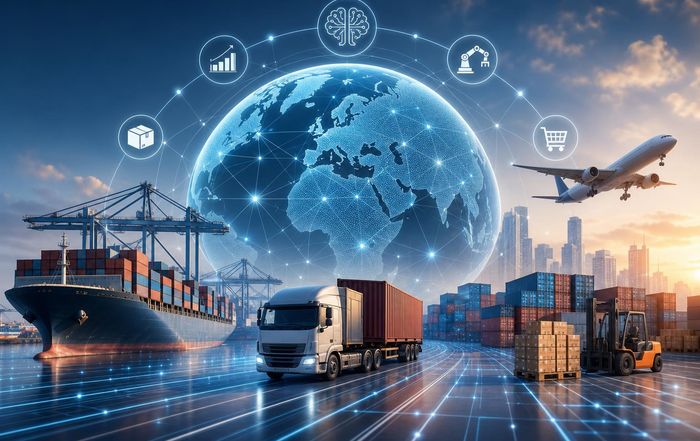
AI-Powered Supply Chains for Global Commerce
The Strategic Inflection Point for Global Supply Chains
Global commerce has reached a decisive inflection point in which the convergence of artificial intelligence, advanced analytics and real-time data infrastructure is redefining how goods move across borders, how risk is managed and how value is created in complex supply networks. The disruptions of the early 2020s, from pandemic-related shutdowns to geopolitical tensions and energy shocks, exposed the fragility of traditional supply chain models built on lean inventories, low-cost labor and predictable trade flows. In response, leading enterprises across the United States, Europe, Asia and emerging markets have accelerated investment in AI-powered supply chain capabilities that promise greater resilience, transparency and responsiveness, while also reshaping the competitive landscape for manufacturers, logistics providers, retailers and financial institutions.
For the professional community here, which sometimes spans decision-makers in Banking, Business, Economy, Education, Employment, Executive leadership, Founders, Innovation, Investment, Jobs, Marketing, Sustainable development and Technology, AI-enabled supply chains are no longer a distant vision but a core strategic theme that cuts across industries and regions. Executives now recognize that supply chain performance is inseparable from corporate strategy, capital allocation and risk management, and that the organizations able to harness data and machine learning at scale will hold a decisive advantage in global trade.
From Linear Chains to Intelligent, Networked Ecosystems
Traditional supply chains were largely linear, siloed and reactive, with information flowing slowly from suppliers to manufacturers, distributors, retailers and end customers, often via manual processes and disconnected systems. In contrast, AI-powered supply chains in 2026 are increasingly networked, data-rich and predictive, functioning more as dynamic ecosystems than as static chains. Cloud platforms, IoT sensors, 5G connectivity and edge computing have created a continuous stream of granular data on inventory levels, production status, transportation conditions, customer demand and macroeconomic indicators, which can be analyzed in real time to support better decisions.
Organizations such as Amazon, Walmart and Alibaba have demonstrated how AI-driven forecasting, inventory optimization and logistics orchestration can compress lead times, reduce stockouts and lower operating costs, while also enabling new business models in e-commerce and omnichannel retail. Learn more about the evolution of global trade and logistics through resources from the World Trade Organization and the World Bank, which track structural shifts in international commerce and infrastructure. As these capabilities diffuse beyond digital-native giants into traditional manufacturers in Germany, automotive leaders in Japan, logistics players in Singapore and retailers across North America and Europe, the expectation of real-time visibility and proactive management is becoming a baseline requirement rather than a differentiator.
TradeProfession.com has observed this transition across its coverage of business strategy and leadership and technology-driven innovation, where supply chain transformation increasingly appears as a board-level priority tied to competitiveness, regulatory compliance and reputational risk.
Core AI Capabilities Transforming Supply Chain Performance
The most advanced supply chain organizations in 2026 deploy a portfolio of AI capabilities that span demand forecasting, production planning, procurement, logistics and after-sales service. Machine learning models ingest structured and unstructured data from internal systems, partner networks and external sources such as macroeconomic indicators, weather patterns and geopolitical developments, offering a level of predictive insight that was previously unattainable.
In demand planning, deep learning and probabilistic forecasting techniques allow enterprises to model complex, nonlinear relationships between customer behavior, pricing, promotional activity, seasonality and broader economic conditions. This is particularly valuable in volatile markets such as consumer electronics, fashion and automotive, where demand can shift rapidly due to innovation cycles, social media trends or regulatory changes. Resources from organizations such as McKinsey & Company and Boston Consulting Group have documented how AI-based forecasting can reduce error rates by 30-50 percent in certain sectors; interested leaders can explore broader perspectives on AI in operations via McKinsey's insights on AI and analytics and BCG's work on digital supply chains.
In production and inventory management, reinforcement learning and optimization algorithms dynamically adjust safety stock levels, reorder points and production schedules based on real-time demand signals, supplier performance and capacity constraints. This enables a shift from static planning cycles to continuous, data-driven decision-making, which is particularly valuable for manufacturers in Germany, Japan, South Korea and the United States that operate complex, multi-tier supply networks. As TradeProfession.com has highlighted in its innovation coverage, this continuous planning paradigm also supports more agile responses to disruptions, such as port closures, raw material shortages or sudden changes in trade policy.
Transportation and logistics are likewise being reshaped by AI. Route optimization systems, supported by real-time traffic, weather and capacity data, reduce fuel consumption and emissions, while predictive maintenance models for fleets and warehouse equipment minimize downtime and extend asset life. The International Transport Forum and OECD transport research provide additional analysis on how digital technologies are impacting freight systems and urban logistics, which is particularly relevant for European and Asia-Pacific markets facing congestion, environmental regulations and infrastructure constraints.
Finance, Banking and the Supply Chain Data Advantage
The intersection of AI-powered supply chains with Banking, Investment and trade finance is becoming a critical frontier for value creation, particularly as financial institutions seek new ways to assess risk, price capital and support cross-border commerce. Traditionally, banks and insurers have relied on backward-looking financial statements, credit scores and macroeconomic indicators to evaluate counterparties, which often provided limited visibility into the real-time health of a company's operations. With the rise of data-rich, AI-enabled supply chains, lenders can increasingly access live information on order books, shipment flows, inventory levels and supplier performance, enabling more accurate and dynamic risk assessments.
Leading institutions such as HSBC, JPMorgan Chase and Standard Chartered are experimenting with AI models that ingest supply chain data, trade documentation and external signals to enhance know-your-customer processes, monitor compliance and detect anomalies indicative of fraud or sanctions evasion. The Bank for International Settlements and International Monetary Fund offer ongoing research on how data and digitalization are transforming trade finance and cross-border payments, providing useful context for executives seeking to align supply chain and treasury strategies.
Platforms that integrate supply chain data with financial services are also enabling new forms of supply chain finance, in which small and medium-sized suppliers in emerging markets can access working capital based on the creditworthiness and order flows of large buyers. This is particularly relevant for manufacturers in Southeast Asia, Africa and Latin America that participate in global value chains but often face high financing costs due to limited transparency. Readers exploring the financial dimensions of supply chain transformation can complement this perspective with TradeProfession.com resources on banking, investment and the broader global economy, where capital flows, monetary policy and risk premiums intersect with logistics and trade.
AI, Crypto Infrastructure and Tokenized Supply Chain Assets
In parallel with traditional financial innovation, the maturation of blockchain and digital asset technologies is beginning to intersect with AI-powered supply chains in 2026, creating new possibilities for traceability, settlement and asset tokenization. While the speculative cycles around cryptocurrencies have drawn significant attention, the more structurally important development for supply chains is the emergence of programmable, transparent ledgers that can record the provenance, custody and ownership of goods as they move across borders and between counterparties.
Enterprises and consortia are exploring how smart contracts on networks such as Ethereum and permissioned blockchains can automate trade documentation, customs clearance and payment triggers, reducing friction, delays and disputes in global commerce. When combined with AI-based anomaly detection and risk scoring, these systems can provide a powerful tool for combating counterfeiting, enforcing quality standards and improving compliance with regulations related to sanctions, forced labor and environmental impact. The World Economic Forum and OECD have published analyses on blockchain in supply chains and trade, which can be read alongside the insights on crypto and digital assets for a more comprehensive view.
Tokenization of supply chain assets, such as inventory, receivables or even specific shipments, opens the door to new financing and risk-sharing mechanisms, in which investors can gain exposure to real-world trade flows through digital instruments. AI models can then be applied to these tokenized assets to assess risk, forecast performance and optimize portfolios, potentially creating a more liquid and data-driven market for trade-related investments. While regulatory frameworks in the United States, European Union, Singapore and other jurisdictions are still evolving, forward-looking executives are beginning to consider how these developments might reshape working capital management, insurance and commodity trading over the next decade.
Workforce, Skills and the Changing Nature of Employment
The deployment of AI in supply chains is fundamentally altering the nature of work across logistics, manufacturing, procurement and planning functions, with significant implications for Employment, Jobs and talent strategies worldwide. Automation of repetitive, rules-based tasks, such as manual data entry, basic order processing and routine scheduling, is reducing the need for certain clerical roles, while creating demand for new capabilities in data analysis, AI model supervision, exception handling and cross-functional coordination.
Warehouse operations in the United States, Germany, China and other major hubs increasingly rely on collaborative robots, automated storage and retrieval systems and AI-driven picking optimization, which change the skill profile required for frontline roles. Rather than focusing primarily on physical tasks, workers are increasingly expected to manage human-machine interfaces, monitor performance dashboards and respond to complex exceptions that automated systems cannot resolve. For executives and HR leaders, this necessitates investments in reskilling and upskilling programs, partnerships with educational institutions and thoughtful workforce planning that anticipates both displacement and new role creation.
Organizations such as MIT, Stanford University and the Fraunhofer Society are conducting research on the future of work in AI-enabled operations, and their publications, available through sources like MIT Sloan Management Review and Stanford HAI, offer valuable guidance for leaders designing workforce strategies. Complementing these academic perspectives, TradeProfession.com provides applied insights on jobs and employment trends and the evolving education and skills landscape, helping organizations connect macro-level shifts with practical talent decisions in logistics, manufacturing and procurement.
Regional Dynamics: United States, Europe and Asia-Pacific
While AI-powered supply chain transformation is a global phenomenon, its trajectory varies significantly across regions due to differences in infrastructure, regulatory frameworks, labor markets and industrial structures. In the United States and Canada, a combination of advanced digital infrastructure, deep capital markets and technology ecosystems centered around Silicon Valley, Seattle and Toronto has supported rapid experimentation with AI in logistics, e-commerce and manufacturing. Major retailers, consumer goods companies and industrial firms are partnering with AI startups and cloud providers to modernize planning systems, warehouse operations and transportation networks, with a strong emphasis on customer experience and omnichannel fulfillment.
In Europe, particularly in Germany, the Netherlands, Sweden and Denmark, AI-enabled supply chains are closely linked to the broader Industry 4.0 agenda, with an emphasis on integrating cyber-physical systems, robotics and advanced analytics in manufacturing. The European Union's regulatory focus on data protection, digital sovereignty and sustainability also shapes how AI is deployed, with initiatives such as the proposed AI Act and the Corporate Sustainability Reporting Directive influencing data governance and reporting requirements. Executives can stay informed on these regulatory developments through official resources from the European Commission and industry bodies like GS1, which play a role in standardizing data across supply networks.
Asia-Pacific presents a diverse picture, with China investing heavily in AI-driven manufacturing and logistics as part of its industrial strategy, while countries such as Singapore, South Korea and Japan focus on high-tech manufacturing, smart ports and advanced logistics hubs. Singapore's government-backed initiatives in digital trade corridors and data-sharing platforms, for example, illustrate how public-private collaboration can accelerate adoption. For global leaders tracking these developments, TradeProfession offers regionally focused analysis in its global and regional coverage, connecting policy shifts and infrastructure investments with practical implications for supply chain strategy in Asia, Europe, North America and beyond.
Sustainability, Compliance and Responsible AI in Supply Chains
Sustainability has moved from a peripheral concern to a central driver of supply chain strategy, as regulators, investors and customers demand greater transparency on environmental and social impacts. AI-powered supply chains play a crucial role in meeting these expectations by enabling more accurate measurement, monitoring and optimization of emissions, resource use and labor practices across complex, multi-tier networks. Companies such as Unilever, Nestlé and Siemens are using AI to model carbon footprints across product life cycles, optimize transportation routes for lower emissions and identify opportunities to shift to more sustainable materials and suppliers.
Regulatory initiatives such as the European Union's Carbon Border Adjustment Mechanism and due diligence laws in Germany and France require companies to demonstrate responsible sourcing and environmental stewardship, which in turn demands high-quality data and advanced analytics. The United Nations Global Compact and CDP provide frameworks and reporting standards that enterprises can align with, while AI helps automate data collection, anomaly detection and scenario analysis. Learn more about sustainable business practices and the role of data and technology in environmental, social and governance performance through resources from Harvard Business School and similar institutions that study corporate sustainability.
At the same time, responsible AI governance is becoming indispensable, as supply chain algorithms influence decisions that affect communities, workers and the environment. Bias in supplier selection models, opaque risk scoring systems or poorly designed optimization objectives can inadvertently create unfair or harmful outcomes. Boards and executives must therefore ensure that AI systems used in procurement, logistics and workforce management adhere to principles of transparency, accountability and fairness, and that human oversight remains central in high-stakes decisions. TradeProfession addresses these issues in its sustainability-focused coverage and broader executive leadership insights, emphasizing that trustworthiness and ethical governance are as important as technical sophistication.
Leadership, Governance and Organizational Transformation
Realizing the full potential of AI-powered supply chains is ultimately a leadership and governance challenge rather than a purely technical one. Organizations that succeed in 2026 typically display strong executive sponsorship, cross-functional alignment and a clear roadmap that links supply chain transformation to corporate strategy, customer value and financial performance. Chief supply chain officers, CIOs, CFOs and chief data officers must collaborate closely to prioritize use cases, allocate resources, manage change and build the necessary data and technology foundations.
A recurring theme in case studies and research from institutions such as INSEAD, London Business School and Wharton is that piecemeal, siloed deployments of AI tools rarely deliver transformative impact. Instead, enterprises need to modernize their core planning systems, data architectures and governance frameworks, while also redesigning processes and incentives to encourage collaboration between procurement, logistics, sales, finance and IT functions. Learn more about strategic transformation and digital leadership through resources from INSEAD Knowledge and Wharton's analytics initiatives, which offer evidence-based guidance for executives navigating complex change programs.
For the readership here today which includes founders of high-growth ventures as well as senior leaders in established corporations, the supply chain agenda intersects with broader themes of innovation, capital allocation and risk management. Articles across the platform's founder-focused section and news and analysis hub illustrate how startups are leveraging AI and data to disrupt traditional logistics models, while incumbents are rethinking their operating models and partnerships. The most successful organizations treat AI not as a standalone initiative, but as an integrated component of business strategy, culture and capability building.
Outlook for 2026 and Beyond: Building Trusted, Intelligent Trade Networks
Looking ahead, AI-powered supply chains are poised to become even more central to global commerce as technologies mature, data ecosystems expand and regulatory frameworks evolve. Generative AI is beginning to augment human decision-making in scenario planning, contract analysis and supplier negotiations, while advances in simulation and digital twins allow companies to model entire end-to-end supply networks and test the impact of disruptions or strategic changes before implementing them in the real world. The integration of AI with emerging technologies such as quantum computing, advanced robotics and next-generation connectivity will further expand the frontier of what is possible in planning, production and logistics.
At the same time, geopolitical fragmentation, climate-related disruptions and social expectations around equity and sustainability will continue to challenge global trade, making resilience, flexibility and trust critical attributes of supply chain design. Organizations that invest in robust data governance, ethical AI practices and collaborative partnerships with suppliers, logistics providers, financial institutions and technology partners will be better positioned to navigate uncertainty and seize opportunities. In this environment, platforms such as TradeProfession.com play an important role in connecting practitioners across Business, Technology, Economy and Sustainable development, offering integrated perspectives that help leaders move beyond narrow functional silos.
Executives and professionals who deepen their understanding of AI-powered supply chains, stay informed through high-quality resources such as the World Bank's logistics performance indicators and the World Trade Organization's trade reports, and engage with cross-industry communities will be best equipped to shape the next generation of intelligent, transparent and responsible trade networks. For those seeking ongoing, practice-oriented insights at the intersection of strategy, technology and global commerce, TradeProfession and its core business and strategy coverage will remain a trusted partner in navigating the evolving landscape of AI-powered supply chains.
