
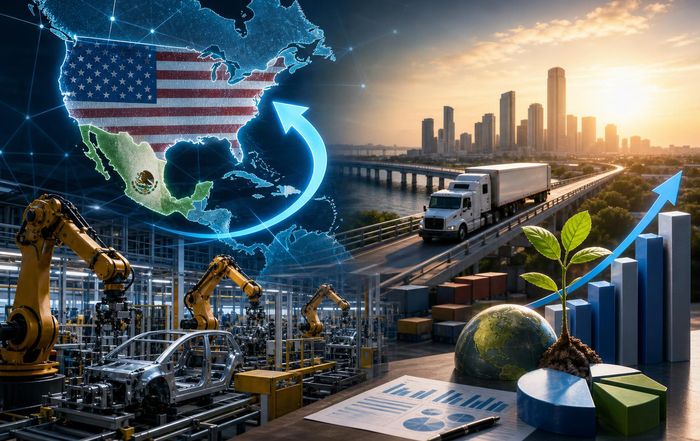
The Economics of Nearshoring for US Manufacturers
For many US manufacturers, "nearshoring" has shifted from a strategic buzzword to an urgent boardroom agenda. Rising geopolitical risk, pandemic-era disruptions, and shifting labor and energy costs have forced a reassessment of the decades-long offshoring model that prioritized lowest-cost production in distant locations. The central question is no longer whether nearshoring will happen, but where it makes economic sense, for which products, and on what timeline. Understanding the economics-rather than the rhetoric-of nearshoring is now a core competency for manufacturing executives, supply chain leaders, and investors.
Nearshoring broadly refers to relocating production from distant, often Asian, locations to geographically closer countries, typically within the same region. For US manufacturers, that usually means moving capacity from China or Southeast Asia to Mexico, Central America, or even back to the United States and Canada under the USMCA framework. While the narrative often focuses on rising Chinese wages or political tensions, the real economics are multi-dimensional: they involve total landed cost, working capital, resilience, tax and trade structures, labor quality, automation, and long-term strategic positioning. Evaluating nearshoring purely as a labor-arbitrage trade is a misread of where manufacturing competitiveness is heading.
This article examines the economic drivers behind nearshoring for US manufacturers, the conditions under which it creates value, and the risks and trade-offs that decision-makers need to weigh. It also explores how technology, including artificial intelligence and advanced automation, is reshaping the cost calculus and redefining what "proximity" means in a global production network.
Why the nearshoring debate intensified
The nearshoring discussion predates COVID-19, but several structural shocks have accelerated it. The US-China trade tensions and successive tariff rounds between 2018 and 2020 raised the effective cost of importing certain goods from China, especially in sectors like machinery, electronics, and consumer products. According to the Office of the United States Trade Representative (USTR), tariffs under Section 301 cover hundreds of billions of dollars of Chinese imports, eroding some of the labor-cost advantage that originally justified offshoring.
The pandemic then exposed how fragile long, lean global supply chains can be when confronted with simultaneous demand spikes, port congestion, and factory shutdowns. Lead times for components in electronics, automotive, and industrial equipment stretched from weeks to months, forcing manufacturers to carry more inventory, miss customer deliveries, or pay premiums for expedited freight. The experience pushed many companies to re-evaluate the value of proximity to end markets, more diversified sourcing, and greater control over critical inputs. Organizations such as the World Trade Organization (WTO) and OECD (oecd.org) have documented the post-pandemic reconfiguration of supply chains, noting a clear rise in regionalization strategies.
At the same time, wage growth in China and parts of Southeast Asia has narrowed the pure labor-cost gap with locations like Mexico. Data from the International Labour Organization (ilo.org) and various consulting analyses suggest that for some manufacturing categories, fully loaded labor costs in industrial zones in northern Mexico can be comparable to or only modestly higher than those in coastal China, especially once productivity, overtime, and compliance costs are factored in. When companies overlay logistics costs, tariffs, and inventory carrying costs, the "total landed cost" of a nearshored option often looks more competitive than headline wage comparisons suggest.
For US manufacturers focused on global markets, this shift intersects with broader economic trends such as industrial policy, reshoring incentives, and sustainability expectations. The US Inflation Reduction Act and CHIPS and Science Act, for example, have changed the economics of domestic and North American production in sectors such as EV batteries, semiconductors, and clean energy components. These policies sit alongside private-sector moves toward more resilient, sustainable supply chains, topics regularly covered in areas like global trade and sustainable business.
Total landed cost: the core of the nearshoring business case
For most manufacturers, the economic case for nearshoring hinges on total landed cost rather than any single input. Total landed cost captures all expenses associated with getting a product from the factory to the customer, including manufacturing, logistics, tariffs, inventory, quality, and overhead allocation. When companies rigorously model these elements, the picture can differ sharply from a simplistic "Mexico vs. China hourly wage" comparison.
Direct labor remains a significant factor, particularly in labor-intensive industries such as apparel, furniture, and some consumer electronics assembly. However, in many advanced manufacturing sectors, labor now represents a smaller share of total cost compared with materials, depreciation on automation equipment, energy, and overhead. As robotics and digital production systems become more prevalent, the relative importance of low-cost labor declines, and proximity to customers, skilled technicians, and R&D centers gains weight. This shift is especially evident in high-mix, low-volume production where flexibility and responsiveness are critical.
Logistics costs and lead times are where nearshoring often delivers its most tangible benefits. Shipping a container from East Asia to a US port can take several weeks in normal conditions, longer during disruptions, with associated freight, insurance, and port handling fees. By contrast, moving goods overland from Mexico or within the United States can reduce transit times to days, allowing companies to cut safety stock, respond faster to demand swings, and support just-in-time or just-in-sequence production. The reduction in inventory levels can meaningfully lower working capital requirements, a consideration that sits at the intersection of banking and trade finance and operational strategy.
Tariffs and trade agreements further tilt the economics. Under USMCA, many goods produced in Mexico or Canada that meet regional content requirements can enter the United States duty-free, while equivalent goods from China may face tariffs. The US International Trade Commission (usitc.gov) provides detailed tariff schedules, and manufacturers increasingly run scenario analyses to compare tariff-inclusive landed costs across sourcing options. For some categories, especially in automotive and industrial machinery, the tariff differential alone can offset a significant wage premium in a nearshore location.
Quality, scrap rates, and rework costs also belong in the landed-cost model. If a nearshored facility offers better process control, easier engineering support, or more effective supplier collaboration, the resulting improvements in yield and defect rates can translate into substantial savings. Conversely, rushing into nearshoring without adequate supplier development or workforce training can increase quality costs and erode any theoretical advantage. Firms that systematically incorporate these factors into their cost models-often supported by advanced analytics and technology-driven planning tools-tend to avoid the most common missteps.
Labor markets, skills, and automation in nearshore locations
Labor economics are more nuanced than headline wage comparisons suggest. Mexico and parts of Central America offer lower average wages than US manufacturing hubs, but the relevant question is often the cost of competent, reliable, and scalable labor relative to productivity. Data from organizations such as the World Bank (worldbank.org) show that Mexico has a significant pool of industrial workers, particularly in automotive, aerospace, and electronics clusters in states like Nuevo León, Guanajuato, and Querétaro. These regions benefit from decades of integration into North American supply chains and a growing network of technical training institutions.
Skill availability is critical for manufacturers in advanced sectors such as medical devices, EV components, and precision machining. Here, the nearshoring decision may involve trade-offs between labor cost and talent depth. Some companies find that while basic assembly labor is readily available, experienced maintenance technicians, process engineers, or quality specialists are in shorter supply, requiring investment in training and partnerships with local universities and vocational schools. This dovetails with broader trends in education and workforce development, where industry and governments collaborate to build manufacturing-relevant skills.
Automation plays a decisive role in making nearshoring economically viable, particularly when moving production from very low-wage environments. Investments in robotics, computer vision, and AI-enabled quality control can standardize processes and reduce per-unit labor content, narrowing the cost gap between locations. Companies like ABB, Fanuc, and Rockwell Automation-profiled frequently by industry sources such as IEEE and MIT-have highlighted how integrated automation systems can support flexible production closer to end markets without sacrificing cost competitiveness.
However, automation itself has a capital cost and requires a capable local ecosystem of integrators, service providers, and component suppliers. Nearshore locations with established industrial clusters tend to offer better access to this ecosystem, making it easier to ramp up sophisticated production lines. Manufacturers need to model not only current wage rates but expected wage inflation, automation roadmaps, and depreciation schedules over a 10- to 15-year horizon. When done well, this analysis often reveals that a highly automated plant in a nearshore location can deliver both cost and resilience benefits, while also supporting higher-value employment and upskilling in the host economy.
Supply chain resilience and risk diversification
The economics of nearshoring cannot be separated from risk management. Traditional cost models often treated disruptions-pandemics, port closures, trade embargoes, or regional conflicts-as low-probability events with limited impact. The past decade has challenged that assumption. Organizations such as the World Economic Forum (weforum.org) and major insurers have emphasized that supply chain risk is now a structural feature of global trade, not an occasional anomaly.
Nearshoring can reduce exposure to certain categories of risk while introducing others. Shorter supply lines and shared time zones improve visibility, communication, and agility, making it easier to adjust production schedules, reroute shipments, or address quality issues. Proximity to the US market can also mitigate risks associated with maritime chokepoints or long-haul air freight. For industries with critical uptime requirements-such as automotive OEMs, industrial equipment, and some consumer electronics-the ability to recover quickly from disruptions can outweigh modest cost differences.
At the same time, nearshoring may increase concentration risk if companies over-index on a single country or region, such as northern Mexico. Natural disasters, political changes, or security concerns in that region could then have outsized effects. A more resilient strategy often combines nearshoring with multi-sourcing and "China-plus-one" or "Asia-plus-one" models, in which production is distributed across at least two major regions. This diversification aligns with broader corporate strategies around global operations and investment, where portfolio thinking is applied to supply chain design.
Insurance costs, compliance requirements, and regulatory risk also enter the equation. Operating in jurisdictions with robust legal systems and predictable commercial rules-such as under USMCA-can reduce the risk of contract disputes or sudden regulatory shifts. However, companies must also contend with country-specific issues such as infrastructure reliability, local permitting processes, and security in certain corridors. Engaging local advisors, industry associations, and chambers of commerce can help calibrate these risks and integrate them into the overall economic assessment.
Trade policy, tax structures, and industrial incentives
Trade agreements and tax regimes can make or break the financial logic of nearshoring. The USMCA framework, which replaced NAFTA, sets rules of origin and content requirements that determine whether goods qualify for preferential tariff treatment. For sectors such as automotive, these rules are complex and evolving, affecting decisions about where to source components, where to perform value-adding operations, and how to document compliance. Resources from the USMCA Secretariat and agencies like Customs and Border Protection (cbp.gov) are critical reference points for companies modeling these scenarios.
Tax considerations extend beyond tariffs. Many nearshore locations offer corporate tax incentives, accelerated depreciation, or special economic zones to attract manufacturing investment. Mexico's IMMEX and maquiladora programs, for example, provide certain tax and duty benefits for export-oriented manufacturers. Governments across Latin America and the Caribbean, as documented by organizations such as the Inter-American Development Bank (iadb.org), are actively promoting nearshoring with incentive packages and infrastructure commitments. For US manufacturers, the challenge is to weigh these offers against long-term policy stability, compliance costs, and reputational considerations.
Domestic US policy also shapes the nearshoring landscape. Incentives for domestic production in sectors such as semiconductors, EVs, and renewable energy components can make US-based manufacturing more competitive, especially when combined with automation and advanced manufacturing techniques. This has led some firms to adopt a "tiered" strategy: high-value, IP-intensive components are produced domestically, while more standardized subassemblies are nearshored within North America. Such configurations must be carefully aligned with corporate tax planning, transfer pricing rules, and the expectations of regulators and investors, themes that intersect with business strategy and executive decision-making.
Sector-specific economics: not all manufacturing is equal
The viability of nearshoring varies significantly by sector, product type, and value density. High-value, lower-weight products with complex supply chains-such as medical devices, aerospace components, and some electronics-often benefit more from proximity to engineering teams, customers, and regulatory bodies than from the absolute lowest labor cost. For these industries, the ability to iterate designs quickly, conduct joint problem-solving with suppliers, and respond to regulatory audits often justifies higher direct costs. Analysts at institutions like McKinsey & Company (mckinsey.com) and Boston Consulting Group (bcg.com) have highlighted these dynamics in sector-specific studies.
By contrast, extremely labor-intensive, low-margin products with commoditized designs-such as basic apparel or simple plastic goods-may still favor ultra-low-cost offshore locations, at least until automation technologies advance further. The sheer labor content and razor-thin margins leave little room to absorb higher wages, even when logistics savings are considered. In these cases, nearshoring may be viable only for premium segments, fast-fashion models that require rapid replenishment, or brands that place a high value on "made in region" labeling and sustainability credentials.
Automotive and mobility supply chains occupy a middle ground. The shift to electric vehicles, more software-intensive architectures, and regional content rules under USMCA are pushing OEMs and Tier 1 suppliers to deepen their North American footprint. This trend cascades down to Tier 2 and Tier 3 suppliers in metals, plastics, electronics, and chemicals. For these firms, nearshoring is often less about chasing cost savings and more about maintaining access to major customers, meeting just-in-time delivery expectations, and aligning with OEM localization strategies. Similar logic is emerging in renewable energy, where domestic-content requirements tied to subsidies influence where solar modules, battery packs, and wind components are produced.
Financial investors and corporate strategists increasingly analyze these sector-specific patterns when making investment and jobs decisions. Private equity firms, for instance, may view nearshoring-ready contract manufacturers as attractive platforms, betting on a multi-year shift toward regional supply chains. Public-market investors scrutinize how listed manufacturers are repositioning their footprint, rewarding those that articulate a credible, economically grounded nearshoring strategy.
Technology, AI, and digital twins in footprint decisions
Advances in digital technologies are transforming how manufacturers evaluate and execute nearshoring strategies. AI-driven analytics, digital twins, and advanced planning systems allow companies to simulate complex supply chain scenarios, test different plant locations, and quantify trade-offs between cost, resilience, and service levels. Platforms from enterprise software providers and specialized supply chain analytics firms can ingest data on demand patterns, transportation networks, tariffs, and capacity constraints to generate recommendations that go far beyond spreadsheet modeling.
AI and machine learning, topics central to innovation in industry, can also optimize day-to-day operations in nearshore plants. Predictive maintenance algorithms reduce downtime on critical equipment, while computer vision systems improve quality inspection and traceability. These technologies help close the productivity gap between new facilities and established offshore plants, shortening the payback period on nearshoring investments. Over time, the data generated by nearshore operations can feed back into design, forecasting, and procurement, creating a more integrated, responsive value chain.
Digital twins-virtual replicas of factories, lines, or entire supply chains-enable manufacturers to experiment with different layouts, automation levels, and production schedules before committing capital. This can be particularly valuable when designing greenfield sites in nearshore locations. Companies can test how varying degrees of automation affect throughput and cost, or how different sourcing strategies influence risk exposure and working capital. These tools also support ongoing optimization as conditions change, allowing companies to adjust production allocations across regions in response to demand shifts, policy changes, or disruptions.
For many manufacturers, the combination of nearshoring and digital transformation is mutually reinforcing. The decision to build or expand a nearshore facility often triggers broader modernization of planning systems, warehouse automation, and supplier collaboration platforms. In turn, these upgrades improve visibility and control, making the economic benefits of nearshoring more tangible and measurable. This convergence of physical and digital strategy resonates strongly with readers focused on technology-enabled operations and artificial intelligence in industry.
Workforce, communities, and long-term competitiveness
Beyond corporate P&Ls, the economics of nearshoring intersect with labor markets and regional development in the United States and its neighbors. Nearshoring to Mexico or Central America can create new employment opportunities in those countries while influencing manufacturing job dynamics in US regions that compete or collaborate within integrated supply chains. Organizations such as the Brookings Institution (brookings.edu) and Peterson Institute for International Economics (piie.com) have analyzed how regional trade integration affects wages, productivity, and inequality across North America.
For US communities, nearshoring can mean more localized demand for specialized services, engineering, logistics, and advanced manufacturing roles, even if some lower-skill assembly moves abroad. This pattern underscores the need for continuous upskilling and alignment between industry needs and education systems, themes central to employment and career development. Manufacturers that nearshore responsibly often pair footprint changes with workforce transition plans, apprenticeship programs, and collaboration with local training providers on both sides of the border.
Long-term competitiveness also depends on how nearshoring strategies integrate sustainability. Shorter supply chains can reduce transportation-related emissions, but the net impact depends on energy sources, facility efficiency, and logistics choices. Investors and regulators increasingly expect companies to quantify and disclose these effects, aligning nearshoring with broader environmental, social, and governance (ESG) goals. This dimension links directly to sustainable operations and to how manufacturers position themselves with customers, regulators, and capital markets.
Making nearshoring decisions that actually pay off
The economic case for nearshoring is neither universally compelling nor universally weak; it is highly context-specific. Manufacturers that extract real value from nearshoring typically share several disciplines. They build robust total landed cost models that incorporate logistics, tariffs, inventory, quality, and risk, rather than focusing narrowly on wages. They conduct scenario analysis across multiple time horizons, recognizing that trade policies, energy prices, and technology costs will evolve. They align footprint decisions with product strategy, customer expectations, and capital allocation, rather than treating nearshoring as a stand-alone operational project.
Equally important, successful nearshoring initiatives invest early in supplier development, workforce skills, and digital capabilities. They recognize that a nearshore plant is not a low-cost clone of an offshore facility but part of a re-architected regional ecosystem. This often involves closer collaboration with logistics providers, financial institutions, and technology partners, drawing on expertise from domains as varied as banking and trade finance, global strategy, and innovation management.
For US manufacturers, the strategic question is no longer whether to consider nearshoring, but how rigorously to evaluate its economics and how deliberately to execute if the numbers support it. Those that approach nearshoring as a structured, data-driven, and technology-enabled transformation-rather than a reactive response to the latest disruption-are more likely to build resilient, competitive, and regionally integrated production networks that can withstand the next decade of volatility in global trade.
