
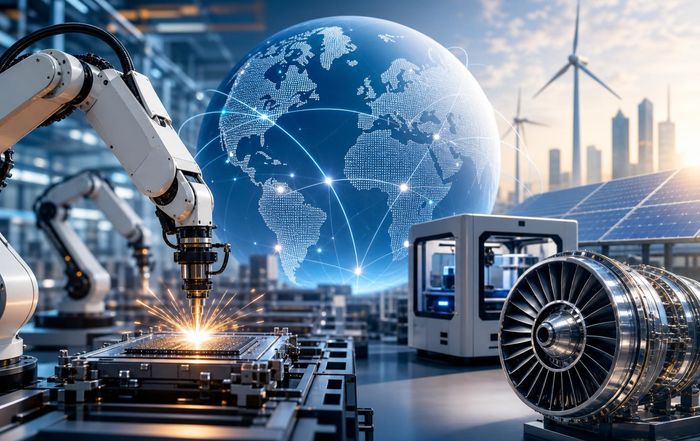
Global Opportunities in Advanced Manufacturing
Advanced Manufacturing at a Global Turning Point
Advanced manufacturing stands at the center of a profound realignment of the global economy, reshaping how products are conceived, produced, and delivered across every major region and industry. From the precision factories of Germany and Japan to rapidly modernizing plants in the United States, China, India, and across Europe and Southeast Asia, the convergence of digital technologies, automation, artificial intelligence, and new materials is redefining competitiveness and creating a new geography of opportunity for businesses, investors, and professionals. For the professional business, an entrepreneurial community here, which spans leaders in Artificial Intelligence, Banking, Business, Crypto, Economy, Education, Employment, Executive leadership, Founders, Innovation, Investment, Jobs, Marketing, Stock Exchange, Sustainable strategies, and Technology, advanced manufacturing is no longer a niche topic but a core driver of long-term value creation.
Advanced manufacturing, as described by organizations such as the World Economic Forum, integrates cyber-physical systems, robotics, data analytics, additive manufacturing, and connected supply chains to deliver higher productivity, greater flexibility, and lower environmental impact. Executives and founders who once viewed manufacturing as a cost center now increasingly see it as a strategic asset that underpins resilient growth, supports innovation, and enables differentiated customer experiences. As global supply chains continue to adjust after the disruptions of the early 2020s, and as governments from the United States and United Kingdom to Germany, Singapore, and South Korea expand industrial policy initiatives, the window for capturing global opportunities in advanced manufacturing is wide open but also intensely competitive.
The Strategic Role of Advanced Manufacturing in the Global Economy
Advanced manufacturing now sits at the intersection of industrial policy, digital transformation, workforce development, and capital markets, making it a crucial theme for business and policy leaders worldwide. Institutions such as the OECD and World Bank have emphasized that manufacturing retains an outsized role in productivity growth, export performance, and high-quality job creation, especially in economies seeking to climb the value chain. For readers monitoring macro trends through resources like the TradeProfession economy and business sections, it is increasingly clear that advanced manufacturing is a key lever for national competitiveness and corporate performance alike.
In North America and Europe, reshoring and nearshoring strategies are driving investment into more automated and digitally enabled facilities, often supported by incentives and regulatory frameworks designed to secure critical supply chains in semiconductors, pharmaceuticals, batteries, and defense-related industries. In Asia, particularly in China, South Korea, Japan, and Singapore, advanced manufacturing is central to long-term industrial strategies that focus on robotics, electronics, and green technologies. Emerging economies in Southeast Asia, India, Eastern Europe, and parts of Africa are positioning themselves as next-generation production hubs, leveraging both cost advantages and targeted adoption of smart manufacturing tools. As analysts from McKinsey & Company and Boston Consulting Group have argued, the winners in this transition will be those who can blend technology, talent, and capital in a way that balances efficiency, resilience, and sustainability.
Technology Foundations: AI, Automation, and Connected Factories
The technological backbone of advanced manufacturing is built on a tight integration of artificial intelligence, industrial automation, and connected factory systems. The latest generation of industrial robots, collaborative robots, and autonomous mobile robots now work alongside human operators, guided by AI-driven vision systems and predictive analytics platforms that continuously optimize quality, throughput, and energy use. For professionals exploring the frontiers of AI, the TradeProfession artificial intelligence and technology resources provide context on how machine learning, computer vision, and generative AI are being embedded into production environments.
Industrial Internet of Things (IIoT) architectures connect machines, sensors, and enterprise systems into a unified data fabric, which allows real-time monitoring of equipment health, supply chain flows, and product performance in the field. Organizations such as Siemens, ABB, Bosch, and Rockwell Automation have invested heavily in digital platforms that bridge operational technology and information technology, enabling predictive maintenance, digital twins, and advanced process control. Companies that learn from best practices shared by groups like NIST in the United States or Fraunhofer Institute in Germany are better positioned to implement secure, scalable, and interoperable systems that support continuous improvement.
At the same time, cloud computing and edge computing architectures from providers such as Microsoft, Amazon Web Services, and Google Cloud allow manufacturers to handle massive data volumes, deploy AI models at the edge of the network, and integrate production data with enterprise planning and financial systems. When combined with additive manufacturing, advanced materials, and flexible automation, these technologies enable shorter product development cycles, mass customization, and faster responses to volatile demand, which are crucial for manufacturers serving global markets in automotive, aerospace, electronics, healthcare, and consumer goods.
Regional Dynamics: Where the Next Wave of Manufacturing Growth Will Emerge
The geography of advanced manufacturing is evolving rapidly, with distinct dynamics playing out across North America, Europe, and Asia, as well as in emerging markets in Africa and South America. In the United States and Canada, public policy initiatives such as infrastructure investment, clean energy incentives, and semiconductor support programs are encouraging companies to build or expand advanced facilities. Analysts who follow developments through the TradeProfession investment and stock exchange pages can observe how capital markets are rewarding firms that align with these long-term policy and technology trends, especially in sectors like electric vehicles, renewable energy, and digital infrastructure.
In Europe, countries including Germany, France, Italy, Spain, the Netherlands, Sweden, Norway, Denmark, and Finland are leveraging strong industrial bases, engineering talent, and sustainability regulations to lead in high-precision manufacturing, green technologies, and advanced materials. The European Commission has articulated ambitious goals for digital and green transitions, and many European manufacturers are early adopters of circular economy practices, energy-efficient production, and low-carbon supply chains. This creates opportunities not only for large industrial groups but also for mid-sized enterprises and startups that can provide enabling technologies, from industrial AI software to advanced sensors and robotics.
Asia remains the manufacturing powerhouse of the world, with China, Japan, South Korea, Singapore, and emerging hubs such as Thailand and Malaysia deepening their capabilities in electronics, semiconductors, and engineered products. Policy frameworks such as "Made in China 2025" and similar national strategies focus on climbing the technology ladder, boosting domestic innovation, and securing leadership in strategic sectors. Institutions like UNIDO and regional development banks have documented how these countries are investing in skills, infrastructure, and digital connectivity to sustain their manufacturing edge, while also expanding into higher value-added services and intellectual property creation.
For Africa and South America, including countries such as South Africa and Brazil, advanced manufacturing offers a path to diversify economies, create skilled employment, and move away from commodity dependence. While these regions face challenges in infrastructure and skills, targeted investment in industrial parks, vocational education, and digital tools can unlock new waves of industrial growth, especially when aligned with regional trade agreements and global value chains. The World Bank and African Development Bank have highlighted the importance of integrating advanced manufacturing into broader development strategies that also emphasize education, governance, and financial inclusion.
Opportunities for Executives, Founders, and Investors
For executives and founders, advanced manufacturing presents both strategic imperatives and expansive opportunities. Senior leaders who engage with the TradeProfession executive and founders content will recognize that manufacturing is no longer just about cost optimization; it is about designing and orchestrating complex global systems that integrate design, production, logistics, and after-sales services in a coherent digital thread. Executives who can articulate a clear vision for digital transformation, talent development, and ecosystem partnerships are better positioned to attract capital, talent, and strategic partners.
Investors, from venture capital and private equity to institutional asset managers, are actively seeking exposure to companies that enable or operate advanced manufacturing platforms. This includes robotics and automation providers, industrial software firms, semiconductor equipment manufacturers, and specialized component suppliers. As financial institutions and analysts track these developments through sources such as Bloomberg, Financial Times, and The Wall Street Journal, they are increasingly differentiating between manufacturers that simply automate existing processes and those that reimagine business models, product-service systems, and data-driven revenue streams. On TradeProfession.com, the banking and news sections frequently reflect how lenders and markets are pricing in operational resilience, technological sophistication, and sustainability performance.
Private investors and corporate venture arms are also exploring adjacent themes such as industrial cybersecurity, digital twins, supply chain visibility platforms, and AI-driven quality control. By following guidance from organizations like MIT Sloan Management Review or Harvard Business Review, executives can better understand how to structure partnerships, joint ventures, and ecosystem collaborations that accelerate innovation while managing risk. For founders, especially in regions like the United States, United Kingdom, Germany, Canada, Australia, Singapore, and South Korea, there is a growing opportunity to build specialized startups that address specific pain points in advanced manufacturing, from predictive maintenance in automotive plants to AI-enabled inspection in pharmaceutical production.
Workforce, Skills, and the Future of Industrial Employment
The evolution of advanced manufacturing raises critical questions about employment, skills, and education, which are central concerns for many in the TradeProfession community. While automation and AI inevitably change the nature of work on the factory floor and in engineering offices, they also create substantial demand for new roles in systems integration, data analytics, robotics maintenance, cyber-physical design, and digital operations management. Leading organizations such as the International Labour Organization and World Economic Forum have emphasized that the challenge is not a simple substitution of machines for workers, but rather a complex reconfiguration of tasks that requires large-scale reskilling and upskilling.
For policymakers, educators, and employers, the priority is to build robust pipelines of talent that can thrive in this new environment. Universities, technical colleges, and vocational institutions across North America, Europe, and Asia are expanding programs in mechatronics, industrial data science, and manufacturing engineering, often in partnership with industry consortia and local governments. Professionals seeking to navigate these changes can benefit from the TradeProfession education and employment resources, which highlight how leading firms are redefining job profiles, apprenticeship models, and continuous learning frameworks.
At the same time, companies must address the social and organizational dimensions of technological change. Research shared by institutions such as Brookings Institution and OECD underscores that inclusive transitions, where workers are involved in redesigning processes and have access to learning opportunities, tend to produce better outcomes in terms of productivity, employee engagement, and social stability. For global employers operating in diverse markets from the United States and United Kingdom to Brazil, South Africa, and Malaysia, thoughtful workforce strategies that respect local contexts while leveraging global best practices are essential to sustaining both competitiveness and trust.
Finance, Crypto, and Digital Infrastructure for Manufacturing
Advanced manufacturing does not operate in isolation; it is increasingly interwoven with financial innovation, digital infrastructure, and new forms of value exchange. Traditional corporate finance and project finance models are being adapted to support capital-intensive investments in automation, clean energy, and new production facilities, with banks and institutional investors carefully assessing technology risk, regulatory environments, and long-term demand scenarios. Readers of the TradeProfession banking and investment sections will recognize that financial institutions are also under pressure to align lending and investment portfolios with environmental, social, and governance frameworks, which has direct implications for the types of manufacturing projects that receive favorable terms.
Digital assets and blockchain technologies are beginning to play a role in supply chain traceability, machine-to-machine transactions, and tokenized financing structures. While mainstream adoption is still in early stages, some manufacturers and logistics providers are experimenting with blockchain-based systems to verify provenance, manage complex supplier networks, and automate contractual payments. Professionals interested in this intersection can explore more through the TradeProfession crypto and global pages, as well as external sources such as the Bank for International Settlements and International Monetary Fund, which analyze the regulatory and macroeconomic implications of digital currencies and distributed ledger technologies.
As factories become more connected and data-intensive, investments in cybersecurity, data governance, and digital infrastructure become non-negotiable. Organizations like ENISA in Europe and CISA in the United States provide guidance on securing industrial control systems and critical infrastructure, while global standards bodies such as ISO and IEC continue to refine frameworks that support interoperability and security. Financial exposure to cyber risks is now a core consideration for boards, insurers, and lenders, making it essential for manufacturing leaders to integrate cybersecurity into strategic planning rather than treating it as a purely technical concern.
Sustainability, Regulation, and the Green Industrial Transition
Sustainability is no longer a peripheral concern in manufacturing; it is a structural driver of investment decisions, regulatory frameworks, and competitive positioning. Governments across North America, Europe, and Asia are tightening emissions standards, introducing carbon pricing mechanisms, and setting ambitious net-zero targets, which directly affect manufacturers in sectors such as steel, cement, chemicals, automotive, and electronics. Organizations like the International Energy Agency and UN Environment Programme have detailed how industrial decarbonization, electrification, and energy efficiency are essential to global climate goals, and advanced manufacturing technologies are central to achieving these objectives.
For the TradeProfession.com audience, the intersection of sustainability and advanced manufacturing is particularly relevant to long-term strategy and risk management. The site's sustainable and innovation pages highlight how leading companies are adopting circular economy principles, designing products for reuse and recycling, and leveraging digital tools to reduce waste and optimize energy use. Manufacturers that invest in low-carbon processes, renewable energy, and sustainable materials are better positioned to meet regulatory requirements, access green financing, and appeal to customers and employees who prioritize environmental responsibility.
Regulatory frameworks are also shaping technology choices and supply chain configurations. The European Union's regulatory agenda, including initiatives related to carbon border adjustment, digital product passports, and due diligence in supply chains, is influencing global standards and prompting manufacturers in the United States, United Kingdom, Asia, and other regions to anticipate similar requirements. Compliance is no longer a passive activity; it demands proactive engagement with regulators, industry associations, and civil society, as well as robust data collection and reporting systems that can withstand scrutiny from investors, customers, and auditors.
Innovation Ecosystems and Collaborative Advantage
Advanced manufacturing thrives in ecosystems where companies, universities, research institutes, startups, and government agencies work together to accelerate innovation and scale new technologies. Around the world, industrial clusters in regions such as the US Midwest, Germany's manufacturing heartlands, the United Kingdom's advanced engineering corridors, Singapore's industrial parks, and South Korea's technology zones demonstrate the power of concentrated expertise and shared infrastructure. Organizations like Fraunhofer, MIT, Imperial College London, and ETH Zurich play critical roles in bridging fundamental research and industrial application, often in partnership with global corporations and local small and medium-sized enterprises.
For professionals and organizations engaging with TradeProfession.com, understanding these ecosystems is essential to identifying where to locate facilities, with whom to partner, and how to access specialized capabilities. The site's global and business content provides context on how cross-border collaborations, joint ventures, and public-private partnerships are evolving. External resources from entities such as OECD, World Economic Forum, and national innovation agencies can help executives benchmark their own innovation strategies and identify gaps in capabilities or networks.
Digital collaboration platforms, virtual design environments, and remote monitoring tools are further extending the reach of these ecosystems, allowing engineers, operators, and researchers across continents to co-develop and refine manufacturing processes in near real time. This distributed yet tightly coordinated model of innovation enables companies to tap into specialized knowledge in locations such as the United States, Germany, Japan, Sweden, or Singapore, while executing production in cost-effective and strategically positioned facilities around the world.
Positioning Trade Professionals at the Heart of the Manufacturing Transition!
As advanced manufacturing reshapes industries and economies, TradeProfession.com is uniquely positioned to serve as a trusted hub for professionals navigating this transformation. By integrating insights across Artificial Intelligence, Banking, Business, Crypto, Economy, Education, Employment, Executive leadership, Founders, Global developments, Innovation, Investment, Jobs, Marketing, News, Personal finance, Stock Exchange, Sustainable strategies, and Technology, the platform mirrors the interdisciplinary nature of advanced manufacturing itself. Executives, investors, engineers, policymakers, and educators who rely on TradeProfession.com can connect macroeconomic trends with sector-specific developments, regulatory shifts with technological breakthroughs, and global opportunities with local realities.
The site's recent coverage of topics such as AI-enabled production, industrial finance, workforce transformation, and sustainable manufacturing offers readers a coherent narrative that links strategic decisions to operational execution. By curating perspectives from leading organizations, research institutions, and industry practitioners, TradeProfession supports informed decision-making for companies and individuals in the United States, United Kingdom, Germany, Canada, Australia, France, Italy, Spain, Brazil, Malaysia, Indonesia, and beyond. In doing so, it reinforces the Experience, Expertise, Authoritativeness, and Trustworthiness that business leaders demand as they navigate one of the most consequential industrial transitions of the modern era.
In the years ahead, the organizations and professionals who succeed in advanced manufacturing will be those who treat it not as a discrete function but as an integrated, strategic capability that spans technology, finance, talent, and sustainability. By continuing to provide rigorous analysis, practical insights, and global perspectives, TradeProfession.com will remain an essential partner for those seeking to understand and capture the global opportunities emerging at the frontier of advanced manufacturing.
