
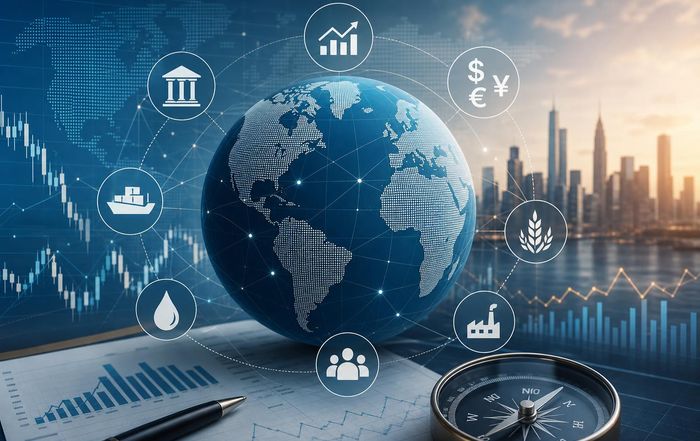
Global Economic Signals Every Business Should Monitor
Why Global Signals Matter More Than Ever
Executives and founders operating from New York to Singapore and from London to São Paulo are discovering that the difference between resilient growth and painful contraction often lies in how effectively their organizations interpret global economic signals. The acceleration of digitalization, the reconfiguration of supply chains, the rise of artificial intelligence, and the persistent aftershocks of inflationary cycles have created an environment in which local performance is increasingly shaped by global forces. For the super readers coming here, who work at the intersection of strategy, finance, technology, and operations, the ability to decode these signals is no longer a specialist skill; it is a core leadership competency.
Forward-looking leaders now recognize that indicators such as interest rates, currency movements, labor-market trends, geopolitical risk, and technological disruption are deeply interconnected. A shift in monetary policy by the Federal Reserve or European Central Bank can reshape capital flows, influence hiring plans, and alter the viability of expansion into new markets. Changes in regulatory regimes for digital assets or artificial intelligence can affect innovation investment and risk management. Understanding these relationships allows businesses to move from reactive decision-making to proactive positioning, aligning strategy with the global economic cycle rather than being blindsided by it.
Macroeconomic Growth Indicators: Reading the Global Pulse
The starting point for any serious economic monitoring framework is a clear view of global and national growth trends. Output measures such as gross domestic product (GDP), industrial production, and services activity provide an essential backdrop for decisions on capital expenditure, hiring, and market entry. Executives routinely consult resources such as the World Bank and International Monetary Fund to track headline GDP growth, but experienced leaders go further and analyze the composition of that growth, distinguishing between consumption-led expansions, investment-driven booms, and export-oriented surges. Each pattern has different implications for sectors such as manufacturing, professional services, and technology.
For global businesses, understanding regional divergence is increasingly important. While the United States and parts of Europe have moved into a slower but still positive growth phase, several economies in Asia, including India and parts of Southeast Asia, continue to post stronger expansion. Organizations that rely on export markets or international supply chains need to follow regional outlooks from sources such as the OECD and UNCTAD, as these institutions provide forward-looking assessments of trade volumes, investment flows, and policy risks. Readers can complement these insights with the macro perspectives curated on TradeProfession.com's own global economy and business pages, which highlight how shifting growth dynamics translate into practical business constraints and opportunities.
Purchasing Managers' Indexes (PMIs), published by organizations such as S&P Global, have become indispensable high-frequency indicators for executives who need to anticipate turning points in manufacturing and services activity. Because PMIs capture business sentiment regarding new orders, employment, and inventories, they often signal inflection points before official GDP data. Monitoring PMIs across key markets such as the United States, Germany, China, and the United Kingdom allows multinational firms to adjust production schedules, marketing budgets, and inventory strategies ahead of competitors.
Inflation, Interest Rates, and the Cost of Capital
From 2021 through the mid-2020s, inflation and the response of central banks reshaped the global financial landscape. By 2026, inflation has moderated in many advanced economies, yet the memory of rapid price increases has changed how boards and finance leaders think about risk, pricing, and investment. Monitoring inflation is no longer a narrow concern of treasury departments; it is a strategic priority. Executives regularly consult data from the U.S. Bureau of Labor Statistics, Eurostat, and national statistical offices across Asia-Pacific and emerging markets to understand both headline and core inflation trends.
Interest rates, guided by central banks such as the Federal Reserve, Bank of England, European Central Bank, and Bank of Japan, directly influence borrowing costs, valuations, and investment appetite. When policy rates rise, leveraged acquisitions, aggressive share buybacks, and speculative expansion plans become less attractive, while companies with strong balance sheets and disciplined capital allocation gain relative advantage. Business leaders track central bank communications, meeting minutes, and forward guidance, often through platforms such as the Bank for International Settlements, to anticipate shifts in monetary policy before they materialize.
For readers focused on banking and investment, TradeProfession.com's dedicated sections on banking, investment, and stock exchange complement traditional macroeconomic sources by translating rate moves into practical insights on credit availability, equity-market sentiment, and sector rotation. In a world where financing conditions can change quickly, systematically tracking yield curves, credit spreads, and corporate bond issuance volumes is essential for planning mergers and acquisitions, refinancing, and large-scale capital projects.
Labor Markets, Employment, and the Global War for Talent
Labor-market dynamics have become a defining economic signal for businesses across North America, Europe, and Asia. The post-pandemic period saw an unusual combination of tight labor markets, elevated wage growth, and evolving worker expectations regarding flexibility and purpose. By 2026, these forces have not disappeared; they have matured into a new equilibrium in which hybrid work, skills-based hiring, and continuous reskilling are standard expectations. Executives closely monitor unemployment rates, labor-force participation, and wage indices through national data portals such as U.S. Bureau of Labor Statistics, UK Office for National Statistics, and Statistisches Bundesamt in Germany, as well as international comparisons from the International Labour Organization.
However, headline unemployment figures can obscure deeper trends that matter more for strategic workforce planning. Businesses must track sector-specific shortages, regional disparities, and the evolving mix between full-time employment, contract work, and platform-based gig roles. For instance, acute shortages of software engineers and cybersecurity specialists in the United States, Canada, and Western Europe have encouraged firms to expand remote hiring from talent pools in India, Eastern Europe, and parts of Africa. Those patterns are reflected not only in official statistics but also in private data from platforms like LinkedIn and Indeed, which provide real-time signals on job postings, skills demand, and wage pressures.
Professionals who rely on TradeProfession.com for guidance on employment and jobs can integrate these global indicators into their talent strategies, using them to decide when to build in-house capabilities, when to partner with specialized providers, and when to automate repetitive tasks. In parallel, HR leaders and learning officers increasingly draw on research from institutions such as the World Economic Forum and OECD Education Directorate to understand how automation and demographic change are reshaping skills requirements, informing both recruitment and internal education initiatives.
Trade, Supply Chains, and Geopolitical Risk
Trade flows and supply-chain configurations have shifted dramatically over the last decade, driven by geopolitical tensions, regionalization trends, and the imperative to build resilience against disruptions ranging from pandemics to climate events. Executives now monitor global trade volumes, tariffs, and logistics bottlenecks with a level of attention previously reserved for financial indicators. Data from the World Trade Organization and UN Comtrade help businesses understand where trade is expanding or contracting, while shipping indices and port throughput statistics offer more granular insight into bottlenecks and lead times.
Geopolitical risk has become one of the most consequential economic signals, influencing decisions on manufacturing locations, market entry, and technology partnerships. Tensions between major powers, evolving sanctions regimes, and regulatory fragmentation in digital and data governance all feed into strategy. Many organizations rely on analysis from think tanks such as Chatham House, the Atlantic Council, and the Center for Strategic and International Studies to interpret geopolitical developments, translating them into exposure maps and scenario plans for their operations in regions such as East Asia, Eastern Europe, and the Middle East.
Readers of TradeProfession.com who focus on global strategy and cross-border expansion recognize that supply-chain resilience is no longer just about diversifying suppliers; it is about designing networks that can flex between regions in response to changing tariffs, political instability, and climate-related disruptions. These leaders track indicators such as reshoring announcements, foreign direct investment flows, and regional trade agreements, using them to calibrate where to place new production facilities, data centers, and distribution hubs.
Financial Markets, Banking Stability, and Liquidity Signals
While GDP and trade statistics offer a view of the real economy, financial markets provide high-frequency signals about sentiment, risk appetite, and liquidity conditions. Executives monitor equity indices across major markets such as the S&P 500, FTSE 100, DAX, Nikkei 225, and Hang Seng, not only to gauge investor confidence but also to anticipate potential impacts on corporate valuations, capital-raising windows, and employee stock-based compensation plans. Volatility indices like the CBOE VIX act as barometers of market stress, helping risk committees decide when to tighten hedging strategies or reassess exposure to cyclical sectors.
Banking-system stability is another critical signal, particularly for companies that depend heavily on credit lines, trade finance, or project financing. Reports from the International Monetary Fund, Bank for International Settlements, and national regulators provide insights into capital adequacy, non-performing loans, and systemic vulnerabilities. The regional banking stresses seen in various markets during the early 2020s underscored how quickly confidence can erode and how severely it can affect credit availability for small and mid-sized enterprises.
The editorial team at TradeProfession.com has increasingly emphasized the importance of connecting banking and stock exchange indicators with broader business strategy, encouraging readers to treat financial markets as an early-warning system rather than a distant scoreboard. Monitoring corporate bond spreads, commercial-paper markets, and syndicated loan activity can help CFOs and treasurers anticipate tightening conditions and secure financing well before stress becomes visible in their own operations.
Digital Assets, Crypto Signals, and the Tokenized Future
Digital assets and crypto markets have evolved from a speculative fringe to a regulated, institutionally relevant asset class in many jurisdictions by 2026. While volatility remains high, the sector now provides meaningful signals about risk appetite, technological adoption, and the future of financial infrastructure. Businesses monitor the market capitalization and liquidity of leading cryptocurrencies, the growth of stablecoins, and the development of tokenized real-world assets, using data from sources such as CoinMarketCap, CoinGecko, and institutional research by firms like Fidelity Digital Assets.
Regulatory developments are particularly important, as they determine whether crypto can be integrated into mainstream payment, treasury, and investment operations. Guidance from bodies such as the U.S. Securities and Exchange Commission, European Securities and Markets Authority, and Monetary Authority of Singapore shapes everything from custody arrangements to disclosure obligations. For multinational corporations, understanding these differences across jurisdictions is essential to avoiding compliance pitfalls while still capturing innovation opportunities.
For professionals exploring the convergence of traditional finance and digital assets, TradeProfession.com's crypto and investment sections provide context on how tokenization, decentralized finance, and central bank digital currencies intersect with corporate treasury, trade finance, and cross-border payments. Monitoring crypto signals alongside conventional banking indicators allows businesses to assess when new technologies are maturing into reliable infrastructure and when they remain primarily experimental.
Technology, Artificial Intelligence, and Innovation Indicators
Technological progress, particularly in artificial intelligence and automation, has become both an economic driver and a signal of future competitive dynamics. Since the rapid diffusion of generative AI models in the early 2020s, organizations across sectors have recognized that AI adoption is reshaping productivity, labor demand, and business models. Executives monitor AI investment levels, patent filings, and open-source activity through sources such as WIPO, OECD AI Policy Observatory, and leading research labs, using these indicators to understand where breakthroughs are likely to emerge and which regions are building durable innovation ecosystems.
In 2026, the integration of AI into core enterprise functions-from supply-chain optimization and predictive maintenance to marketing analytics and customer service-has become a decisive factor in productivity growth. Thoughtful leaders track not only the capabilities of AI models but also evolving regulatory frameworks from bodies such as the European Commission and national data-protection authorities, which influence how AI can be deployed in sectors like healthcare, finance, and education. They also pay attention to cybersecurity incidents and regulatory enforcement actions, recognizing that trust and governance are as important as technical performance.
Readers of TradeProfession.com can deepen their understanding of these dynamics through the platform's coverage of artificial intelligence, technology, and innovation, which connect global AI trends to practical decisions about capital allocation, vendor selection, and workforce reskilling. Monitoring technology indicators-such as R&D spending, venture-capital flows into deep tech, and standards-setting activity-helps organizations avoid being blindsided by disruptive entrants or regulatory shifts that can rapidly alter industry economics.
Sustainability, Climate Risk, and ESG as Economic Signals
Sustainability has shifted from a reputational concern to a core driver of capital allocation, regulation, and consumer behavior. Climate-related financial disclosures, carbon pricing mechanisms, and evolving environmental, social, and governance (ESG) standards now function as economic signals that influence cost structures, access to financing, and market demand. Businesses monitor regulatory developments such as the EU's Corporate Sustainability Reporting Directive, guidance from the International Sustainability Standards Board, and frameworks from the Task Force on Climate-related Financial Disclosures to anticipate reporting obligations and investor expectations.
Climate risk indicators-including physical risks like heatwaves and floods, as well as transition risks associated with decarbonization policies-are increasingly integrated into strategic planning. Data from organizations such as NASA, the Intergovernmental Panel on Climate Change, and national meteorological agencies inform long-term decisions about plant locations, insurance coverage, and supply-chain design. Insurers and lenders are already adjusting pricing and coverage based on climate models, creating financial incentives for businesses to invest in resilience and low-carbon technologies.
For the readers of TradeProfession.com, the sustainable business section connects these global signals to operational and financial decisions, highlighting how sustainability performance influences everything from talent attraction and customer loyalty to borrowing costs and equity valuations. Companies that treat sustainability metrics as leading indicators rather than compliance checkboxes are better positioned to capture emerging opportunities in green infrastructure, renewable energy, and circular-economy business models.
Education, Human Capital, and Long-Term Competitiveness
Beyond short-term labor-market indicators, the quality and adaptability of education systems serve as long-term economic signals that influence where businesses choose to invest and expand. Nations that successfully align education with future skills-particularly in STEM fields, digital literacy, and critical thinking-tend to attract high-value industries and innovation clusters. Organizations monitor international benchmarks such as OECD PISA scores, tertiary-education enrollment data from UNESCO, and national strategies on lifelong learning to assess the depth of talent pools in regions under consideration for R&D centers or advanced manufacturing facilities.
Corporate leaders increasingly view internal education and reskilling programs as strategic assets rather than discretionary costs. Partnerships with universities, online learning platforms, and vocational-training providers are shaped by insights from research institutions like Brookings Institution and McKinsey Global Institute, which analyze how automation and demographic shifts will alter skills demand. Executives who follow the education and personal development coverage on TradeProfession.com understand that investment in human capital is one of the most reliable predictors of long-term competitiveness and innovation capacity.
Integrating Signals into a Coherent Decision Framework
The sheer volume of global economic signals can overwhelm even experienced executives if not organized into a coherent framework. Leading organizations in 2026 are building integrated dashboards that combine macroeconomic indicators, financial-market data, labor statistics, technology trends, and sustainability metrics into a unified view tailored to their sector and geographic footprint. These dashboards often leverage AI-driven analytics to detect correlations, flag anomalies, and generate scenario simulations, enabling leadership teams to test how different policy or market shocks would affect revenue, costs, and risk exposure.
For the cool audience of TradeProfession.com, the most effective approach is to align signal monitoring with specific strategic questions: where to expand geographically, which product lines to prioritize, how aggressively to invest in automation, and how to structure financing. By mapping indicators such as GDP growth, interest rates, and regulatory changes to these decisions, businesses avoid treating economic data as abstract information and instead use it as a practical guide for action. The platform's executive, founders, and news sections provide ongoing analysis that helps leaders interpret new data releases and policy announcements through this strategic lens.
Ultimately, the organizations that thrive in the mid-2020s are those that combine disciplined monitoring of global economic signals with a culture of agile decision-making. They recognize that no single indicator provides a complete picture, but that a carefully curated set-covering growth, inflation, labor markets, trade, finance, technology, sustainability, and education-can collectively illuminate the path ahead. By embedding this intelligence into board discussions, budgeting processes, and risk management, the global business community can navigate uncertainty with greater confidence and turn volatility into a source of strategic advantage.
