
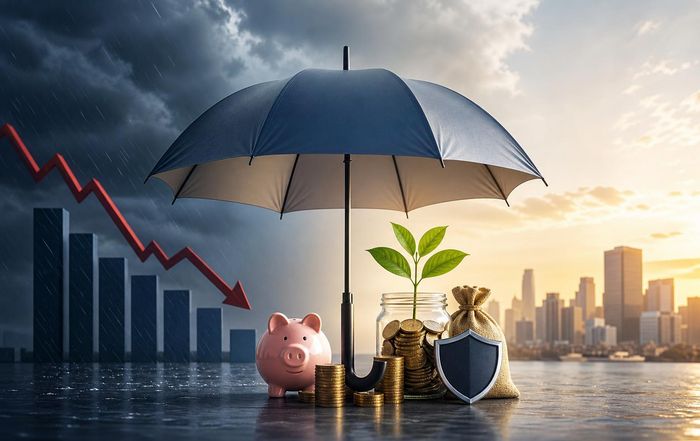
Financial Resilience During Economic Slowdowns
The New Reality of Cyclical Uncertainty
Executives, founders and professionals across global markets operate in an environment defined by overlapping shocks, persistent inflationary pressures and rapid technological disruption, which together have made financial resilience during economic slowdowns not only a defensive necessity but also a strategic differentiator. The experience of repeated downturn scares since the pandemic, the tightening cycles of the U.S. Federal Reserve, the energy and supply chain disruptions across Europe and the structural slowdown concerns in China have collectively reshaped how resilient organizations and individuals think about risk, liquidity and long-term value creation, and it is within this context that TradeProfession.com positions itself as a practical guide for decision-makers who must now integrate resilience into every aspect of business, investment and career strategy.
While traditional macroeconomic indicators such as GDP growth, unemployment rates and consumer confidence remain central to understanding cyclical risk, the current era demands that leaders monitor a wider array of signals, including tightening credit conditions, shifts in venture funding, volatility in the stock exchanges of the United States, United Kingdom, Germany and Asia, and the accelerating impact of artificial intelligence on productivity and employment. Resources such as the International Monetary Fund's World Economic Outlook and analyses from the Bank for International Settlements help executives interpret these signals and understand how global liquidity and debt dynamics can amplify downturns, yet translating macro insight into actionable resilience strategies requires a more granular focus on balance sheets, operating models, talent and technology. For readers today, this means aligning insights across areas such as business strategy, global economic trends and investment positioning into a coherent, forward-looking approach.
Understanding the Anatomy of Slowdowns
Economic slowdowns in the mid-2020s have been shaped by a confluence of structural and cyclical forces, from demographic aging in advanced economies and elevated public debt levels to the reordering of global supply chains and the race for technological supremacy. Institutions such as the World Bank and the Organisation for Economic Co-operation and Development (OECD) have repeatedly highlighted that productivity growth in many advanced economies remains modest, while geopolitical fragmentation has increased trade frictions, raising costs and uncertainty for exporters and import-dependent industries. At the same time, sectors such as cloud computing, semiconductors and green technologies continue to expand, creating pockets of growth even when headline indicators soften, which means that slowdowns are increasingly uneven across industries and regions.
For business leaders in North America, Europe and Asia, this unevenness complicates planning, as some customer segments contract while others remain resilient or even accelerate, forcing executives to abandon one-size-fits-all assumptions about demand. Central banks including the European Central Bank and the Bank of England have become more explicit in their data-dependent approaches, adjusting interest rates in response to evolving inflation and labor market data, which in turn has made financial conditions more volatile and increased the importance of scenario analysis and stress testing for corporate treasurers and investors. Professionals who actively track policy updates, research on global economic developments and market commentary from sources such as Bloomberg and the Financial Times are better positioned to anticipate turning points, yet awareness alone is insufficient without disciplined execution of resilience-oriented strategies.
Corporate Financial Resilience: Liquidity, Capital and Operating Discipline
At the organizational level, financial resilience during an economic slowdown begins with liquidity management and capital structure discipline, since access to cash and credit frequently determines which companies can withstand revenue shocks and which are forced into distressed asset sales, unfavorable financing or insolvency. Guidance from professional bodies such as the Chartered Financial Analyst (CFA) Institute underscores the importance of maintaining robust liquidity buffers, diversified funding sources and conservative leverage ratios, particularly in industries exposed to cyclical demand or long capital expenditure cycles. For many mid-market firms in Germany, Canada and Australia, this has meant renegotiating covenants, extending debt maturities and building stronger relationships with multiple banking partners to avoid concentration risk.
Simultaneously, executives are reassessing operating models to ensure that cost structures are sufficiently flexible to adapt to revenue swings without undermining long-term capabilities. This includes shifting fixed costs to variable where possible, redesigning supply chains for resilience rather than pure efficiency and embedding more dynamic budgeting and forecasting processes supported by advanced analytics. Readers who follow executive strategy insights and innovation-driven transformation at TradeProfession.com will recognize that leading organizations are not simply cutting expenses in downturns; they are reallocating resources to high-conviction growth initiatives, such as digital channels, automation and data platforms, while pruning non-core projects that do not contribute to strategic differentiation.
The Strategic Role of Banking Relationships and Credit Access
In times of economic stress, the strength and depth of relationships with banks and other financial intermediaries often become decisive, particularly for small and medium-sized enterprises across the United States, United Kingdom, Italy, Spain and South Africa that may lack direct access to capital markets. Regulatory reforms implemented after the global financial crisis, documented by the Bank of England and the European Banking Authority, have made the traditional banking sector more resilient in aggregate, yet tightening credit standards during downturns can still constrain lending to riskier segments, amplifying the impact of slowdowns on employment and investment. Business owners who proactively engage with their banking partners, share transparent financial information and demonstrate credible contingency plans are more likely to secure or maintain credit lines than those who treat financing as a transactional afterthought.
Digital banking and fintech platforms have added new dimensions to resilience planning by offering more agile lending products, cash-flow analytics and integrated treasury solutions, especially in markets such as Singapore, Sweden and Brazil, where digital adoption is high. At the same time, executives must carefully evaluate counterparty risk, regulatory protections and data security when relying on non-traditional lenders, referencing guidance from regulators such as the Monetary Authority of Singapore and the U.S. Federal Deposit Insurance Corporation. For leaders seeking to deepen their understanding of banking dynamics and credit tools, specialized coverage of financial services on TradeProfession.com can help translate complex regulatory and market developments into practical implications for cash management, credit access and risk mitigation.
Investment Strategy and Portfolio Resilience Across Asset Classes
For both institutional and individual investors, periods of economic slowdown are critical tests of portfolio construction discipline, risk tolerance and behavioral resilience, with outcomes often shaped more by preparation and decision-making frameworks than by short-term market moves. Historical research from the Federal Reserve Bank of St. Louis and the National Bureau of Economic Research demonstrates that diversified portfolios, combining equities, high-quality bonds, cash and alternative assets, tend to withstand downturns better than concentrated allocations, provided that investors avoid panic selling at market troughs. Nevertheless, the specific contours of resilience have evolved in 2026, as higher interest rates, elevated public debt and structural shifts in technology and energy have altered correlations and risk premia across asset classes.
Institutional allocators, including pension funds and endowments in Canada, Netherlands and Norway, have increasingly focused on scenario analysis, climate risk integration and stress testing to ensure that portfolios can absorb both cyclical recessions and long-term structural transitions. Individual professionals, entrepreneurs and executives, many of whom follow investment insights and stock market developments at TradeProfession.com, are paying closer attention to asset allocation discipline, emergency liquidity reserves and tax-efficient rebalancing strategies, often with guidance from regulated advisors and reference materials from organizations such as the U.S. Securities and Exchange Commission and the Financial Conduct Authority in the United Kingdom. The overarching lesson is that resilience is built before the downturn, through prudent diversification, realistic expectations and a clear framework for decision-making under uncertainty.
Cryptoassets, Digital Finance and Volatility Management
The evolution of cryptoassets and digital finance has introduced both new risks and new tools for financial resilience, particularly for younger investors and technology-oriented founders in markets such as South Korea, Japan and New Zealand, where digital adoption is extensive. Episodes of extreme volatility, exchange failures and regulatory crackdowns over the past decade have highlighted the importance of robust custody practices, counterparty due diligence and conservative position sizing when allocating to cryptocurrencies or tokenized assets. Regulatory authorities including the European Securities and Markets Authority and the Monetary Authority of Singapore have published guidance and frameworks to protect investors and maintain financial stability, yet responsibility ultimately rests with market participants to understand the speculative nature and risk profile of these instruments.
For fans of TradeProfession, the role of crypto in a resilience strategy is best understood as a high-risk satellite allocation rather than a core holding, suitable only for those who can afford to absorb significant volatility and potential losses without compromising essential financial goals. Those seeking to deepen their understanding of digital assets, blockchain innovation and regulatory developments can explore specialized crypto and digital finance analysis, where the emphasis is on informed decision-making, risk management and the integration of emerging technologies into broader financial planning rather than on short-term speculation. In downturns, disciplined investors tend to prioritize capital preservation, liquidity and high-quality assets, while treating crypto exposure as a carefully monitored, limited component of a diversified portfolio.
Technology and Artificial Intelligence as Engines of Resilience
One of the defining features of the 2020s is the role of technology and artificial intelligence (AI) in reshaping how organizations and individuals respond to economic stress, not only by reducing costs but also by enabling new revenue streams, business models and forms of collaboration. Advances in generative AI, predictive analytics and automation, documented by institutions such as McKinsey & Company and the World Economic Forum, have allowed companies in sectors ranging from manufacturing and logistics to financial services and healthcare to improve forecasting accuracy, optimize working capital and dynamically adjust pricing and inventory in response to demand shifts. These capabilities are particularly valuable during slowdowns, when margins are under pressure and capital is scarce, since they allow leaders to make more informed trade-offs based on real-time data rather than intuition alone.
However, technology-driven resilience is not merely a matter of tools; it requires strategic clarity, robust data governance and a workforce equipped to leverage new capabilities. Organizations that invest in AI without aligning projects to clearly defined business outcomes or without addressing ethical, regulatory and cybersecurity considerations risk undermining trust and incurring unforeseen liabilities. For executives and professionals exploring how to embed AI responsibly into their operations and careers, dedicated coverage of artificial intelligence and technology strategy offers a bridge between technical developments and boardroom-level decision-making, emphasizing not only efficiency gains but also resilience, transparency and long-term competitiveness.
Human Capital, Employment and Career Resilience
Financial resilience during economic slowdowns is inseparable from the resilience of human capital, since employment stability, skills relevance and career adaptability directly influence income security, savings capacity and the ability to navigate transitions. Analyses from the International Labour Organization and the World Economic Forum have consistently shown that workers in roles with high exposure to automation or cyclical demand, such as routine administrative functions or discretionary consumer services, face heightened risk during downturns, particularly in advanced economies like the United States, France and Denmark. Conversely, professionals with in-demand skills in technology, data, healthcare, green industries and advanced manufacturing tend to experience more stable employment prospects and faster re-employment when disruptions occur.
For individuals seeking to strengthen their personal resilience, continuous learning and credentialing have become essential strategies, supported by the growth of high-quality online education platforms and executive programs at institutions such as MIT, INSEAD and London Business School. Readers can explore education-focused content and employment and jobs insights to identify emerging skill needs, regional labor market trends and practical pathways for upskilling or reskilling. In parallel, organizations that prioritize workforce development, transparent communication and supportive transition policies tend to preserve institutional knowledge, maintain engagement and protect their reputations, which in turn enhances their long-term financial resilience and attractiveness to both talent and investors.
Leadership, Governance and Trust in Times of Stress
In downturns, the quality of leadership and corporate governance becomes highly visible, with stakeholders closely scrutinizing how boards and executives balance the interests of shareholders, employees, customers and communities. Research from the Harvard Business School and the Institute of Directors suggests that organizations with diverse, independent boards, clear risk oversight structures and robust ethical frameworks are better equipped to make balanced, long-term decisions under pressure, avoiding both reckless risk-taking and excessively defensive retrenchment. Trust, once damaged by opaque communication, misaligned incentives or perceived unfairness in cost-cutting measures, is difficult to rebuild and can have persistent financial consequences through higher capital costs, lower employee engagement and reputational harm.
For founders, executives and professionals who look to TradeProfession.com for guidance, the emphasis on experience, expertise, authoritativeness and trustworthiness is not simply editorial positioning; it mirrors the qualities that resilient organizations must embody in their governance and stakeholder relationships. Leaders who communicate transparently about challenges, share data-driven rationales for decisions and demonstrate personal accountability tend to retain investor confidence and employee commitment even when difficult measures are unavoidable. Coverage of executive leadership, founder journeys and broader business strategy on the platform aims to surface practical examples of such leadership in action across regions from North America and Europe to Asia and Africa, offering readers benchmarks against which to evaluate their own practices.
Sustainable Finance and Long-Term Value in a Volatile World
An increasingly important dimension of financial resilience is the integration of environmental, social and governance (ESG) considerations into corporate strategy and investment decision-making, not as a marketing exercise but as a recognition that climate risk, social instability and governance failures can have material financial impacts, particularly during downturns. Institutions such as the Task Force on Climate-related Financial Disclosures (TCFD) and the United Nations Principles for Responsible Investment (UN PRI) have provided frameworks for assessing and disclosing climate and sustainability risks, while regulators in the European Union, United Kingdom and Japan have begun to mandate more rigorous reporting standards. Companies that proactively manage transition risks, invest in energy efficiency and maintain strong stakeholder relationships often find that these efforts enhance operational resilience, reduce regulatory and reputational risk and open access to a growing pool of sustainable capital.
For investors and executives, learning to integrate sustainability into risk assessment and capital allocation is now a core competence, not a peripheral concern, particularly as physical climate impacts intensify in regions such as Australia, South Africa and Brazil. Readers who wish to deepen their understanding of how sustainable finance intersects with resilience can explore sustainability-focused analysis and broader global economic coverage, which connect high-level policy developments and scientific findings from organizations like the Intergovernmental Panel on Climate Change with concrete implications for sectors, portfolios and regional strategies. The central message is that long-term financial resilience increasingly depends on aligning business models and investment theses with the realities of a decarbonizing, resource-constrained world.
Personal Financial Planning and Individual Resilience
Beyond corporate balance sheets and institutional portfolios, financial resilience during economic slowdowns has a deeply personal dimension for professionals, entrepreneurs and families who must manage income volatility, debt obligations and long-term goals such as retirement, education and home ownership. Guidance from consumer finance authorities such as the Consumer Financial Protection Bureau in the United States and the Money and Pensions Service in the United Kingdom emphasizes the importance of building emergency savings, maintaining prudent debt levels, diversifying income sources where possible and aligning investment strategies with time horizons and risk tolerance. For many readers of TradeProfession.com, this personal dimension is as critical as corporate strategy, since career decisions, entrepreneurial risk-taking and investment choices are interdependent.
The platform's focus on personal finance and career resilience, combined with coverage of jobs and labor market trends and broader economic developments, is designed to help individuals in regions from Canada and Germany to Malaysia and Thailand translate macro and sector insights into practical steps for protecting and growing their financial security. In downturns, those who have prepared with adequate liquidity, diversified skills and realistic expectations are better positioned not only to endure volatility but also to seize opportunities, whether by investing at attractive valuations, launching counter-cyclical ventures or transitioning into more resilient sectors.
A Resilience-Focused Era?
As time unfolds, the interplay of cyclical slowdowns, technological disruption, geopolitical realignment and climate risk ensures that financial resilience will remain a central concern for executives, founders, investors and professionals across North America, Europe, Asia, Africa and South America. In this environment, TradeProfession serves as a specialized hub where readers can connect insights across domains such as business strategy, technology and AI, banking and finance, innovation and investment and sustainable transformation, supported by a commitment to experience-based analysis, expert perspectives and trustworthy information.
By curating developments from leading institutions like the IMF, World Bank, OECD, World Economic Forum, major central banks and top academic and industry research centers, and by framing them in a way that is directly relevant to decision-makers navigating real-world constraints, the platform helps its audience move beyond headlines to actionable understanding. Whether the reader is a founder in Singapore optimizing cash flow and runway, a corporate executive in Germany reconfiguring supply chains, a professional in Canada rethinking career paths in the age of AI or an investor in Sweden reassessing portfolio allocations amid shifting interest rates, the underlying objective is the same: to build durable financial resilience that can withstand slowdowns, capitalize on recoveries and support long-term prosperity.
In a world where volatility has become a structural feature rather than a temporary anomaly, financial resilience is no longer a static goal but an ongoing practice, requiring continuous learning, strategic agility and disciplined execution. By engaging with the interconnected themes presented across the site and by leveraging high-quality external resources from respected global institutions, readers can equip themselves with the knowledge, frameworks and confidence needed to navigate the economic cycles of the 2020s and beyond with clarity and purpose.
